
Costs for Tree Removal: What Determines Your Price
You've got a tree that needs to come down, and now you're staring at quotes wondering why one company said $400 and another said $2,800 for what sounds like the same job. Costs for tree removal vary this much because price depends on real factors, not just guesswork or a company padding its rates. A 30-foot maple in an open backyard costs a fraction of what a 90-foot fir leaning toward your roofline will run.
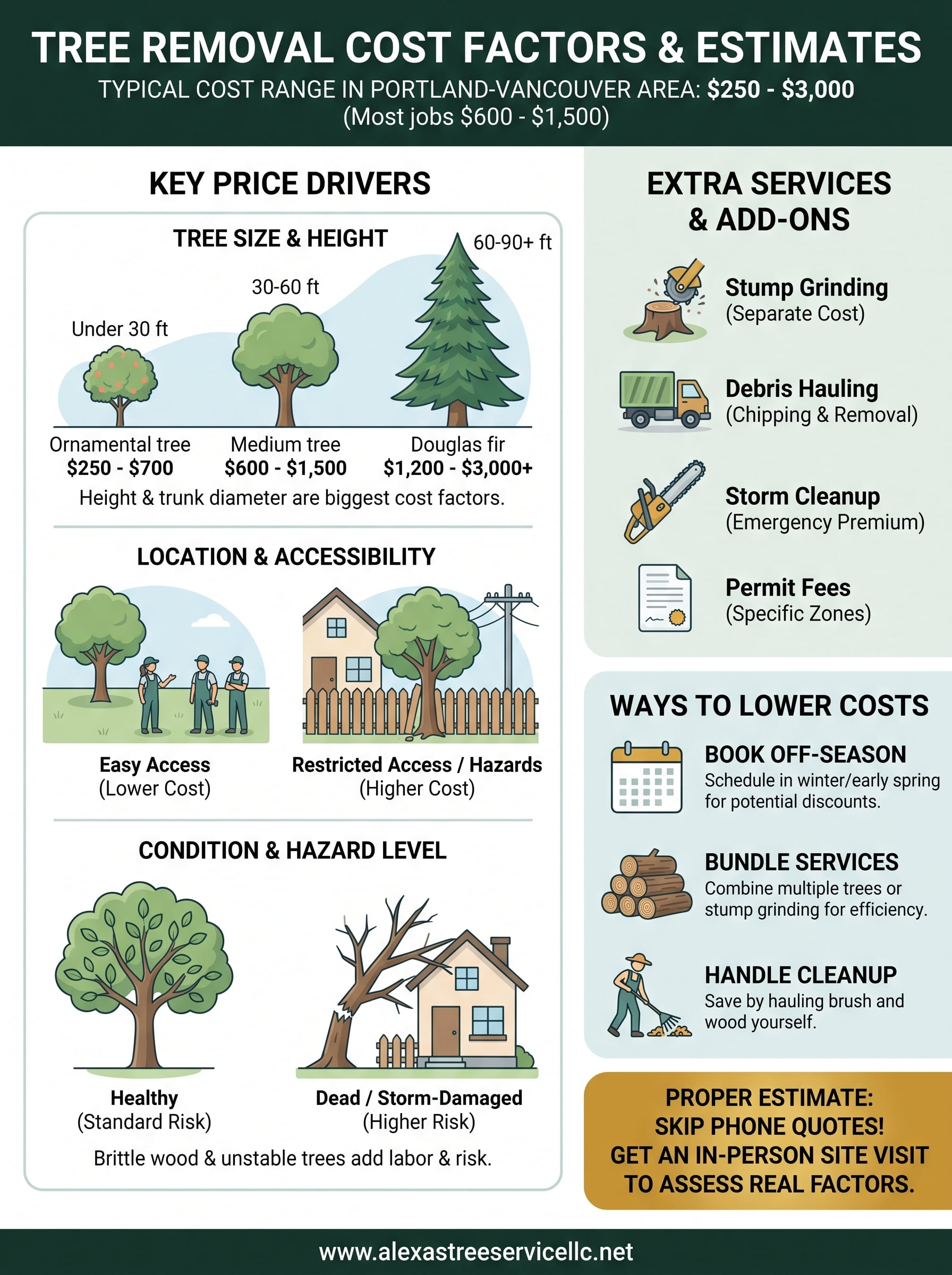
If you want a straight answer, here it is: most residential tree removals in the Portland-Vancouver area land somewhere between $250 and $3,000, with the bulk of jobs falling in the $600 to $1,500 range. Where your project lands depends on tree height and diameter , how close it stands to power lines or structures, and whether stump grinding or storm cleanup gets added to the job.
We've pulled 15 years of job data from our crews across Vancouver, Portland, Camas, and Battle Ground to break down exactly what drives your tree removal price up or down. Below, you'll find the specific factors that determine your quote and how to read an estimate so you're not overpaying.
Why tree removal costs vary so much
Every residential tree removal in Vancouver, WA looks unique once you get past the surface, and that's exactly why tree removal pricing swings so widely between quotes. Two trees can look almost identical from the street and still cost $500 apart once a crew climbs one and cranes the other. The factors below are the ones our estimators weigh on every site visit, and understanding them helps you make sense of any quote you're handed.
Tree size and height
Height and trunk diameter drive the bulk of your price because they determine how much time, labor, and equipment the job takes. A 25-foot ornamental pear in a front yard might take two people ninety minutes. A 100-foot Douglas fir can take a four-person crew most of a day, plus a bucket truck or crane rental. Tree height matters more than most homeowners expect, since every additional 20 feet usually means another rigging point, another rope, and more time spent lowering limbs safely instead of just dropping them.
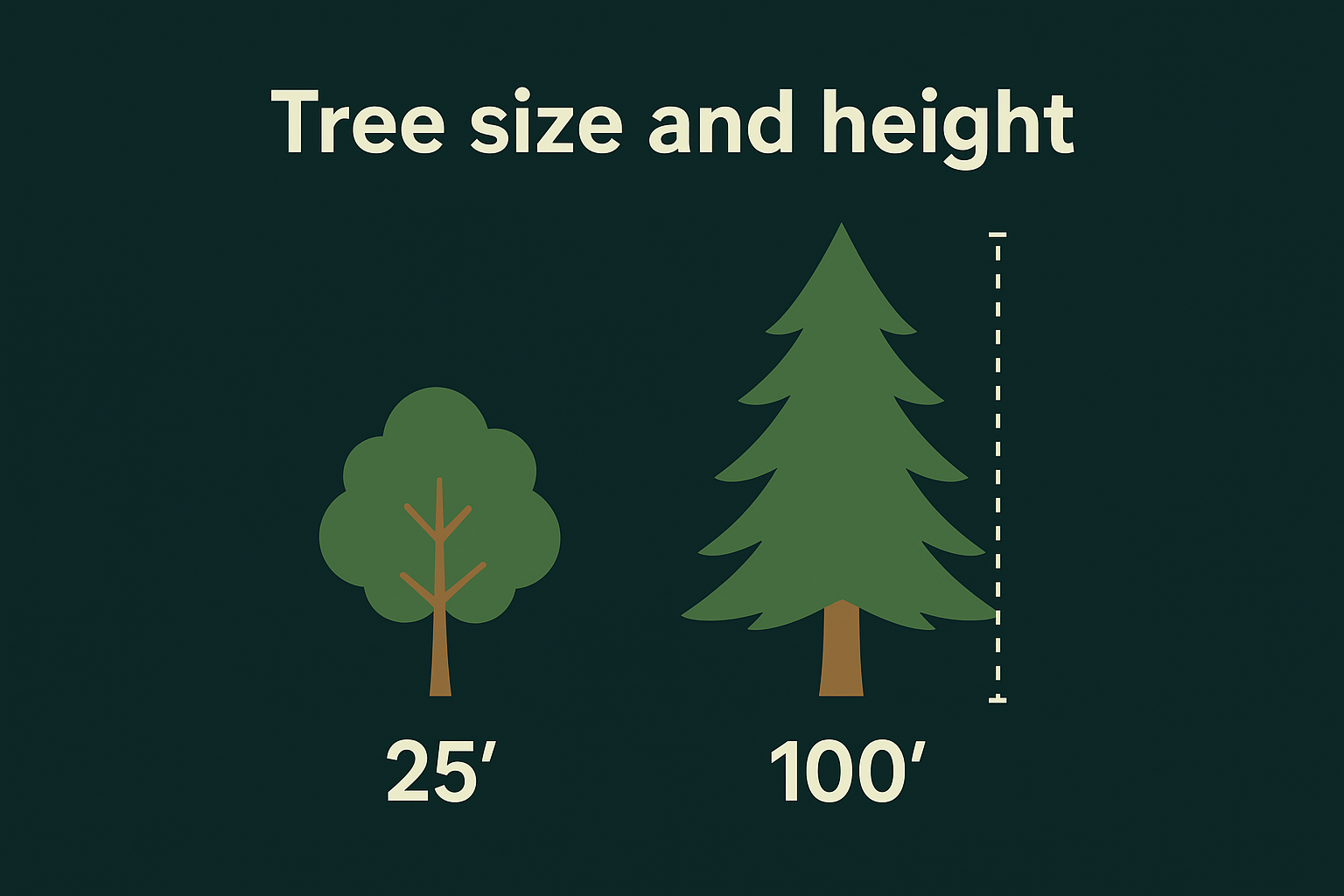
The taller and thicker the tree, the more it costs, but access and hazard level can swing the price just as hard as size does.
Location and accessibility
Where the tree sits on your property changes the job as much as the tree itself does. A tree in an open backyard with room to drop full sections costs less than one wedged between a fence, a shed, and your neighbor's driveway. Crews have to piece that second tree down branch by branch, lowering each cut with ropes instead of letting gravity do the work. Cutting trees near power lines adds another layer entirely. Our crews carry the training to work near electrical lines safely, but that work moves slower and sometimes requires coordinating with the utility company first, which adds both time and cost to the job.
Tree condition and hazard level
A dead, diseased, or storm-damaged tree isn't necessarily cheaper to remove just because it's already weakened. In fact, hazardous trees often cost more. Brittle wood, unpredictable breakage, and hollow trunks all raise the risk for the crew, and that risk gets reflected in the estimate. Leaning trees pointed at your house, garage, or a neighbor's fence line require extra rigging to control the direction of the fall, which adds labor hours even on a tree that's otherwise modest in size.
Extra services that raise the total
Most tree removal estimates quote the removal itself, but plenty of jobs need more than a cut-and-haul. Here's what typically gets added as a separate line item:
- Stump grinding : grinding the stump down below grade usually runs separately from removal, since it needs its own equipment and pass
- Debris hauling : chipping and hauling brush and logs off-site instead of leaving a stack in your yard
- Storm cleanup : emergency work on a downed or hanging tree after a windstorm often carries a premium for after-hours or rushed scheduling
- Permit fees : removal within Vancouver, WA city limits or certain protected zones may require a permit before work starts
Spreading these into their own line items is actually good practice on an estimate. It lets you see exactly what you're paying for instead of one vague number, and it's a big part of why the cost of a tree removal on paper can look so different from what a neighbor paid for what seems like a similar tree.
How to get an accurate tree removal estimate
Getting a number you can actually trust starts with skipping the phone quote. Any company that gives you a firm price without seeing the tree is guessing, and guesses run high to cover their own risk. Tree removal estimates worth trusting come from someone standing under the tree, looking at the lean, the trunk diameter, and what's within falling distance. That's why we walk every property in person before we quote a job, whether it's a single backyard maple or a commercial lot with a dozen trees along the parking lot edge.
An estimate written from a photo or a phone call is a guess, not a price.
What a proper site visit covers
A solid estimator does more than eyeball the trunk. Expect them to check the tree's health, measure or estimate height and diameter, look at overhead power lines, and map out where each section will drop or need to be lowered by rope. They should also ask about your fence, driveway, garden beds, or anything nearby that needs protecting during the work. Vancouver, WA has specific rules for removing trees within city limits, so a good estimator will flag early on whether your job needs a permit before a crew ever shows up.
Questions worth asking before you sign
Before you agree to any tree removal price , run through this list with the estimator:
- Is the quote a flat rate, or could the final bill change once work starts?
- Does the price include stump grinding, debris hauling, and full cleanup, or are those extra?
- What happens if the crew finds internal rot or damage once cutting begins?
- Are they licensed and insured, and can they show proof?
- How soon can they schedule the work, and does that timeline affect the price?
Getting these answers in writing protects you from a quote that balloons once the chainsaws start.
Red flags that signal a bad estimate
Watch for quotes that feel too good to be true, especially ones handed out sight unseen or scribbled on a business card with no breakdown. A trustworthy company itemizes the job: removal, hauling, stump work, and permit costs listed separately, not lumped into one round number. If a company can't answer basic questions about insurance or hesitates to put anything in writing, that's worth more attention than the number they quoted you. We offer free estimates for exactly this reason, so you get a real number based on your actual tree, not a rough guess over the phone.
Typical costs by tree size and type
Numbers help more than ranges, so let's get specific. Based on our own job records across Vancouver and Portland, tree removal cost breaks down fairly predictably once you sort trees into small, medium, and large categories, much like our 2026 tree removal cost breakdown shows. These figures assume decent access and a healthy tree with no major complications, since a hazardous lean or tight yard pushes any of these numbers higher.
Small, medium, and large trees
The table below reflects what most homeowners in our service area actually pay, not inflated averages pulled from national surveys that don't account for Pacific Northwest tree species or terrain.
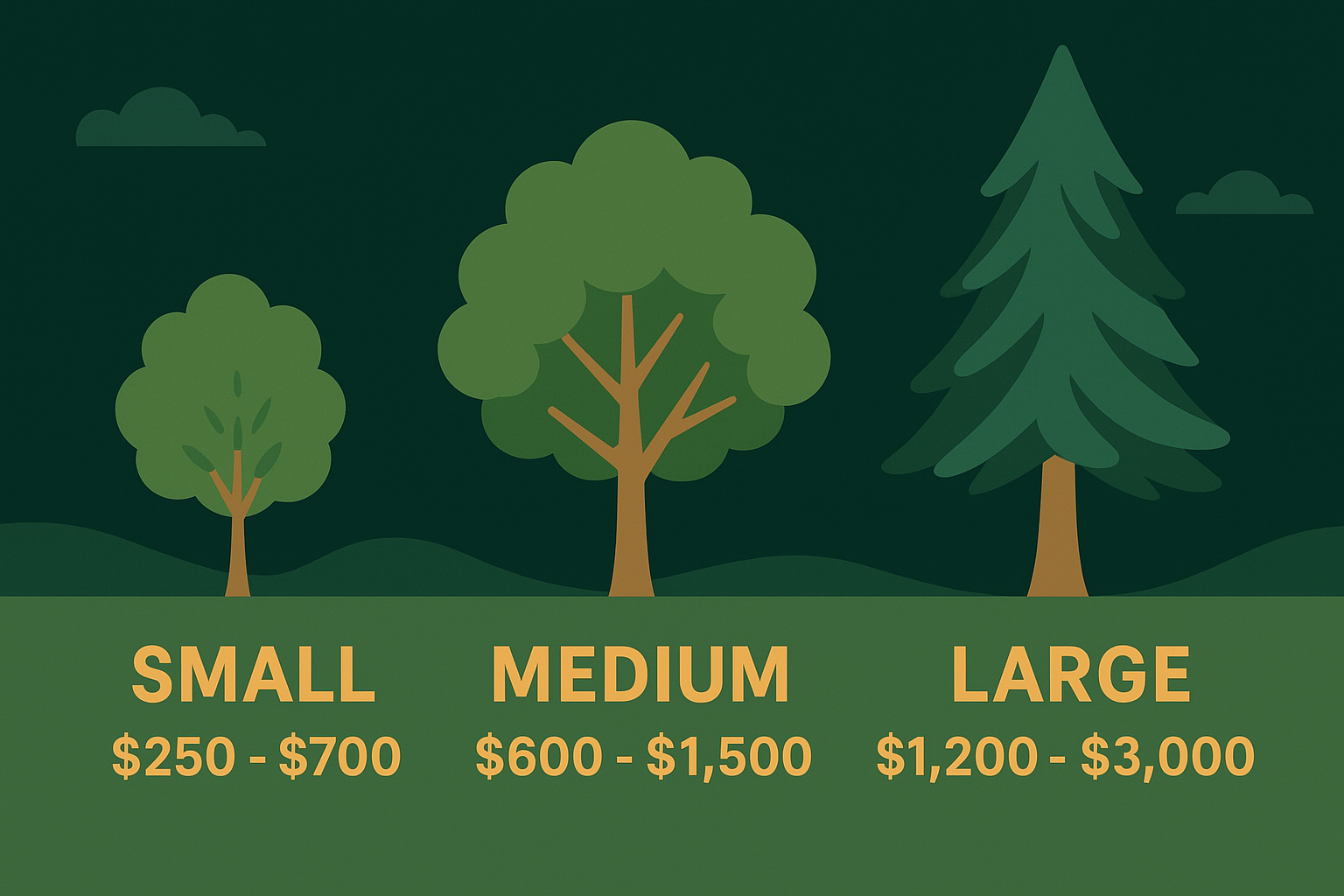
| Tree Size | Height | Typical Price Range | Example Species |
|---|---|---|---|
| Small | Under 30 ft | $250 - $700 | Ornamental pear, dogwood, young maple |
| Medium | 30-60 ft | $600 - $1,500 | Mature maple, cherry, mid-size cedar |
| Large | 60-90+ ft | $1,200 - $3,000+ | Douglas fir, large cedar, mature oak |
A small ornamental tree and a mature Douglas fir aren't the same job, even if they're both called "tree removal" on a quote.
Once a tree pushes past 80 or 90 feet, especially conifers common throughout Clark County, expect the upper end of that range or beyond it. Crane assistance alone can add several hundred dollars, and it's often necessary once a tree is too tall or too close to a structure to fell safely by hand, as you can see in our photos of completed crane rigging projects.
How species affects the price
Species matters almost as much as height. Softwoods like pine or alder cut faster and lighter than dense hardwoods like oak or maple, which take more saw time and produce heavier sections to lower and haul. Douglas firs and cedars, both common across our region, tend to grow tall and straight, which actually simplifies rigging compared to a sprawling oak with multiple heavy limbs pointed in different directions. That's one reason a 70-foot fir can sometimes cost less than a 50-foot oak with a wide canopy.
Brittle species like Bradford pear or certain maples also carry higher risk once they're dead or storm-damaged, since limbs can snap unpredictably during the cut. If you're comparing tree removal rates between quotes, ask whether the estimator factored in species-specific risk, not just height and trunk width. Two 50-foot trees can land $300 or $400 apart once you account for wood density, branch structure, and how brittle the tree has become with age or disease.
Ways to lower your tree removal costs
Dropping your total doesn't mean cutting corners, it means being smart about timing, bundling, and what you handle yourself. Homeowners who plan a few weeks ahead instead of calling in a panic almost always pay less for the same tree. Tree removal pricing responds to demand and scheduling flexibility more than most people realize, so a little patience often saves real money.
Book during the off-season
Winter and early spring tend to be slower months for most tree crews in the Portland-Vancouver area, since storm cleanup and summer landscaping projects haven't ramped up yet. Scheduling your removal during these lulls can shave money off the quote simply because crews have open calendar space and aren't charging a rush premium. Summer and the weeks right after a windstorm are the worst times to ask how much is tree removal going to cost, since demand spikes and pricing follows it.
Waiting for a slow season instead of an emergency is one of the easiest ways to cut your bill without cutting corners.
Bundle multiple trees or services
If you've got more than one tree that needs to come down, or a removal paired with canopy trimming and pruning elsewhere on the property, ask for a combined quote. Crews already on-site with equipment set up can knock out a second or third tree far faster than scheduling a separate visit later, and that efficiency usually gets passed on as a discount. The same logic applies to stump grinding: pairing it with the removal instead of calling back weeks later saves a mobilization fee. Property owners enrolled in a year-round tree care and maintenance program often catch problem trees early, before they become expensive emergency removals, which keeps long-term costs down across the whole property.
Handle cleanup yourself
Hauling brush and bucking logs into firewood-length pieces yourself can trim a noticeable chunk off the cost of a tree removal , since debris hauling and yard cleanup is often billed separately anyway. Ask your estimator if they'll leave the wood on-site in exchange for a lower price, especially for larger trees that leave behind a lot of usable lumber. Just confirm this before the crew arrives, since some companies price hauling into the base quote and won't adjust it after the fact. Getting multiple written estimates and comparing line items, rather than just the bottom number, remains the single best way to spot where you can trim costs without sacrificing the quality of the work.
Planning ahead for your tree removal
At the end of the day, costs for tree removal come down to a handful of variables you can actually assess before a crew ever shows up: tree size, accessibility, condition, and whatever extras like stump grinding or debris hauling get added on. Knowing those factors turns a confusing quote into a number that makes sense, and it puts you in a better position to compare bids instead of just picking the cheapest one and hoping for the best.
Skip the phone-quote guesswork and get an estimator on-site who can measure your tree, check the lean, and give you a real number broken into clear line items. Whether you're dealing with a single backyard maple or a commercial lot full of overgrown trees near Vancouver or Portland, the right time to plan is before a storm forces your hand. Contact Alexa's Tree Service for a free estimate in person and find out exactly what your job will run.