
Tree Removal Cost: What You'll Really Pay in 2026
You've got a tree that needs to come down, and before you call anyone, you want a real number, not a vague
Why tree removal costs vary so much
Ask five tree companies how much cost for tree removal on the same tree and you might get five different numbers, sometimes off by hundreds of dollars. That's not because someone is padding the bill. Tree removal pricing depends on a stack of variables that change from job to job, and a company that ignores any of them is either guessing or lowballing you to win the work. Understanding what actually drives the average cost of tree removal , and what professional tree removal costs in 2026, helps you spot a fair quote from an unrealistic one.
Size and species set the baseline
Height and trunk diameter matter more than almost anything else. A 30-foot ornamental in a front yard takes an hour with a chainsaw and a chipper. A 90-foot Douglas fir towering over a Vancouver, WA property requires rigging, a bucket truck or climber, and a crew that knows how to drop sections safely without crushing a fence. Species matters too. Dense hardwoods like oak take longer to cut and haul than a soft-wooded cottonwood of the same size, and brittle species like Douglas fir often need extra rigging because limbs break unpredictably.
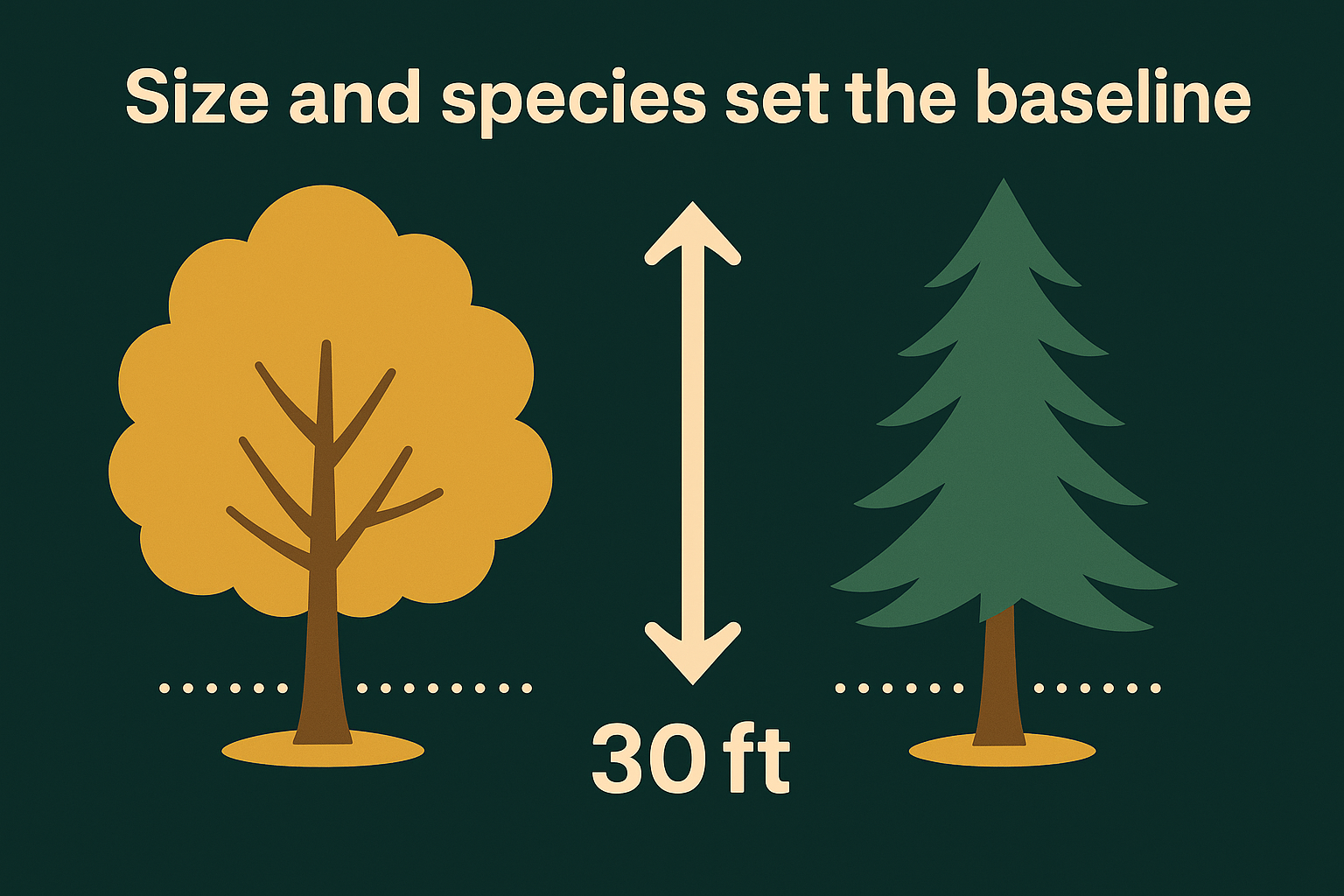
The single biggest factor in your quote is almost always the tree's height and trunk diameter, not the company you hire.
Location and access change the math
Placement on the property can swing a bid by 30% or more. A tree standing alone in an open backyard is straightforward. A tree wedged between a garage, a power line, and a neighbor's fence forces the crew to remove it in small, controlled pieces instead of felling it whole, which adds hours. Overhead utility lines sometimes require coordinating with the utility company before any cutting starts, because of the dangers of working around energized power lines, and that coordination isn't free.
Condition and risk drive up the price
Dead, diseased, or storm-damaged trees carry more risk, and price reflects that. A hazardous tree leaning toward a roof or already showing rot at the base demands more careful rigging and sometimes a crane, which raises the bill even if the tree itself isn't especially large. Emergency storm cleanup in Vancouver, WA after high winds also commands a premium, since crews are working under time pressure and often in unsafe conditions.
| Factor | Impact on price |
|---|---|
| Tree height (over 60-80 ft) | Adds equipment, labor, rigging time |
| Trunk diameter | Wider trunks take longer to cut and remove |
| Species (hardwood vs softwood) | Denser wood slows cutting and hauling |
| Proximity to structures/lines | Requires piece-by-piece removal, utility coordination |
| Tree health (dead, diseased, leaning) | Higher risk means more careful, slower work |
| Access for equipment | Tight yards or fenced lots limit machinery, raise labor cost |
Regionally, Pacific Northwest crews also factor in our tall conifers, wet ground conditions that limit heavy equipment access much of the year, and permit requirements in cities like Vancouver. All of it adds up to why a typical cost to remove a tree here can look different than a quote you'd see online from a national average calculator built around a different climate and tree mix entirely.
How professionals calculate your tree removal estimate
When a certified arborist in Vancouver, WA walks your property, they're not eyeballing a random number. They're running through a mental checklist that turns a tree removal estimate into something closer to a formula than a guess. Knowing this process helps you understand why one company quotes $800 and another quotes $2,200 for what looks like the same tree.
What the site visit actually measures
Every legitimate quote starts with a site visit , not a phone estimate. A crew lead or arborist walks the property and evaluates several things before naming a price:
- Trunk diameter at chest height and overall tree height
- Lean direction and any visible rot, cracks, or dead limbs
- Distance to the house, fence, shed, or power lines
- Ground access for a chipper, bucket truck, or crane
- Whether the stump and debris removal are part of the job
A quote given without seeing the tree in person is a guess, not an estimate.
Labor, equipment, and disposal drive the number
Once the assessment is done, the price breaks down into three buckets: labor hours, equipment needed, and debris hauling. A two-person crew with hand tools and a chipper costs less per hour than a job requiring a bucket truck operator, a ground crew, and a separate crane rental for a tree too tall or too close to a structure to fell safely. Wood and brush disposal adds its own line item, especially if the tree is large enough to fill multiple truckloads. Companies with 15+ years in a region, like ours here in Clark County and the greater Portland metro, also factor in local permit requirements and typical soil conditions when pricing a job, since wet ground in fall and winter slows equipment and adds time.
Why a written, itemized quote matters
Requesting a written breakdown protects you from surprise charges after the crew arrives. A trustworthy company itemizes labor, equipment, stump grinding if included, and debris hauling separately, rather than handing you one lump number. This transparency is also why we offer free estimates before any work begins, so you know exactly what you're paying for and why, before a single branch comes down.
Tree removal cost by size, height, and type
Most homeowners want a straight number, so here's the honest range. Small trees under 30 feet, like a flowering dogwood or a young maple, typically run $150 to $500. Medium trees between 30 and 60 feet, think mature maples, birches, or fruit trees, usually land between $500 and $1,200. Once you get into large trees from 60 to 80 feet, common with oaks and big-leaf maples around Vancouver and Portland, expect $1,200 to $2,500. Anything over 80 feet, especially our regional Douglas firs and western red cedars, can push past $3,000, particularly if a crane or extended rigging is involved on these complex, tight-quarter removals.
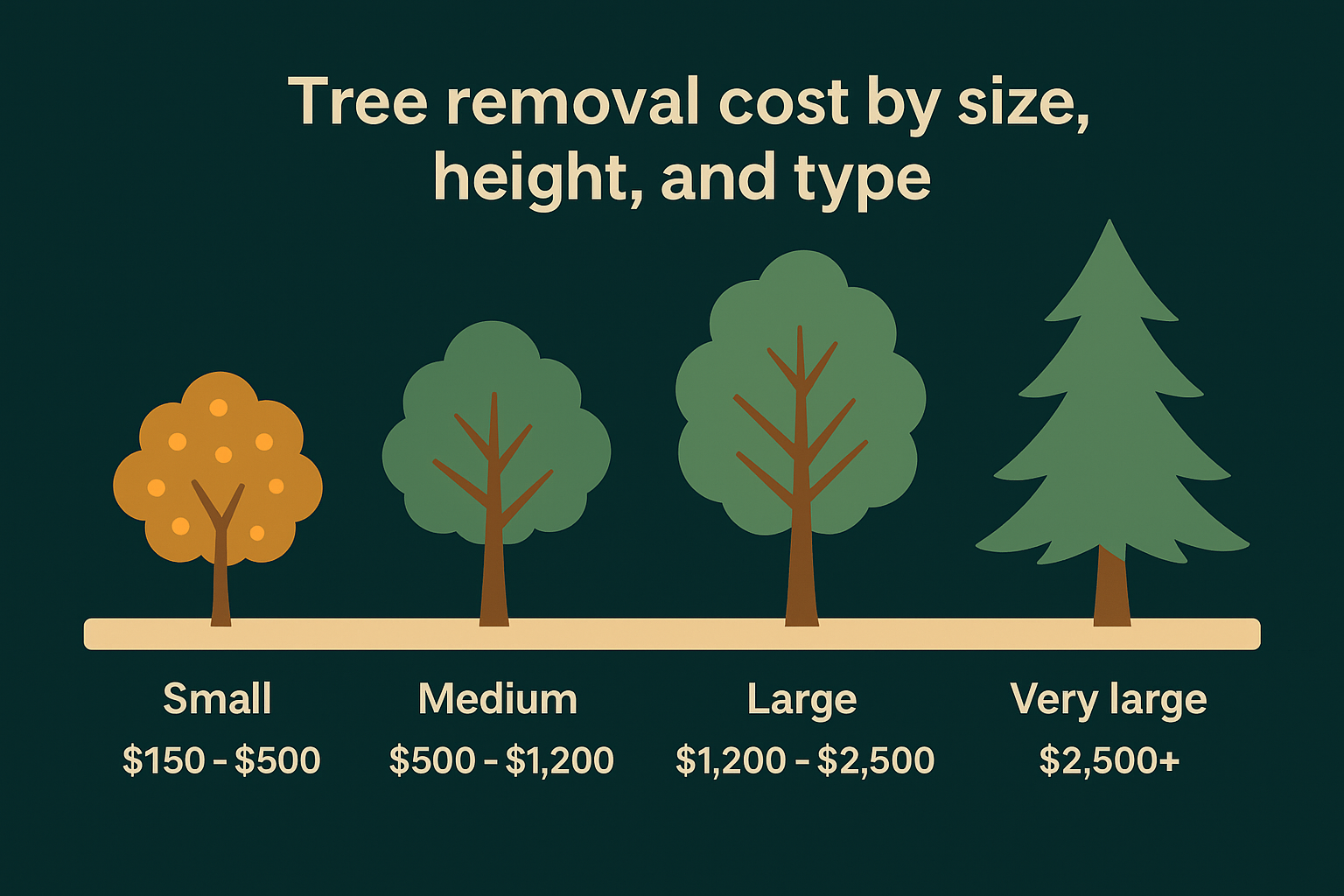
Height alone can triple your bill, so a rough guess based on a neighbor's quote rarely holds up for your tree.
Why species changes the number even at the same height
Two trees at the same height can still cost differently once species enters the picture. Softwoods like pine and cottonwood cut and haul faster than dense hardwoods like oak or maple of comparable size. Douglas fir, a Pacific Northwest staple, often needs extra rigging because its branches break unpredictably during a controlled drop, adding labor time that a straightforward pine removal wouldn't require.
A quick reference for typical ranges
Use this table as a starting point, then adjust for access, health, and location factors covered earlier in this article.
| Tree size | Height range | Typical cost |
|---|---|---|
| Small | Under 30 ft | $150 - $500 |
| Medium | 30 - 60 ft | $500 - $1,200 |
| Large | 60 - 80 ft | $1,200 - $2,500 |
| Very large | Over 80 ft | $2,500 - $4,500+ |
Understanding this breakdown matters because the average cost for tree removal you see quoted online often comes from a national blend of climates and species that doesn't reflect what grows in Clark County or the greater Portland metro. Our tall conifers and wet soil conditions push real quotes higher than a generic calculator suggests, so treat these ranges as a regional starting point, not a final number, until a crew has actually seen your tree.
Extra costs to budget for beyond the tree itself
Beyond the removal itself, several add-on costs catch homeowners off guard when the final invoice arrives. Stump grinding is the most common one, since most companies price it separately from the tree removal, typically running $100 to $400 depending on trunk diameter. If you want a clean, plantable yard afterward, ask upfront whether stump grinding is included or quoted as an add-on, and check our stump grinding services in Vancouver, WA for typical pricing in the Vancouver and Portland area.
Cleanup and hauling fees also stack up fast on larger jobs. Debris removal, wood chipping, and hauling logs or brush off-site can add $75 to $300 to a job, especially for large trees that generate several truckloads of material. Some homeowners choose to keep the wood for firewood instead, which can lower the bill since the crew doesn't have to haul it away.
Ask what's included before you sign anything, because stump grinding and debris hauling are rarely bundled into the base price.
Permits and utility coordination
Cities in our service area, including Vancouver, WA, sometimes require a permit before a tree comes down, particularly for large or heritage trees on residential lots. Permit fees usually run $50 to $150, and a reputable company should offer permit assistance guidance rather than leaving you to figure out city code alone. Utility line coordination adds its own cost when branches sit near power lines, since a certified line-clearance crew or utility company visit may need to happen before cutting starts.
Emergency and after-hours work carries a premium too. Storm damage that threatens a roof or blocks a driveway often needs 24/7 response, so it helps to know who to call for emergency or storm tree removal, and that urgency typically adds 25% to 50% to the standard rate. Here's a quick summary of what to ask about before signing:
- Is stump grinding included or billed separately?
- Who hauls away the wood and brush, and is that itemized?
- Does the quote include permit fees if one is required?
- Is there an emergency or after-hours surcharge?
- Will utility coordination be handled by the crew or billed extra?
Smart ways to lower your tree removal bill
Bundling projects saves real money. If you have more than one tree that needs attention, ask for a combined quote instead of scheduling separate visits. Crews already have equipment and a chipper on-site, so cutting a second or third tree during the same trip usually costs less per tree than paying for a standalone job later. Bundling multiple trees also spreads the trip charge and setup time across more work, which most companies reflect in the final price.
Timing matters more than most homeowners realize. Late fall and winter are the slow season for tree companies in the Pacific Northwest, since storm cleanup work hasn't picked up yet and fewer homeowners are scheduling routine removals. Booking during this window often gets you a better rate than calling in spring, when everyone wants overgrown branches gone before summer.
Scheduling your removal in the off-season is one of the few cost factors you actually control.
Handle the wood and cleanup yourself
If you're willing to do some of the work, ask the crew to leave cut logs on-site instead of hauling them away. Splitting your own firewood or renting a chipper for smaller branches cuts the debris-hauling line item out of your quote entirely. Just confirm this in writing, since some companies price the removal assuming full cleanup is included.
Compare quotes the right way
Getting multiple written estimates protects you from both overpaying and hiring an underinsured crew that cuts corners. Compare quotes using the same checklist every time:
- Confirm each quote covers the same scope: tree removal, stump, and cleanup
- Ask whether the price is fixed or subject to change once work starts
- Verify licensing and insurance before comparing dollar figures, since removals belong to licensed, insured crews
- Skip the lowest bid if it can't explain what's excluded, one of the tree removal mistakes homeowners must avoid
Doing this legwork upfront, rather than choosing the cheapest number on paper, is what actually keeps your tree removal cost reasonable without risking property damage from a crew that's cutting corners to hit a low price.
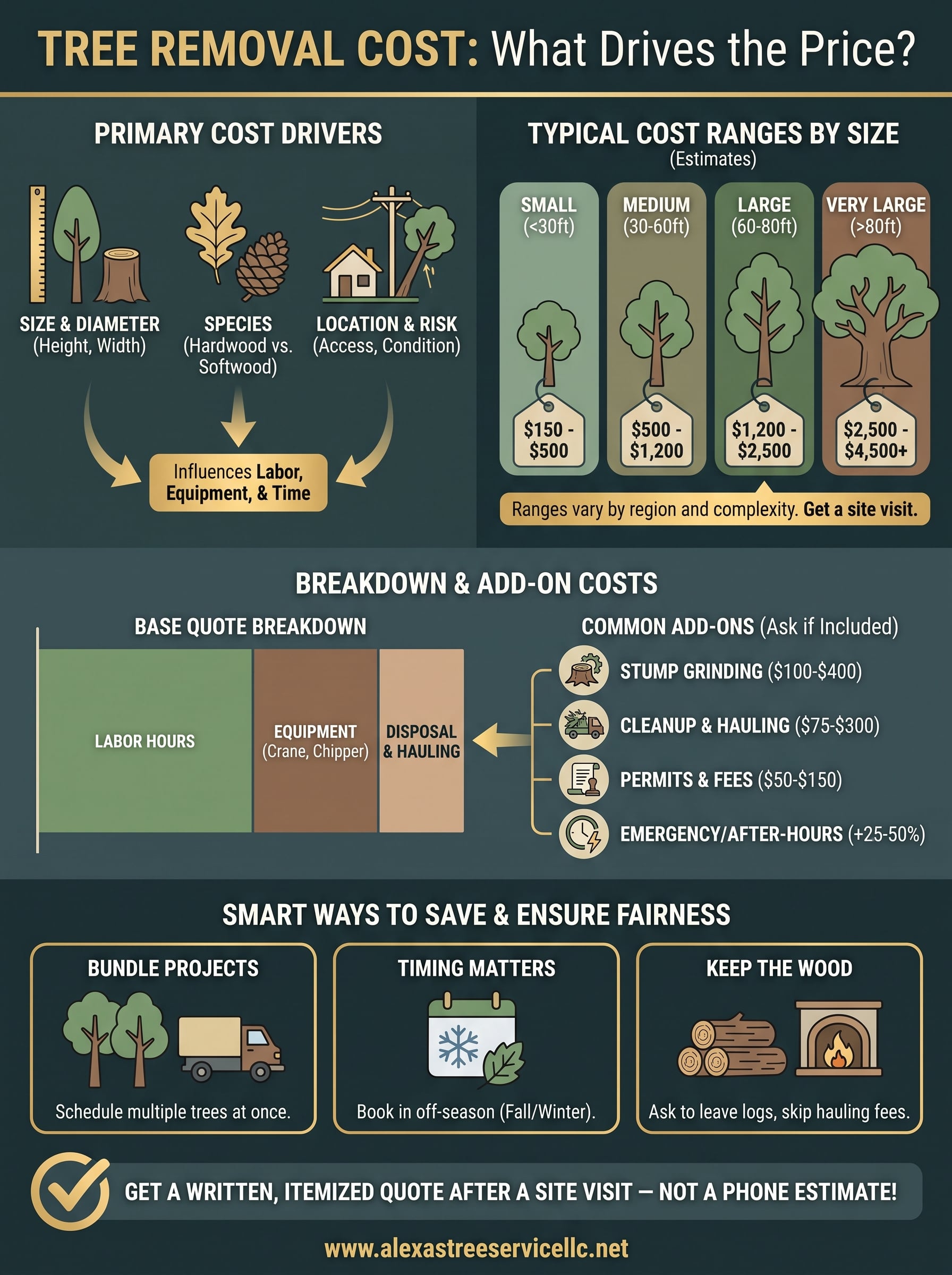
Getting a fair price for your tree removal
A fair tree removal price comes down to matching the quote to the actual job, not chasing the lowest number on paper. Height, species, access, and condition set the real baseline, and a written itemized estimate protects you from surprise charges once the crew shows up. Bundling projects, timing your work for the off-season, and asking the right questions before you sign all put real money back in your pocket without cutting corners on safety.
Cheap quotes that skip a site visit or dodge questions about licensing usually cost more in the end, whether that's property damage or a job left half-finished. The average cost of a tree removal in Vancouver, Portland, and the surrounding Pacific Northwest reflects our tall conifers, wet ground, and local permit rules, so trust a crew that actually accounts for that. Ready to see what your tree really costs? Get your free estimate from Alexa's Tree Service and get a number you can count on.