
How to Remove a Stump Without Grinding: 4 DIY Methods
The fastest way to learn how to remove a stump without grinding is to match the method to the stump. A stump under about 6 inches across comes out with a mattock and a saw in an hour or two. Larger stumps can be dug out in a day, burned out in a few days, or rotted with stump remover over weeks to months. All four methods work, and none of them needs a grinder.
The problem is that a stump looks simple and fights back. Roots run farther than you expect, the wood is dense, and a half-removed stump can sprout again or become a nest for ants and termites. Many homeowners start with a shovel, hit a taproot, and stall. Others pour chemicals into a stump and wait a year with nothing to show for it, because the stump was too big or too dry for that method.
Alexa's Tree Service has worked on trees and stumps in Vancouver, Portland, and nearby towns since 2006, so we know when DIY works and when it does not. This guide covers four methods in order, with tools, timelines, and safety rules for each. It ends with how to fill the hole and keep sprouts from coming back.
Pick the right method before you start
Pick your method by stump size, your deadline, and how close the stump sits to your house, fence, or utility lines. Digging is the fastest option for most yards, rotting is the easiest, and burning is the most restricted.
What happens if you leave the stump
A dead stump is not harmless. It decays slowly, which draws carpenter ants and termites , grows fungus, and turns into a trip hazard and mower-blade hazard at ground level. Many species, including maple, willow, and poplar, also send up shoots from the stump and roots for years.
That is why the goal is to remove the stump or kill it completely, not just cut it lower. A stump that is only half dead will keep spending energy on sprouts.
Compare the four methods
The table below sets the four approaches side by side, so you can see the trade between time and effort.
| Method | Typical time | Effort | Best for |
|---|---|---|---|
| Dig and cut the roots | A few hours to a day | High, very physical | Small and medium stumps when you want it gone fast |
| Pull with a winch or tractor | Hours, after the roots are cut | Medium, needs equipment | Medium and large stumps with open access |
| Rot with remover or nitrogen | Weeks to months for small stumps, a year or more for large ones | Low | Any size when you can wait |
| Burn it out | One to three days | Medium, high caution | Large stumps in open yards where burning is legal |
If you need a stump gone in two or three days, digging or burning are your only real options. Chemical products soften the wood but you still have to chop out what is left.
Match the method to the stump, because the wrong choice costs you either a weekend or a year.
Take a 12-inch fir stump in a backyard where you plan to seed grass in spring. You could drill and treat it in the fall and let the wet Northwest winter keep it soaked. It should be soft enough to chop out by spring, though a dense or larger stump may need longer.
Gather your tools and check the ground
Most of these tools are common, and you can borrow or rent the heavier ones. Gather them before you start, because stopping halfway to shop is how stump projects drag on:
- Round-point shovel and a mattock
- Reciprocating saw with a pruning or demolition blade, plus a bow saw and loppers
- Drill and a 1-inch wood bit, long enough to go deep
- Garden hose or pressure washer
- Tarp, gloves, eye and ear protection, and chainsaw chaps if you use a chainsaw
Before you dig anywhere, call 811 a few days ahead so utility lines get marked, and look for irrigation lines and septic parts. If the tree is still standing, check city or county tree rules first. Vancouver, WA requires permits for some removals, and we can point you to the right steps.
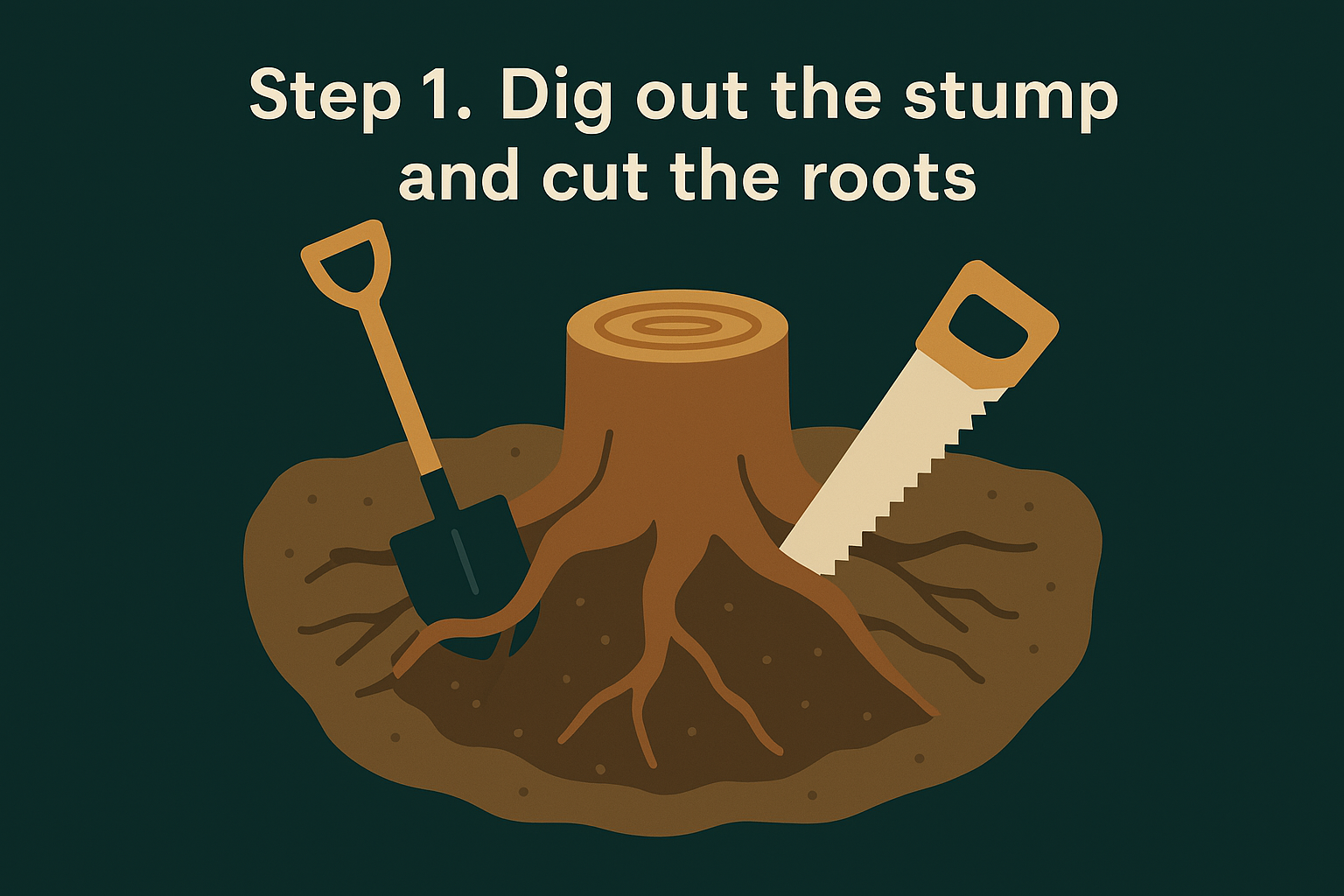
Step 1. Dig out the stump and cut the roots
Dig out the stump by exposing the roots, cutting each one, and tipping the stump free. For a stump about 12 inches across, plan on a half day to a full day of work. This is the best answer for how to get rid of a tree stump without grinding when you want it gone this week.
Expose the roots
Do not cut the stump down to the ground first. Leave 2 to 3 feet standing so you have a handle to rock and lever. Then follow these steps:
- Dig a trench 12 to 18 inches wide around the stump with a shovel.
- Spray the soil off the roots with a hose or pressure washer as you go.
- Keep digging down until you can see where the main roots dive.
- Clear soil from under the sides, so you can reach roots from below.
Washing the roots matters more than it sounds. Dirt dulls saw blades and chains fast , and a clean root cuts in seconds instead of minutes.
Cut the roots and free the stump
Cut every root you can reach with a reciprocating saw and a pruning blade, or a bow saw for the thick ones. Use loppers for roots under an inch or two, and chop through the rest with the mattock. Work around the stump, then rock it back and forth to find roots you missed.
The last piece is the taproot, the thick vertical root under the center. Dig beside it, cut it as deep as you can reach, and tip the stump out of the hole. If you have never run a chainsaw near soil and rock, use hand tools. A chain that touches dirt is ruined in one cut.
Pull a stubborn stump with a winch or tractor
When the stump rocks but will not release, a machine finishes the job. Loop a rated chain or recovery strap low around the stump , then pull with a winch, truck, or tractor. Keep everyone out of line with the pull, because a snapped strap can fly. Never anchor to a bumper, and stay clear of pools, walls, and buried lines.
A tractor with a backhoe also saves hours of digging around a big stump. For a stump under about 5 inches across, a brush grubber attached to your vehicle's hitch tears it out whole.
Cut every root you can reach before you pull, because roots left in the ground are what make a stump fight back.
Step 2. Rot the stump with remover or nitrogen
Rot the stump by drilling deep holes, filling them with a stump remover, keeping the wood wet, and waiting for it to soften. It is the lowest-effort way to remove a stump without grinding, but it does not dissolve anything. It only speeds up natural decay so you can chop out the softened wood later.
Drill the holes
Cut the stump as low to the ground as you can with a chainsaw. Then drill the holes that carry the remover deep into the wood, using this pattern:
- Use a bit about 1 inch wide.
- Drill as deep as your bit allows, usually 8 to 12 inches.
- Space the holes 2 to 4 inches apart across the whole top.
- Add a few holes angled in from the sides, so the solution reaches the lower trunk.
More holes means faster rot , because each hole is a path for moisture and fungi into the dense center.
Add remover and keep it wet
Fill each hole with stump remover granules, which are mostly potassium nitrate, and add warm water to dissolve them. Top the holes off as the liquid soaks in. Then soak the soil around the stump and cover everything with a tarp weighted at the edges, so moisture stays in and rain does not wash the remover out. Wear gloves, and keep kids and pets away.
If you prefer a gentler route, use a high-nitrogen lawn fertilizer or composted manure in the same holes. It works more slowly. I would skip the salt remedies, since rock salt leaches into the soil and harms the grass and plants around the stump. Never pour kerosene or gasoline into a stump, because it contaminates the soil and creates a fire risk.
How long rotting takes
A small softwood stump may soften in a few weeks to a few months. A large hardwood stump can take a year or more, and a stump left to rot with no help can take up to seven years. Recharge the holes every few weeks, and keep the tarp on in dry months. The Northwest's rainy winters help, since wood that stays damp decays faster.
You will know it is ready when the wood turns spongy and crumbly , and a screwdriver sinks in with little effort. Then chop it apart with an axe or mattock and pull out the pieces. Some product labels allow burning the dried, treated wood, so read yours and check local rules first.
Stump remover speeds up decay, but it will not make a stump disappear on its own.
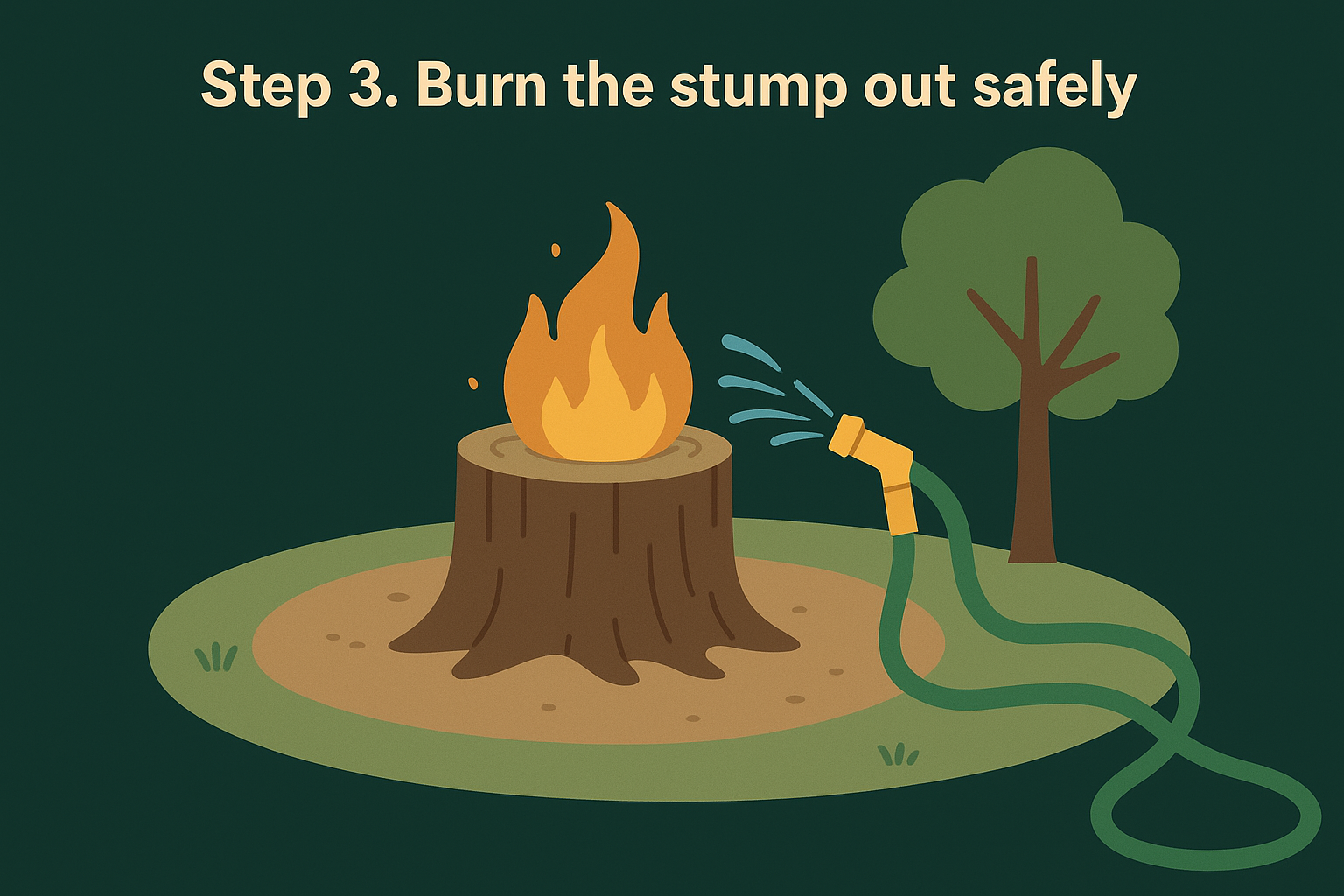
Step 3. Burn the stump out safely
Burn a stump only where local rules allow it, in an open area, with a hose ready, and with the fire built inside the stump instead of on top. It is the second-fastest way to remove a stump without grinding, usually one to three days.
Check the rules and clear the area
Many cities and counties in Washington and Oregon restrict or ban yard burning, especially in urban areas and during dry-season burn bans. Check with your local fire department or clean air agency , and get a permit if one is required. If burning is not allowed, skip to another method.
If burning is legal, clear a 10 to 15 foot circle down to bare soil, and keep it away from fences, sheds, overhead branches, pools, and utility lines. Keep a connected hose within reach. Remember that roots can smolder underground and flare up away from the stump, so walk the area during and after the burn.
Build the fire inside the stump
A rocket-stove design burns hotter and cleaner than a pile of wood on top. Cut the stump low, then follow these steps:
- Drill several deep vertical holes into the center of the stump.
- Drill a lateral hole near the base that connects to the center holes, so air can feed the fire.
- Fill the center with dry charcoal or small pieces of dry firewood.
- Light it, and keep adding fuel as it burns down.
A big stump burns slowly. One that is 2 to 3 feet across can smolder for days and use dozens of pounds of charcoal. Wet wood is hard to light, so a dry stretch helps. Late summer is often burn-ban season in the region, so check the current status before you plan around it.
Put the fire out completely
Never walk away from a burning stump. When the wood is burned down, douse it with water , stir the ashes, and soak the soil around it. Check again that evening and the next morning, since buried roots can hold heat.
Fill the hole only once everything is cold to the touch. Digging in warm ash can reignite smoldering pockets.
A stump fire is finished when the roots are cold, not when the flames stop.
Step 4. Clear the remains and stop regrowth
Finish by hauling out the leftovers, filling the hole, and stopping sprouts, then decide whether a professional grind is smarter for what remains. This step applies to all three earlier methods, and skipping it is why many removed stumps come back.
Clear the remains and fill the hole
Pull out rotted or charred chunks with a mattock and a shovel. Large wood chunks left in the soil can tie up nitrogen as they decay and leave a weak patch in your lawn. Fill the hole with topsoil in layers, tamping each layer, and mound it slightly because the soil will settle.
Wait a few weeks, top up the low spots, and then seed or plant. If you dug out a large stump, expect a hole big enough to need several wheelbarrows of soil.
Stop sprouts from coming back
Check the area every few weeks through the first growing season. Cut any sprouts at the base before they leaf out. For species that resprout, such as maple, willow, and poplar, paint a cut-stump herbicide labeled for the job onto fresh wood within minutes of cutting. Glyphosate and triclopyr are the common active ingredients. Follow the label, and keep the product away from lawn, water, and plants you want to keep.
Roots can sprout shoots several feet from the stump. Those suckers are a sign that live root is still down there, so keep cutting them back until they stop.
When grinding is the better call
DIY is not always cheaper once you count time and risk. Our stump grinding runs $120 to $380 per stump , and the crew grinds 6 to 12 inches below grade. Small softwood stumps take about 30 minutes, and large hardwood stumps take 2 to 3 hours. Bundling a grind with a tree removal saves $45 to $75 compared with scheduling them separately.
If the stump sits beside a foundation, pool, or buried line, or if sprouts keep returning, a short grind is often safer than a week of digging and chemicals. If you are weighing it, you can ask for a free estimate and compare it to your own time.
Grinding is not failure, and sometimes it is the cheapest way to avoid a damaged foundation or a lost month.
Choose your method and get started
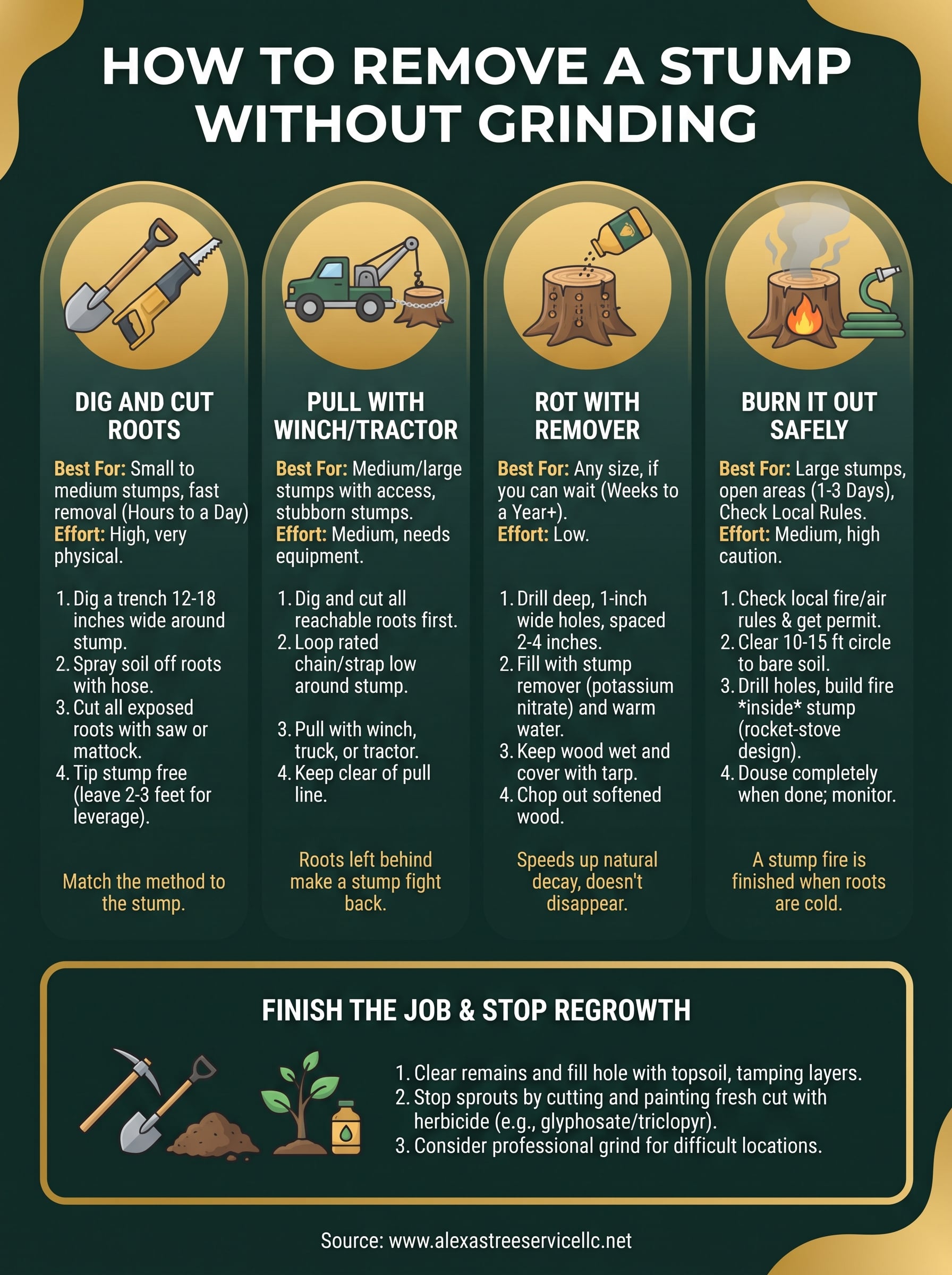
Match the method to the stump. Dig and cut roots when you want it gone in a day, pull with a winch or tractor when it will not tip, rot it when you can wait, and burn it only where the rules and your yard allow. Then clear the remains, fill the hole, and cut back sprouts until they stop.
If the stump is big, close to something expensive, or just not worth your weekend, we can take care of it. Request a free estimate from Alexa's Tree Service and we will tell you honestly whether grinding, removal, or a DIY plan makes sense for your property.