
Tree Trimming: When Is the Best Time in Vancouver, WA?
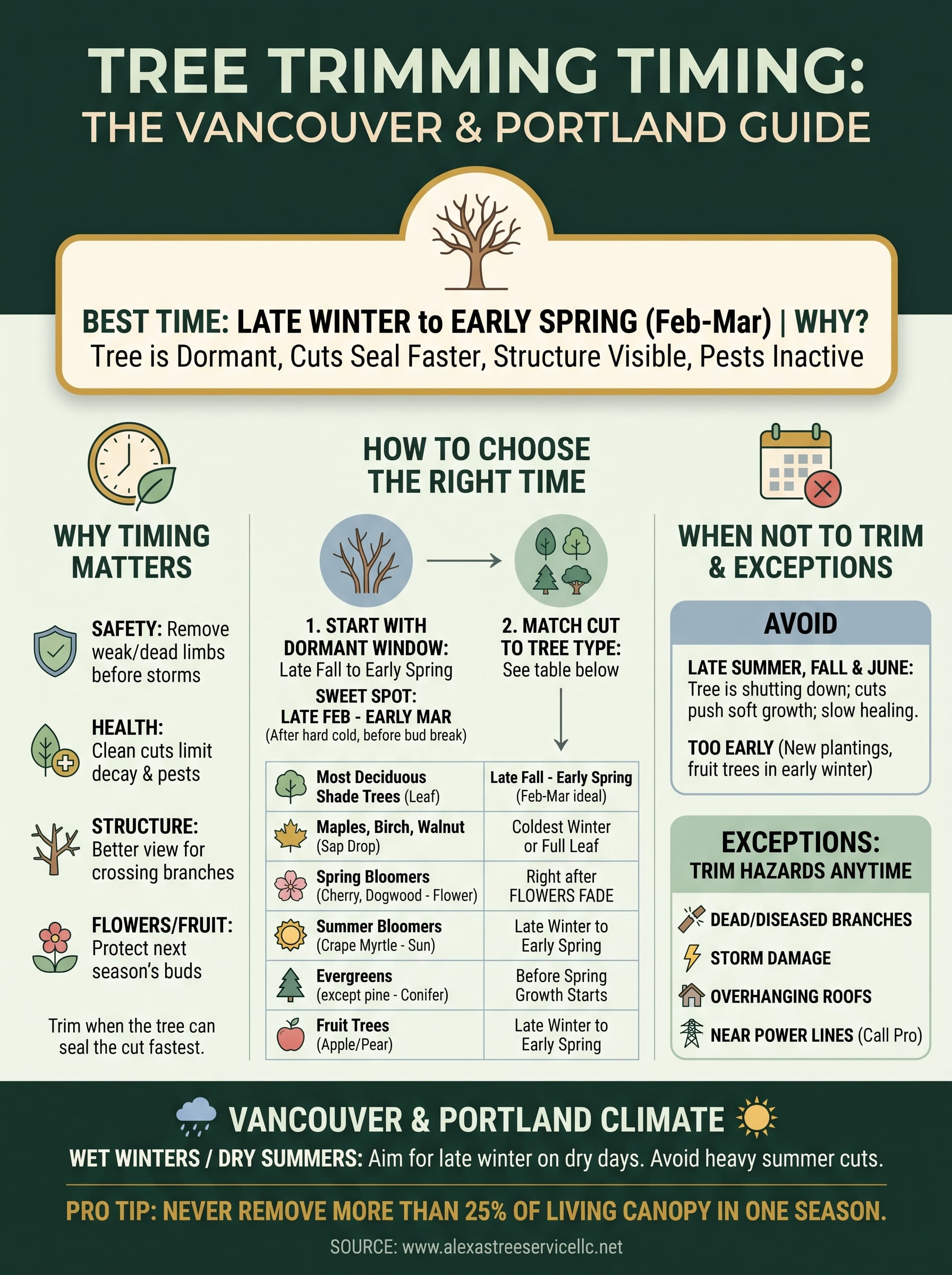
If you are searching for tree trimming when is best, the answer for most trees around Vancouver, WA and Portland, OR is late winter to early spring, February through March, while the tree is still dormant. Dormant means the tree has dropped its leaves and paused its growth. You can see the branch structure, pests and diseases are inactive, and the cuts begin to seal as growth restarts.
Tree trimming is the removal of branches to keep a tree healthy, safe, and well shaped. Every cut is a wound, so the season you make it in matters almost as much as which branch you remove. A few groups follow different calendars: spring-flowering trees, sap-heavy maples, evergreens, and anything damaged by a storm.
This guide covers why timing matters, how to pick the right window for your tree, what to avoid, and how our wet-winter, dry-summer climate shifts the calendar. It also shows how to make a clean cut. Alexa's Tree Service has trimmed trees across Clark County and the Portland area since 2006, so the advice below comes from local work, not theory.
Why the timing of tree trimming matters
Timing matters because a tree can only close a wound while it is able to grow, and the season decides what can get into that wound first. A cut made at the right time seals quickly. A cut made at the wrong time stays open to decay, insects, or cold.
What a cut does to a tree
Trimming is a stimulus. When you remove a branch, the tree responds with new growth near the cut and starts building callus tissue around the edge. In late winter, that callus starts forming just as the growing season begins, so the wound has the whole year to close.
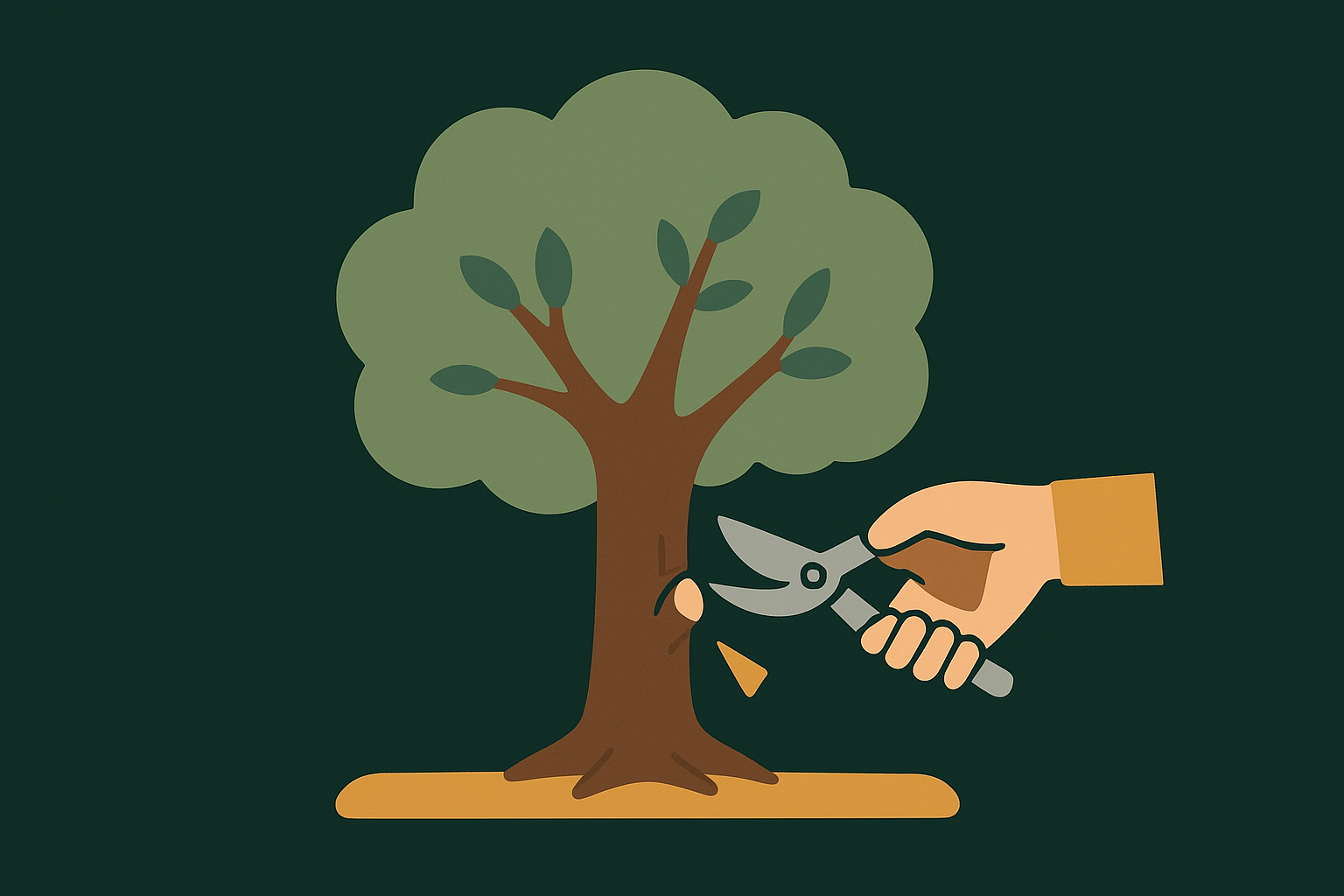
Cut in late summer and the tree gets the opposite signal. It is slowing down for winter, yet the pruning pushes out tender new shoots that may not harden before the first frost. Cold damage and slow-healing wounds are the usual result.
What good timing gets you
Choosing the right season supports the reasons you trim in the first place:
- Safety: you remove weak or dead limbs before winter storms test them.
- Health: clean cuts in the dormant season limit decay and pest entry.
- Structure: with no leaves, you can see crossing branches and open up the canopy for light and airflow.
- Flowers and fruit: you cut at the point that protects next season's buds.
The best trim is the one made when the tree can seal the cut fastest.
How to choose the right time for your tree
Start with the dormant window, then adjust for what your particular tree does. That two-step check settles the question for nearly every yard tree.
Start with the dormant window
For most deciduous trees, the dormant season runs from late fall, after the leaves drop, to very early spring. The sweet spot is late February to early March , after the hardest cold but before buds break. Trimming then lets callus tissue start early in the growing season.
Winter trimming has practical advantages too. A bare tree shows you every crossing limb, weak union, and dead branch. Insects and fungi are quiet, so fresh cuts are less likely to be infected.
Match the cut to your tree type
Use this table as a quick reference:
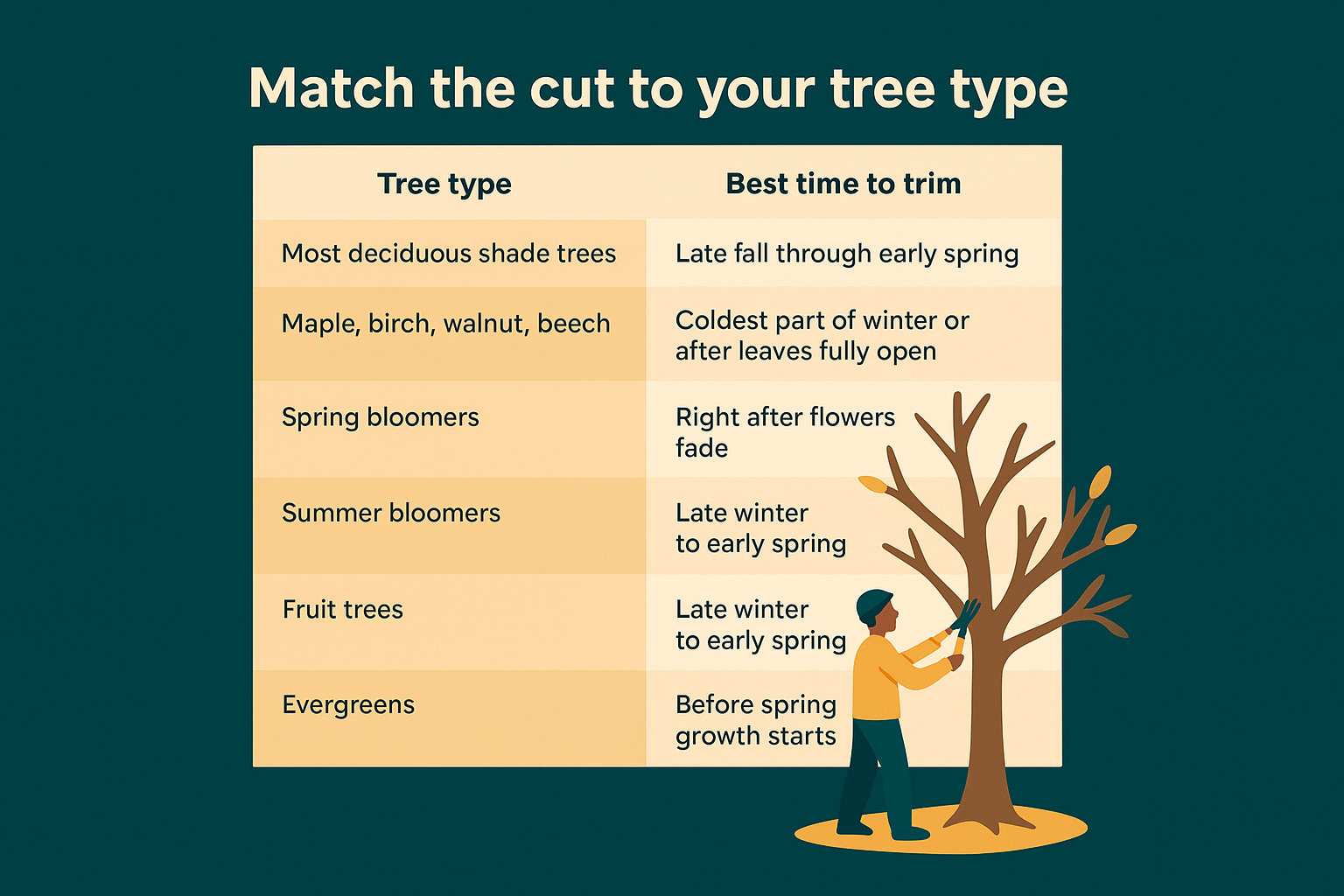
| Tree type | Best time to trim | Reason |
|---|---|---|
| Most deciduous shade trees | Late fall through early spring, ideally February to March | Structure is visible, pests are dormant |
| Maple, birch, walnut, beech | Coldest part of winter, or after leaves fully open | Avoids heavy sap flow |
| Spring bloomers (flowering cherry, crabapple, dogwood, saucer magnolia) | Right after flowers fade | Buds form on last year's wood |
| Summer bloomers (crape myrtle) | Late winter to early spring | Flowers form on new growth |
| Fruit trees | Late winter to early spring | Opens the canopy to sun, avoids early-winter injury |
| Evergreens (except pine) | Before spring growth starts | Follows natural branching |
| Dead, diseased, or damaged limbs | Any time | Safety and tree health |
Know the two common surprises
Maples, birches, and walnuts "bleed" sap when cut in late winter and early spring. It looks messy, but bleeding does not harm the tree . If it bothers you, trim in the coldest part of winter or wait until the leaves have fully emerged.
Spring-flowering trees are the bigger trap, and among the plants you should never prune in winter. They set next year's blooms on old wood during summer, so a February trim removes the flowers before they open. Trim those trees right after the petals drop.
When not to trim, and when you should anyway
Avoid routine trimming in late summer and early fall, and do not wait for the calendar when a limb is dead, hazardous, or storm damaged. The calendar governs elective work. Safety overrides it.
Late summer, fall, and June
Late summer and fall are the worst window. The tree is shutting down, and cuts push soft growth that winter can kill. Wounds also close more slowly than they would in late winter.
June is not a disaster, but it is not ideal. Most deciduous trees tolerate light work in late spring or early summer. You will just see less structure, and pests are more active. Heavy summer cuts add heat stress, so water the tree well if you must trim then.
Too early, and when hazards can't wait
Pruning too early causes its own problems. A tree planted this year needs a year to build roots, so limit it to corrective cuts. A spring bloomer trimmed in winter loses its flowers, and a fruit tree trimmed in early winter can be injured by cold before it regains hardiness.
Trim these right away, in any season:
- Dead or diseased branches
- Limbs broken in a storm
- Branches hanging over your roof
- Limbs growing toward power lines(call your utility or a qualified pro, never do this yourself)
A hazard never has to wait for February.
Tree trimming timing in Vancouver and Portland
In the Pacific Northwest, the dormant window still works, but our wet winters and dry summers shape how you use it. Aim for late winter, pick dry days when you can, and avoid heavy summer cuts.
What wet winters and dry summers change
Winter here is long and damp, so dormant trimming is easy to schedule from leaf drop onward. Fresh cuts are best made on dry days, since wet conditions favor fungi. Our summers turn hot and dry, which stresses trees. Heavy summer trimming adds to that stress.
That is why we schedule most trimming for February and March , the same window we recommend for our Tree Trimming service. Mature trees that stay strong through wet winters and dry summers usually have a seasonal tree care plan behind them, not one emergency cut.
A year-round trimming calendar
| Time of year | What to do |
|---|---|
| Late fall to January | Trim most deciduous trees once leaves have dropped |
| February to March | Prime window for most trees, fruit trees, and summer bloomers |
| April to May | Trim spring bloomers after flowers fade, evergreens before new growth |
| June to July | Light work only, and water the tree |
| August to October | Skip routine trimming, except hazards |
How much to take off
Never remove more than 25% of the living canopy in one season . Heavy cuts starve the tree of the leaves it uses to make food. Say a tree needs 40% of its canopy thinned. Take up to 25% this winter, then finish the rest the following winter.
Spread big trims over two winters instead of stressing the tree in one.
How to make the cut, and when to call a pro
A good cut is just outside the branch collar, and big or high work belongs with a licensed, insured crew. Clean cuts at the right time are what let the tree heal.
The three-cut method for large branches
Use this tree trimming technique to remove any branch too heavy to cut in one pass, so the bark doesn't tear:
- Cut about one-third of the way through the branch from underneath, a foot or so from the trunk.
- Cut through from the top, a short distance beyond the first cut, to drop the branch.
- Remove the remaining stub just outside the branch collar, the swollen area where the branch meets the trunk.
Do not cut flush with the trunk, because that creates a large wound and removes the tissue that heals best. Skip pruning paint and sealants as well, since they are generally not recommended.
DIY or professional
Small, young trees are fine for hand pruners, loppers, and a pruning saw. Anything that needs a ladder, a chainsaw overhead, or work near wires should go to professionals. Tree trimming prices from Alexa's Tree Service typically run $200 to $800+ , depending on tree size and the amount of work. We are licensed and insured, and we clean up branches and debris afterward. You can get a free estimate on request.
If the job needs a ladder or lines are nearby, hire it out.
Pick your window and book early
For most trees, the answer to tree trimming timing is the dormant season, with February and March the best months here. Adjust for bleeders, spring bloomers, and evergreens, avoid late summer and fall, and trim hazards whenever they appear. Keep each season's cuts under 25% of the canopy.
Late winter is also when trimming schedules fill up. If you want a professional assessment before your trees break bud, request a free estimate for professional tree trimming from Alexa's Tree Service and we will tell you what your trees need and when.