
Tree Trimming and Removal: How to Hire and Compare Quotes
The way to handle tree trimming and removal is to define the job first, check permit and property-line rules, hire a licensed and insured crew, compare three written quotes for the same scope, and schedule the work off-peak. In the Vancouver, WA and Portland, OR area, trimming typically runs about $200 to $800 and removal about $300 to $2,000 or more, depending on tree size, access, and risk.
The hard part is that quotes for the same tree can differ by hundreds of dollars, and nobody explains why. After a windstorm, unlicensed crews knock on doors. A bad hire can mean a damaged roof, a butchered tree, or an injury claim that lands on you. Most homeowners learn what a fair quote looks like only after paying for the wrong one.
This guide walks you through the process in four steps, from deciding what the tree needs to preparing your yard on the day of the work. We have worked on residential and commercial properties around Vancouver and Portland since 2006, so the ranges and checks below come from real jobs.
What drives tree trimming and removal costs
Tree trimming and removal costs depend on the labor and risk a job carries, not just the height of the tree. Two trees of the same size can differ by a thousand dollars if one hangs over your roof.
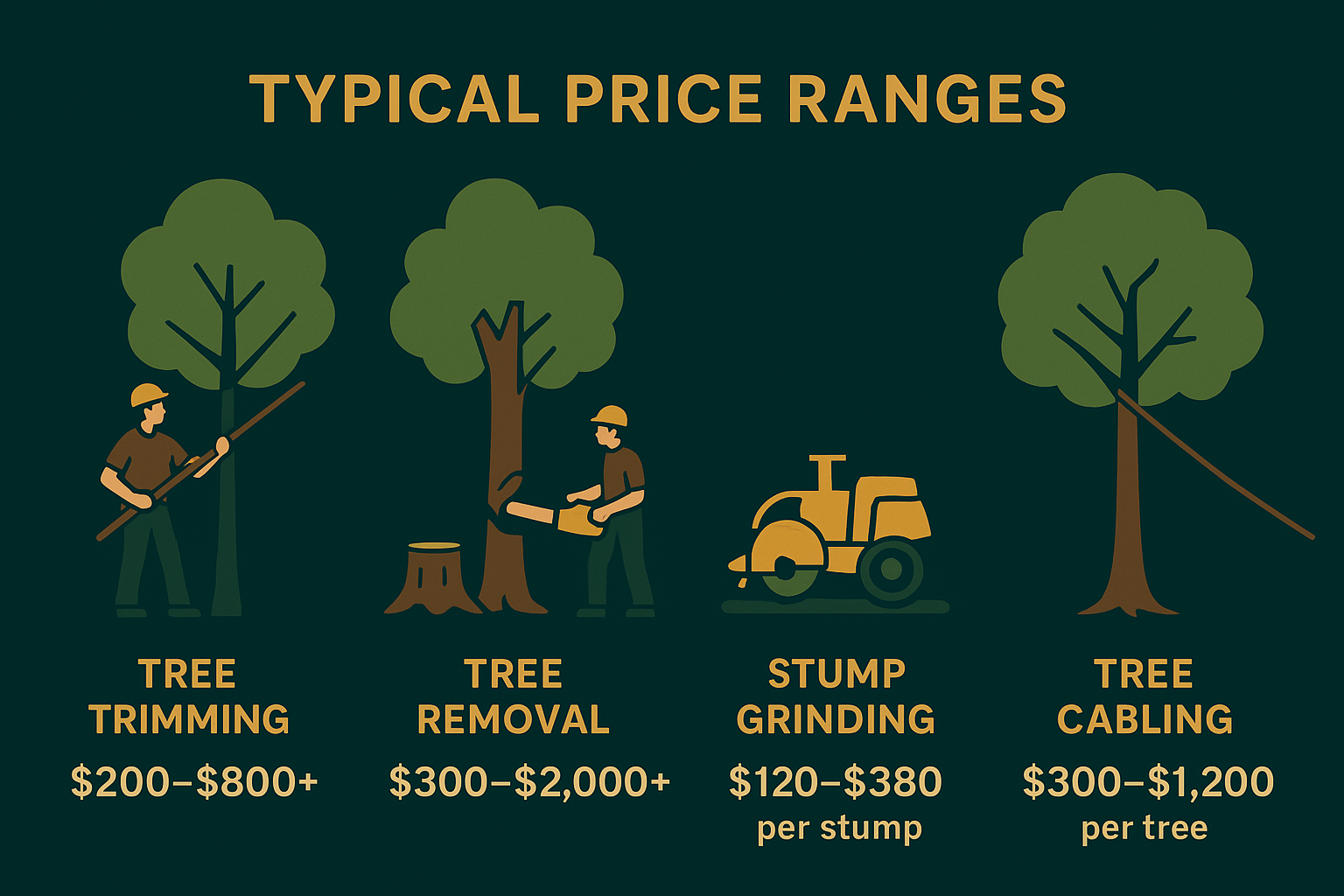
Typical price ranges
These are the ranges we quote for the Vancouver and Portland area. Very large or hazardous trees can exceed them.
| Service | Typical range | What to know |
|---|---|---|
| Tree trimming | $200–$800+ | Rises with height and branch count |
| Tree removal | $300–$2,000+ | Large, hazardous, or hard-to-reach trees sit at the top |
| Stump grinding | $120–$380 per stump | Grinds 6–12 inches below grade |
| Tree cabling | $300–$1,200 per tree | An option for saving a weak or split tree |
Trimming usually costs less than removal for the same tree, but the ranges overlap. Pruning a tall, mature tree near power lines can cost more than taking down a small ornamental.
What moves your quote
Six factors explain most of the gap between one quote and another:
- Height and trunk diameter
- Access, meaning whether a bucket truck can reach it or a climber must rope pieces down
- Distance to your house, fences, and power lines
- Condition, since dead or rotted wood is unpredictable and slower to work
- Haul-away of logs, branches, and chips
- Add-ons such as stump grinding or permit paperwork
A worked example
Say a backyard fir needs removal at $900, plus $200 to grind the stump. Bundling the two saves $45 to $75 compared with booking them separately, so you pay $1,025 to $1,055 . Add $450 to trim a maple on the same visit and the day totals $1,475 to $1,505 . The figures are illustrative, but the arithmetic is the one to run on your own quotes.
The price follows the risk and the labor, so a cheap-looking tree next to your roof is rarely cheap.
Step 1. Define the job and check the rules
Decide whether the tree needs trimming or removal, then confirm what your city and your neighbor allow before anyone starts a saw. This takes an afternoon and prevents most disputes later.
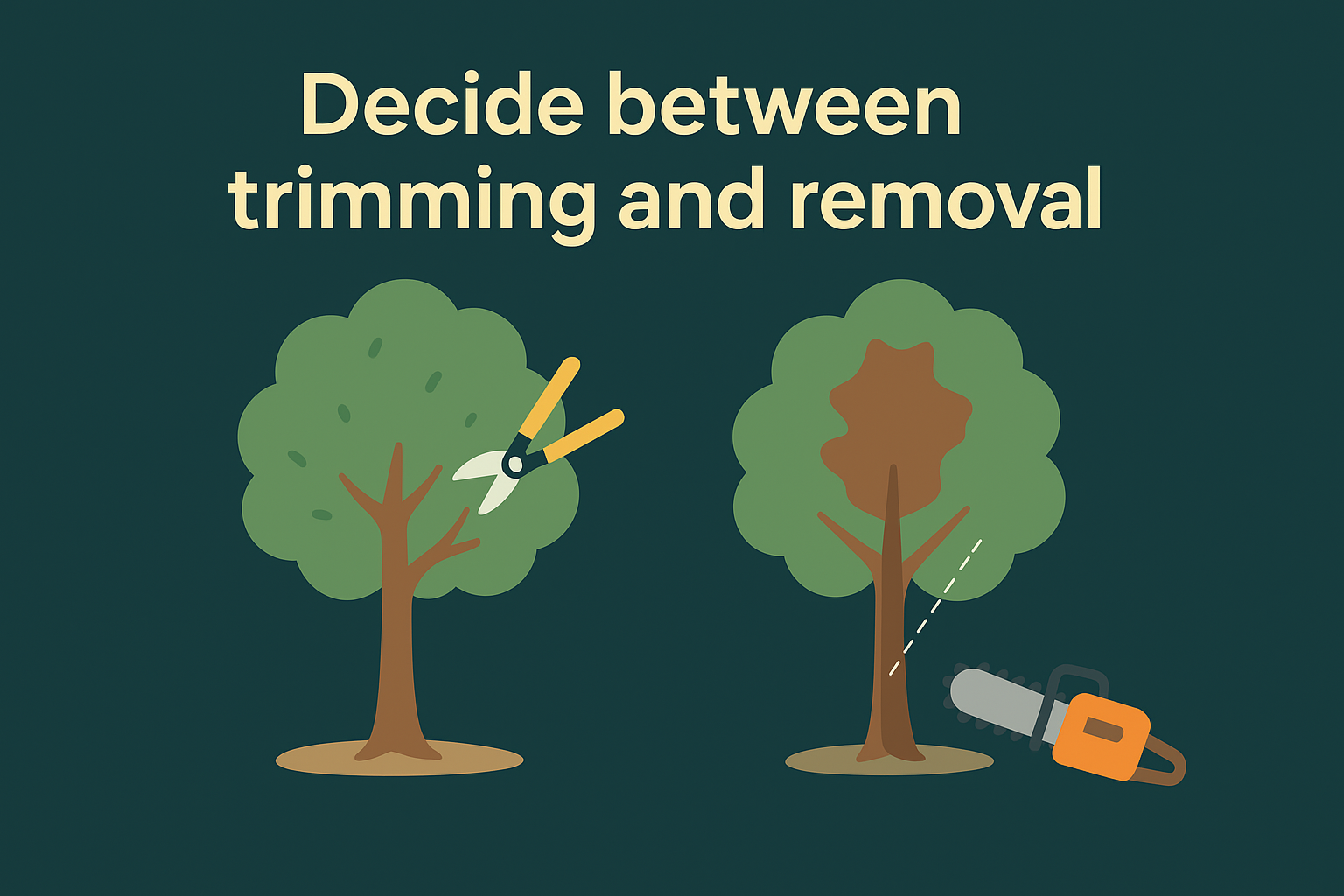
Decide between trimming and removal
Trim when the tree is structurally sound and the problem is dead branches, crowding, clearance, or shape. Remove when the tree is a safety risk. Warning signs include:
- A cracked or split trunk
- A large dead section of the canopy
- Fungus or soft, rotted wood at the base
- A lean with soil lifting around the roots
- Repeated limb drops
If a valuable tree is weak but not failing, ask about cabling. Properly installed cables support split or heavy limbs for 10 to 20+ years. For trimming, never remove more than 25% of the living canopy in one season.
Check permits and property lines
Removal rules vary by city and county, and by tree size, species, and location, so confirm with your local jurisdiction before cutting . In Vancouver, WA, permit processing takes 5 to 10 business days, which can shape your schedule. We have helped with permit paperwork on 31 Vancouver properties from 2024 to 2026. Portland and Oregon cities have their own tree codes, so check yours.
If the tree sits on a property line or belongs to a neighbor, get written agreement before any work. In Washington, courts can award triple damages for trees wrongly cut on someone else's land. Branches that cross onto your side can generally be trimmed back to the line without harming the tree. For a real dispute, talk to an attorney.
Settle the permit and ownership questions before the first quote, because a delay changes your schedule, not just your paperwork.
Step 2. Vet companies before you request quotes
Only consider a tree trimming and removal company that can show current liability insurance and workers' compensation, holds the licenses your state requires, and has a local track record. Check these before you invite anyone onto your property.
Ask for proof, not promises
Request these items by phone or email:
- A certificate of liability insurance, ideally sent by the insurer, with coverage dates
- Proof of workers' compensation for the crew
- The state and local business license or registration that applies, which you can look up yourself
- A local address and a named person who will do the estimate
- For valuable trees, whether a certified arborist reviews the work
Insurance matters most. If an uninsured worker falls or a limb goes through your roof, you may end up paying.
Read reviews and watch for red flags
Look for recent, detailed reviews that mention cleanup, communication, and whether anything was damaged. Volume helps. Our own record is 180+ five-star Google reviews, a fair benchmark for an established local crew. Walk away when you see:
- Pressure to decide on the spot
- A large cash deposit demanded up front
- Unsolicited door knocking after a storm
- "Topping," which cuts main branches to stubs and harms the tree
- Climbing spikes used on a tree you plan to keep
Ask for the insurance certificate before the estimate, not after the work.
Step 3. Get and compare three written quotes
Request at least three written quotes for the identical scope, then compare them line by line. Most reputable companies, including us, give free estimates by phone or online form.
What a good quote includes
A usable quote names each tree and the work on it. Make sure it states:
- Which trees are covered and where they are
- The exact work: trim to what, remove, or grind
- Whether the crew hauls away logs, branches, and chips
- Whether stump grinding is included and to what depth
- Who handles any permit
- The total price, payment terms, and a start date
How to compare them
Compare scope before price. A $600 quote with no haul-away can cost more than a $750 quote that includes cleanup and stump grinding. Rewrite each quote to the same scope , then compare totals.
A large gap between quotes is a signal, so ask each company to explain what it plans to do. A good estimator walks the property, looks up at the canopy, and notes what sits below it. If a quote arrives without a site visit, treat the number as a rough guess.
A quote is only cheap if it covers the same work as the others.
Step 4. Time the work and prepare your property
Schedule trimming in late winter and healthy-tree removal outside storm season, then prepare your yard so the crew works quickly and safely. Good timing and prep keep the final bill near the quote.
Pick the right time of year
For trimming, February to March is the best window. The tree is still dormant and the branch structure is easy to see. No month guarantees a discount, but crews are stretched after storms, so booking a healthy-tree removal outside storm season helps you avoid paying for urgency. A dead or hazardous tree should not wait. We run storm cleanup around the clock for emergencies.
If you also want the stump gone, book it with the removal. Bundling saves $45 to $75 versus separate visits.
Get ready for the work day
Most residential jobs take 2 to 8 hours. Before the crew arrives:
- Move cars and outdoor furniture out of the drop zone.
- Clear a path to the tree and unlock any gates.
- Mark sprinkler heads and shallow lines.
- Keep children and pets indoors.
- Confirm the start time and who will be on site.
When the crew finishes, walk the property with the crew lead before you pay . Check the lawn, fence, and roof, confirm the debris is gone, and verify that the stump depth matches the quote.
Book trimming for February or March and removal outside storm season, and you stop paying a premium for urgency.
Start with a written estimate
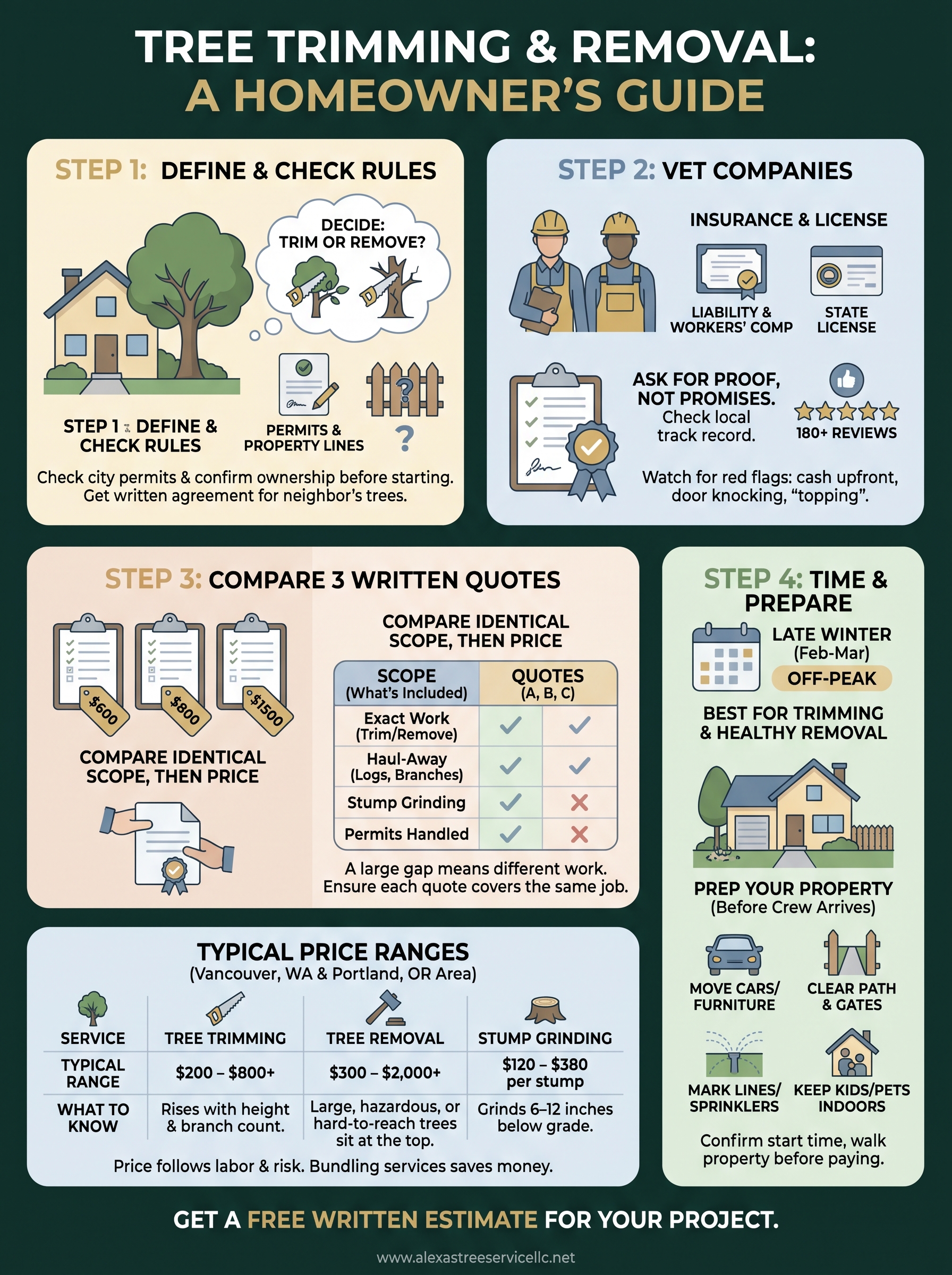
Good tree trimming and removal comes down to a few decisions made in order. Know whether the tree needs trimming or removal, confirm permits and ownership, verify insurance and licensing, compare three quotes on the same scope, and choose the season. Do that and the price you agree to is close to the price you pay.
If you are in the Vancouver or Portland area and want a second quote for your comparison, you can request a free estimate from Alexa's Tree Service. Have photos of the trees and a note about what sits beneath them ready, and the conversation will go faster.