Service Tree Removal: 5 Options to Compare Before You Book
The best service tree removal company is a licensed, insured crew that gives you a written quote, shows proof of insurance, and cleans up after the job. The right type of provider depends on your tree. A local full-service crew fits most homeowners, a certified arborist fits large or protected trees, a national brand fits owners who want ongoing care, and a utility or city program fits trees that touch power lines or sit on public ground.
Searching for tree removal gives you pages of near-identical promises: free estimates, fair prices, fast service. Meanwhile the tree is leaning, dropping limbs, or hanging over your roof. A wrong hire can mean a damaged fence, an uninsured injury on your property, or a bill twice the quote.
This guide compares five options in the Portland-Vancouver area, starting with our own crew at Alexa's Tree Service. Each option gets the same three checks: what it is, who it suits, and what to watch for on cost. After the list, you get a breakdown of what drives the price, with a worked example, and a checklist for comparing quotes.
1. Alexa's Tree Service
Alexa's Tree Service is a good fit when you want one licensed local crew to handle the removal, the stump, the cleanup, and the paperwork. It is the option we know best, so we describe it plainly.
What it is
Alexa's Tree Service LLC is a licensed and insured tree company working in Vancouver, WA, Portland, OR, Camas, Battle Ground, Ridgefield, Gresham, Beaverton, and Lake Oswego. It has operated since 2006 and has 180+ five-star Google reviews . It removes hazardous, diseased, and unwanted trees, and also offers stump grinding, trimming, cabling, and 24/7 storm cleanup.
A job starts with a free estimate by phone at (360) 723-6688 or through the online form. The crew then removes the tree and hauls away branches, debris, and leftover materials. In Vancouver, the company also helps with tree removal permits . It has done so for 31 properties between 2024 and 2026.
Who it suits
Homeowners with a dead, diseased, or storm-damaged tree are the core audience. Business owners are the other. Commercial work is a separate service line, scheduled around business hours, for trees near entrances and parking lots.
- Homeowners who want removal and stump grinding in one visit
- Property managers who need hazard trees cleared without disrupting customers
- Anyone in Vancouver who needs help with a permit
Cost and what to check
Residential removal runs from $300 to $2,000+ , and most residential jobs take 2 to 8 hours. The estimate is free. Whichever company you choose, confirm that the written quote names the stump, the haul-away, and the cleanup as included or excluded. If your city requires a permit, ask who files it and how long it takes. Permit processing runs 5 to 10 business days.
A local crew that handles removal, stump, cleanup, and permits saves you from coordinating three vendors.
2. Certified arborist company
Choose a company led by ISA Certified Arborists when the real question is whether the tree needs to come down at all.
What it is
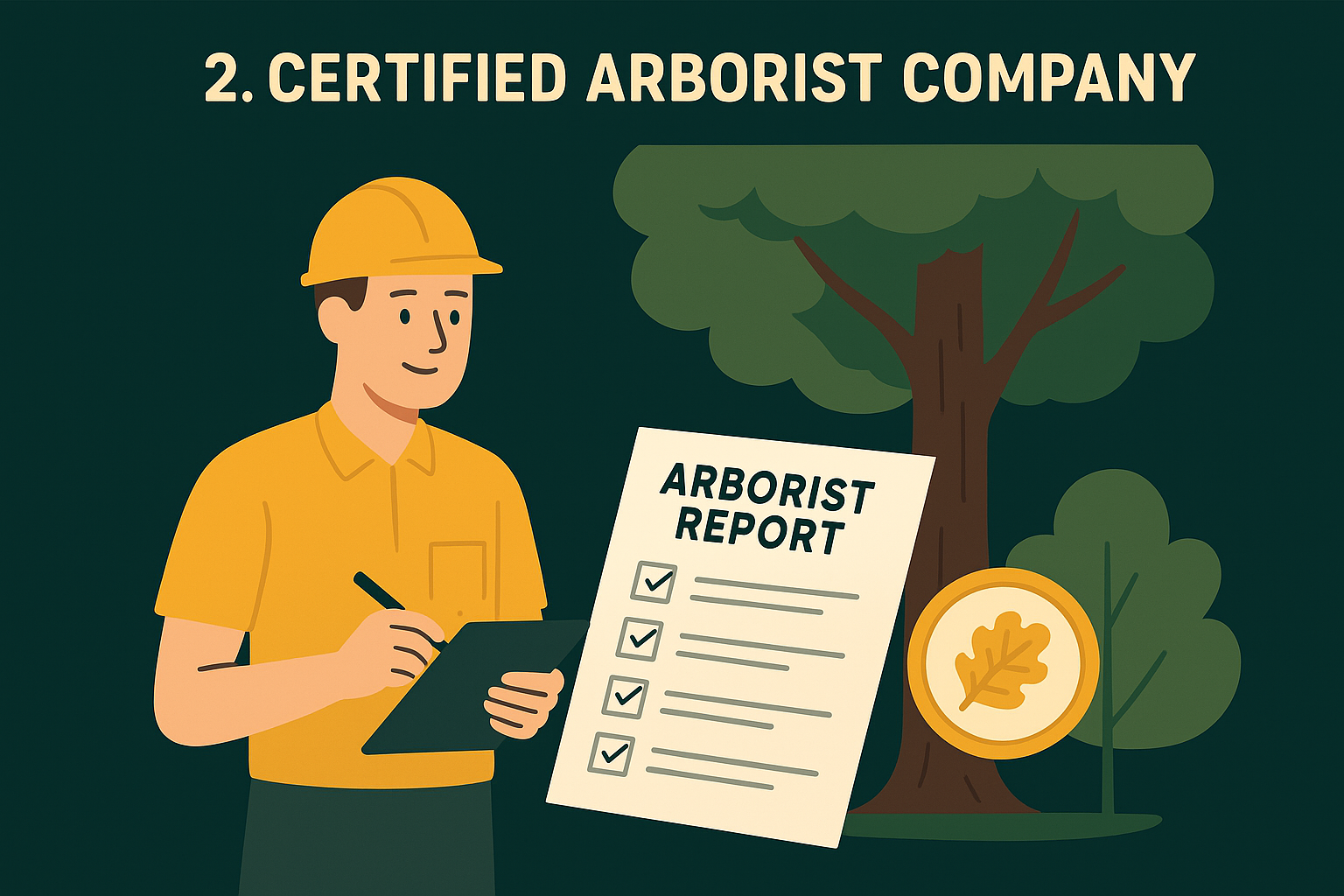
These companies diagnose tree health, write arborist reports , and recommend removal only when other options fail. An ISA credential means the arborist has passed an exam on tree biology, diagnosis, and safe work practices.
Some of these firms also do the removal. Others only consult and refer the work out. Either way, the written report gives you something useful when one crew says "remove it" and another says "it can be saved."
Who it suits
This option fits mature trees that add real value to your property. It also fits trees that may be protected by local rules, and disputes with a neighbor, landlord, HOA, or insurer where you need an independent opinion on risk.
- Large Douglas firs, bigleaf maples, and oaks near the house
- Trees you suspect are protected or require a permit
- Cases where a written risk assessment will be shared with others
Cost and what to check
Expect to pay a consultation fee, and expect removal prices that are not the lowest in your area. The fee buys a documented opinion. Ask for the arborist's certification number and look it up in the ISA directory. Also ask whether the consulting fee is credited toward the work if you hire the same company.
Pay for a certified opinion when the question is whether to remove the tree, not just how.
3. National tree-care company
A large national brand makes sense when removal is one part of a longer relationship with the same provider.
What it is
National companies run local offices with standardized estimating, scheduling, and safety programs. An estimator usually visits first, and a separate crew does the work. Many also sell year-round care programs such as fertilization, pest treatment, and disease monitoring.
Some hold accreditation from the Tree Care Industry Association, which audits safety and business practices. That is a useful signal, but it describes the company, not the specific crew that shows up at your house.
Who it suits
This option suits owners who want a single provider for removal now and plant health care later. It also suits people who prefer a formal process, with a booked estimate, a written proposal, and a set schedule.
- Owners of several valuable trees who want ongoing treatment
- Buyers who weigh accreditation and formal safety programs heavily
- Property owners outside the core service area of smaller local crews
Cost and what to check
National brands often price above small local crews , because the overhead of offices, estimators, and programs is built into the quote. Ask whether the people on your job are employees or subcontractors, and confirm that the local office covers your town. If you only need one removal, compare the quote line by line against a local crew's before you accept.
Pay for the brand only if you will use the ongoing care programs that come with it.
4. Small independent crew
A one- or two-truck operator can be the cheapest route to a good removal, but only for the right tree.
What it is
These are owner-operators found through word of mouth, neighborhood groups, or online marketplaces. The person who quotes the job is often the person running the saw. That can mean fast scheduling and flexible pricing.
It also means quality varies more than with any other option. Some independents are excellent. Others work without proper insurance or training. You have to verify the crew yourself.
Who it suits
Small, simple removals are where an independent crew makes the most sense. Think of a young tree in an open yard, well away from the house, fences, and power lines. Budget-driven jobs with easy access are the sweet spot.
- A small ornamental or fruit tree with a clear drop zone
- Cleanup of a few downed limbs after a windy night
- Not suitable for trees over roofs, pools, or wires
Cost and what to check
Quotes are usually the lowest you will see , but the risk moves to you. Ask for a certificate of insurance showing general liability and workers' compensation, and call the insurer to confirm it is active. If an uninsured worker is hurt on your property, you may face a claim. Ask for recent local references, a written scope of work, and avoid paying a large deposit up front.
The cheapest quote is only cheap if the insurance certificate checks out.
5. Utility and city programs
Sometimes the right service tree removal call is not to a contractor at all. Utilities and cities manage certain trees, and they usually do it at no charge to you.
What it is
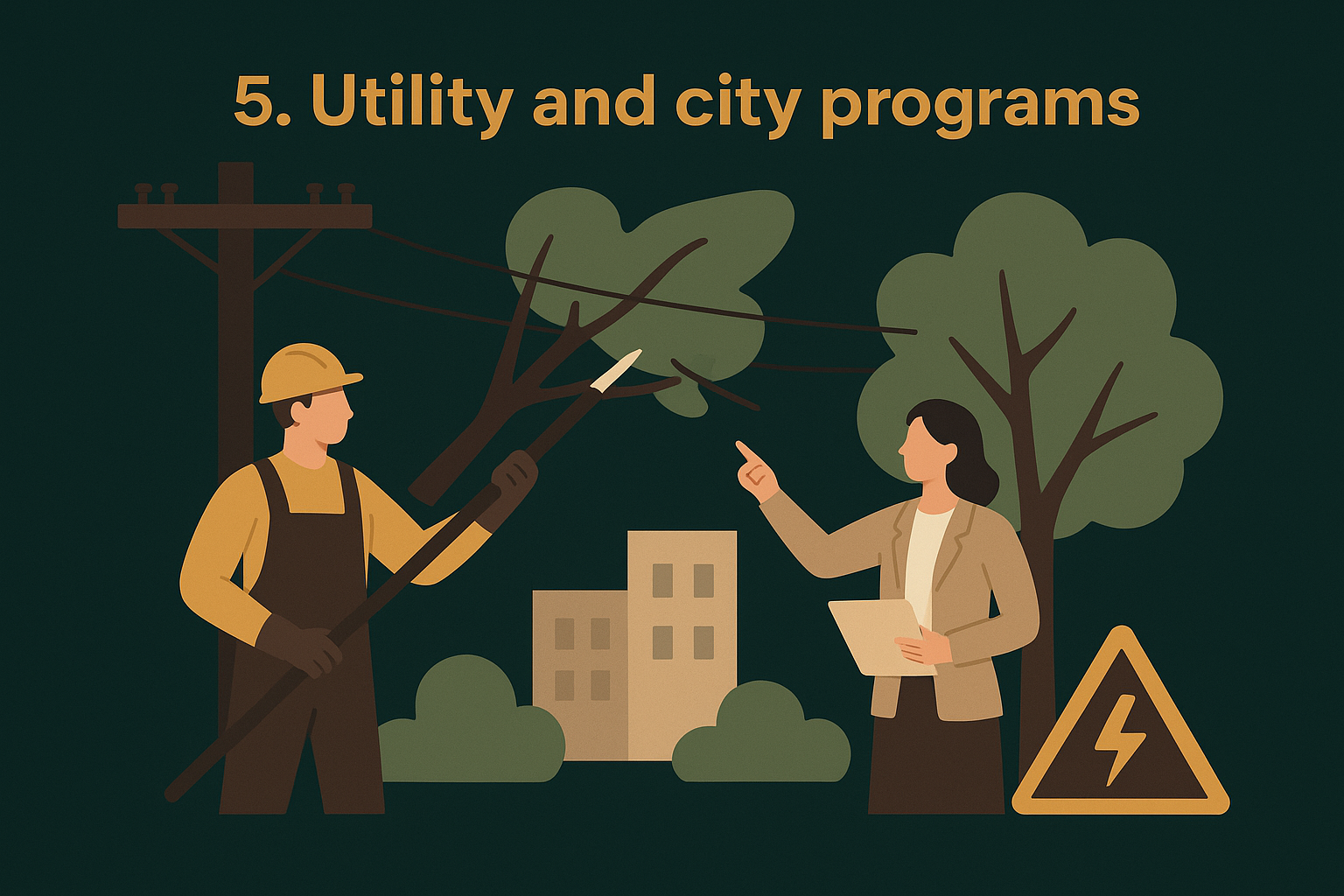
Your electric utility is generally responsible for clearing trees that threaten its own lines. Your city manages trees on public land, including street trees in the planting strip. These are programs, not services you hire, so the utility or city decides what happens and when.
Neither typically removes a healthy tree in your private yard for free. Searches for free tree removal usually lead here, and the honest answer is that free removal applies only when the tree is the utility's or the city's responsibility.
Who it suits
Owners of a tree touching or leaning into a power line should call the utility first. So should anyone with a street tree on public ground that looks dead or dangerous. Keep people and equipment well away from any tree in contact with a line, and never cut it yourself.
- Branches touching or near service lines to your house
- A city-owned street tree that is dead, split, or leaning
- Not suitable for healthy private trees you simply want gone
Cost and what to check
When the tree is theirs, there is usually no charge . Start by asking whether the tree is yours or theirs, then ask about timing. If the utility declines because the tree is on your side of the line, hire a crew trained for work near energized lines. Also check with your city before removing any tree in a public right-of-way.
If a tree touches a power line, call the utility first and keep everyone away from it.
What drives the price of tree removal
Tree removal costs depend on the tree's size, condition, and location far more than on the company's sign. A fair quote reflects the work of getting that specific tree down safely.
What changes the quote
Each factor below can move a price up or down. Quotes that ignore them are either guessing or leaving something out.
| Factor | Why it changes the price |
|---|---|
| Height and trunk diameter | Bigger trees take more time, rigging, and haul-away |
| Access | Fenced yards, slopes, and no truck access mean more hand work |
| What is underneath | Roofs, pools, fences, and wires require careful sectioning or a crane |
| Tree condition | Dead or rotten wood is unpredictable and slower to cut safely |
| Stump grinding | Usually a separate line, priced per stump |
| Haul-away and cleanup | Some quotes leave wood or debris on site |
| Emergency or after-hours work | Urgent hazards cost more than scheduled jobs |
A worked example
Height alone does not set the price, so a 30-foot tree can land anywhere in the range. A large tree with tight access or sitting over a structure can reach $1,000 and well beyond . This example uses Alexa's published ranges for a mid-range tree with a stump.
| Line | Amount |
|---|---|
| Medium tree removal | $800 |
| Stump grinding | $200 |
| Subtotal | $1,000 |
| Saving from bundling both in one visit | $45 to $75 |
| Total | $925 to $955 |
The cheapest tree removal is the quote with the narrowest scope. Compare totals only after you confirm that each quote includes the same work.
Compare scope before price, because a low quote that excludes stump and cleanup is not the lowest.
How to compare quotes and what to expect
Get at least two written quotes and compare them line by line against the same checklist. A good quote reads like a work order, not a number on a card.
Checklist before you sign
Work through these steps with every company, including ours.
- Ask for a certificate of insurance showing general liability and workers' compensation, and for proof of license where your state requires one.
- Get the scope in writing: which trees, whether the stump is ground, and whether wood and debris leave the property.
- Check for permit requirements with your city. Confirm who files and who pays.
- Ask for the start date and how long the crew expects to be on site.
- Confirm payment terms, and be wary of large deposits or pressure to decide on the spot.
- Read recent reviews that mention cleanup and property damage, not just price.
Be cautious of any crew that offers to "top" a tree, meaning cutting main limbs back to stubs. It harms trees that stay and signals poor training.
What the job looks like
On the day, the crew walks the site, marks a drop zone, and protects the lawn and nearby structures. They then cut the tree down in sections, lowering the heavy pieces with ropes when space is tight. Most residential jobs finish in 2 to 8 hours, longer for large or crowded sites.
Afterward, the crew should rake and clear branches and debris. If stump grinding is included, the stump is ground 6 to 12 inches below grade. Walk the property with the crew lead before you pay, and point out anything you want finished.
A good quote reads like a work order: it names the tree, the stump, the haul-away, and the cleanup.
Picking your tree removal crew
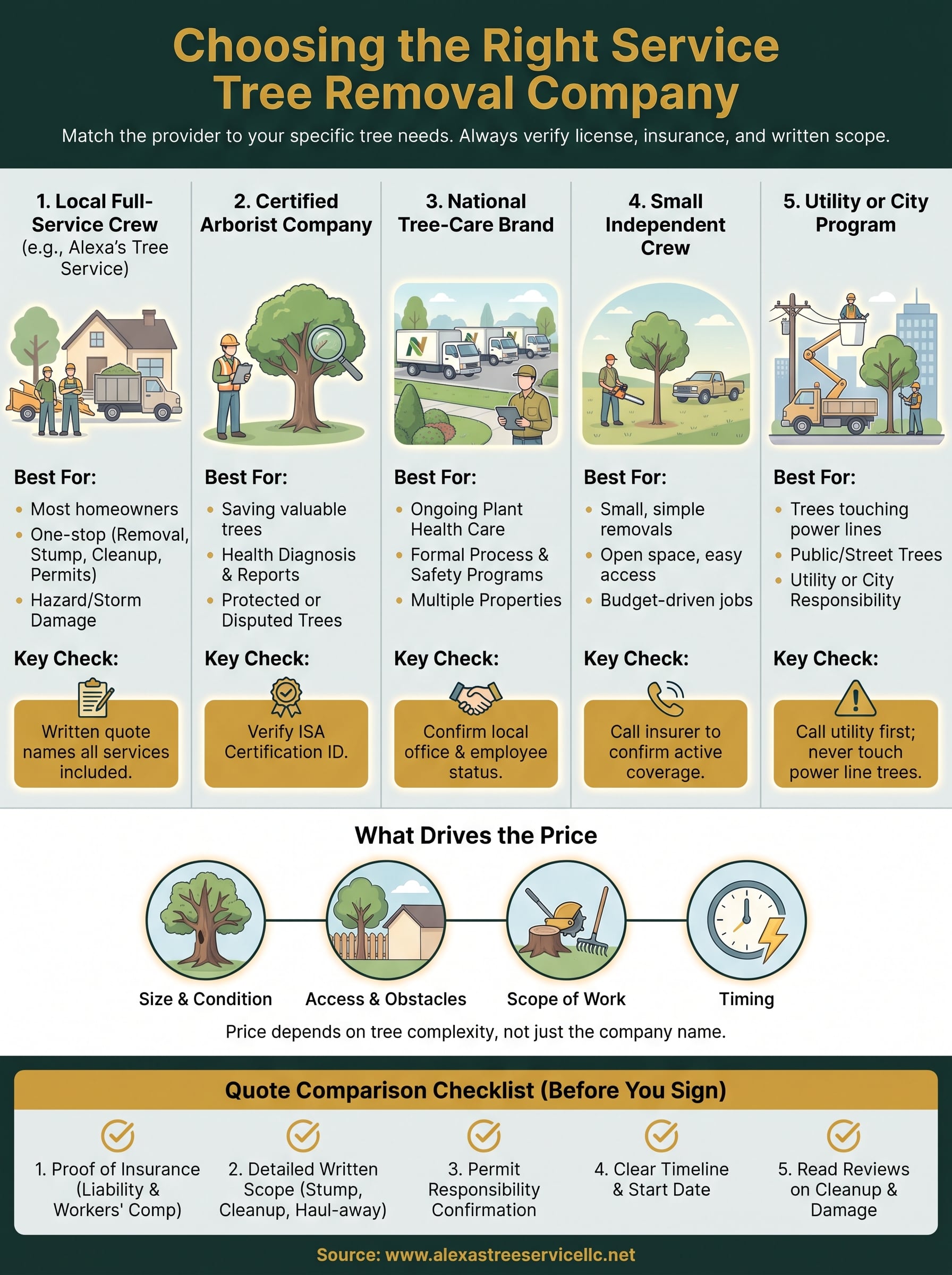
The right provider depends on the tree. A local licensed crew handles most removals, a certified arborist settles whether a tree should go, a national brand fits ongoing care, an independent crew fits small, simple jobs, and the utility or city handles trees on their side of the line. Whoever you choose, insist on proof of insurance and a written scope.
Compare at least two quotes on the same terms. Confirm what is included, who handles the permit, and what the cleanup covers. That takes an hour and protects you from most of the problems tree removal can cause.
If you are in Vancouver, Portland, or nearby and want a second quote, you can request a free estimate from Alexa's Tree Service.