
How to Grind a Tree Stump: Step-by-Step DIY Guide
That stump in your yard isn't just an eyesore. It's a tripping hazard, a mower obstacle, and a magnet for termites and carpenter ants once it starts to rot. If you're grinding a stump yourself for the first time, you need to know exactly what you're getting into before you rent equipment and end up with a half-finished hole in your lawn.
This guide walks you through tree stump grinding from start to finish: the machine you'll need, how deep to grind, and the safety steps that keep you from getting hurt or damaging buried lines. We'll cover the real technique behind grinding a tree stump , not just the theory, so you can grind it down to a few inches below grade and get your yard back.
We've spent over 15 years removing and grinding stumps across Vancouver, Portland, and the surrounding Pacific Northwest, so we know where DIY jobs typically go sideways. Whether you're dealing with one small stump or sizing up a bigger job, this step-by-step breakdown will help you decide if it's a weekend project or one better left to a crew with the right gear.
What to know before grinding a tree stump
Before you rent anything, take stock of what you're actually dealing with, and it helps to understand the different ways to remove or grind a tree stump. Stump grinding isn't the same as digging out a root ball with a shovel, it's a controlled removal of wood fiber using a spinning cutting wheel, and the process changes depending on stump diameter, root depth, and how close the stump sits to structures, fences, or utility lines. A stump under 12 inches wide is a reasonable weekend project for most homeowners. Anything larger, or a stump tangled in a septic line or foundation, starts tipping the scale toward hiring a crew.
Renting the right grinder
Grinders come in a few size classes, and picking the wrong one either wastes your money or leaves you underpowered for the job, so it pays to compare rental rates against what stump grinding really costs by diameter and access. Home centers typically rent walk-behind models in the 13 to 25 horsepower range, which handles most residential stumps.
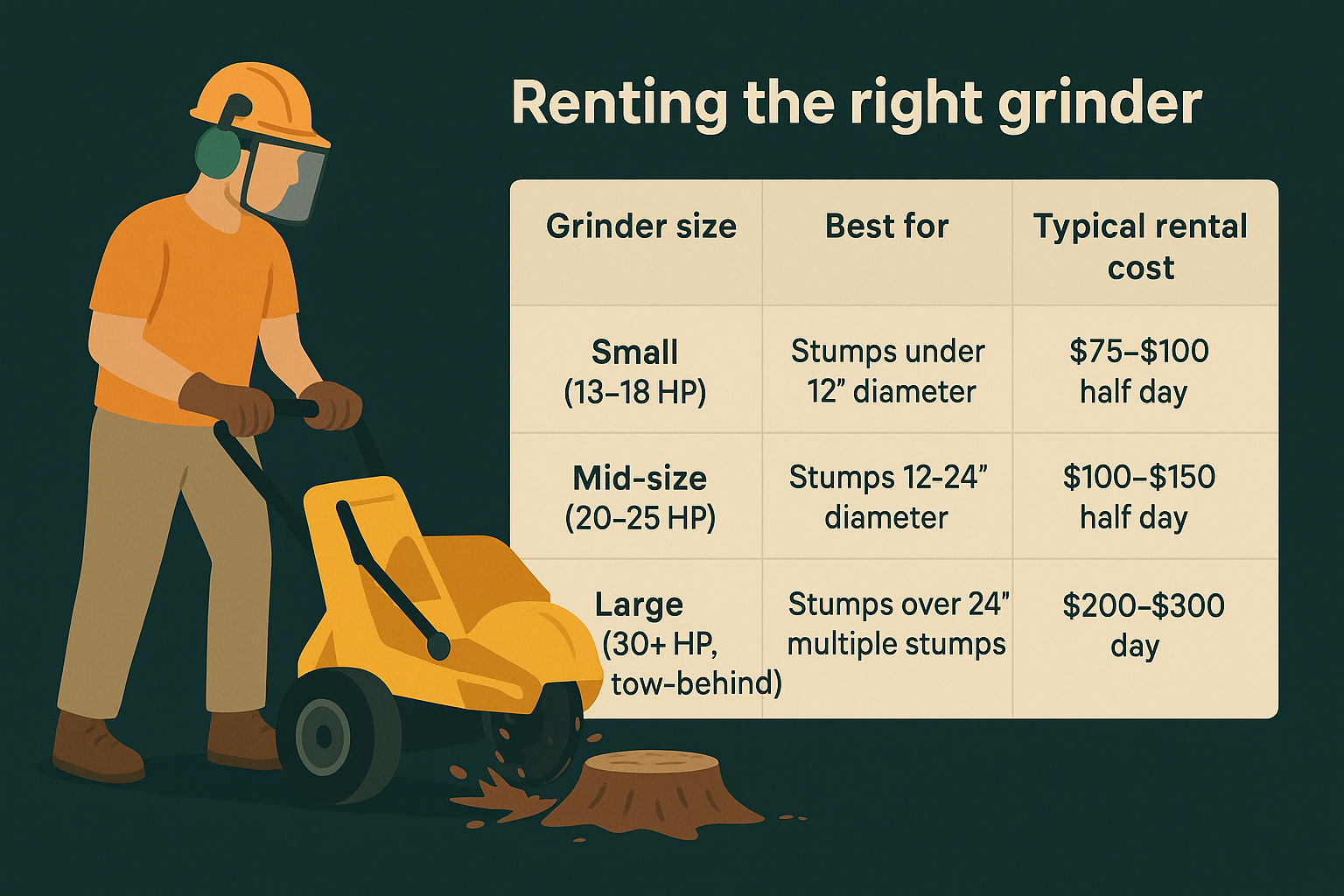
| Grinder size | Best for | Typical rental cost |
|---|---|---|
| Small (13-18 HP) | Stumps under 12" diameter | $75-$100/half day |
| Mid-size (20-25 HP) | Stumps 12-24" diameter | $100-$150/half day |
| Large (30+ HP, tow-behind) | Stumps over 24", multiple stumps | $200-$300/day |
Ask the rental counter to show you how the depth control and cutting wheel lock work before you leave the lot. A five-minute walkthrough saves you a frustrating hour in your yard.
Gear you can't skip
Safety equipment isn't optional here. A stump grinder throws wood chips and debris at high speed, and the cutting wheel has caused serious injuries when operators skip basic protection.
- Safety glasses or a full face shield
- Hearing protection (grinders run loud for extended periods)
- Steel-toed boots
- Heavy work gloves
- Long pants and a long-sleeve shirt, no loose clothing
Skipping eye and hearing protection is the single most common mistake first-time stump grinders make.
Finally, be honest about your physical capacity. Operating a walk-behind grinder means guiding a heavy machine back and forth for 30 minutes to over an hour depending on stump size, and it demands steady footing and upper body strength. If you have a bad back, uneven terrain, or a stump on a slope, factor that into your decision before you commit to the rental fee.
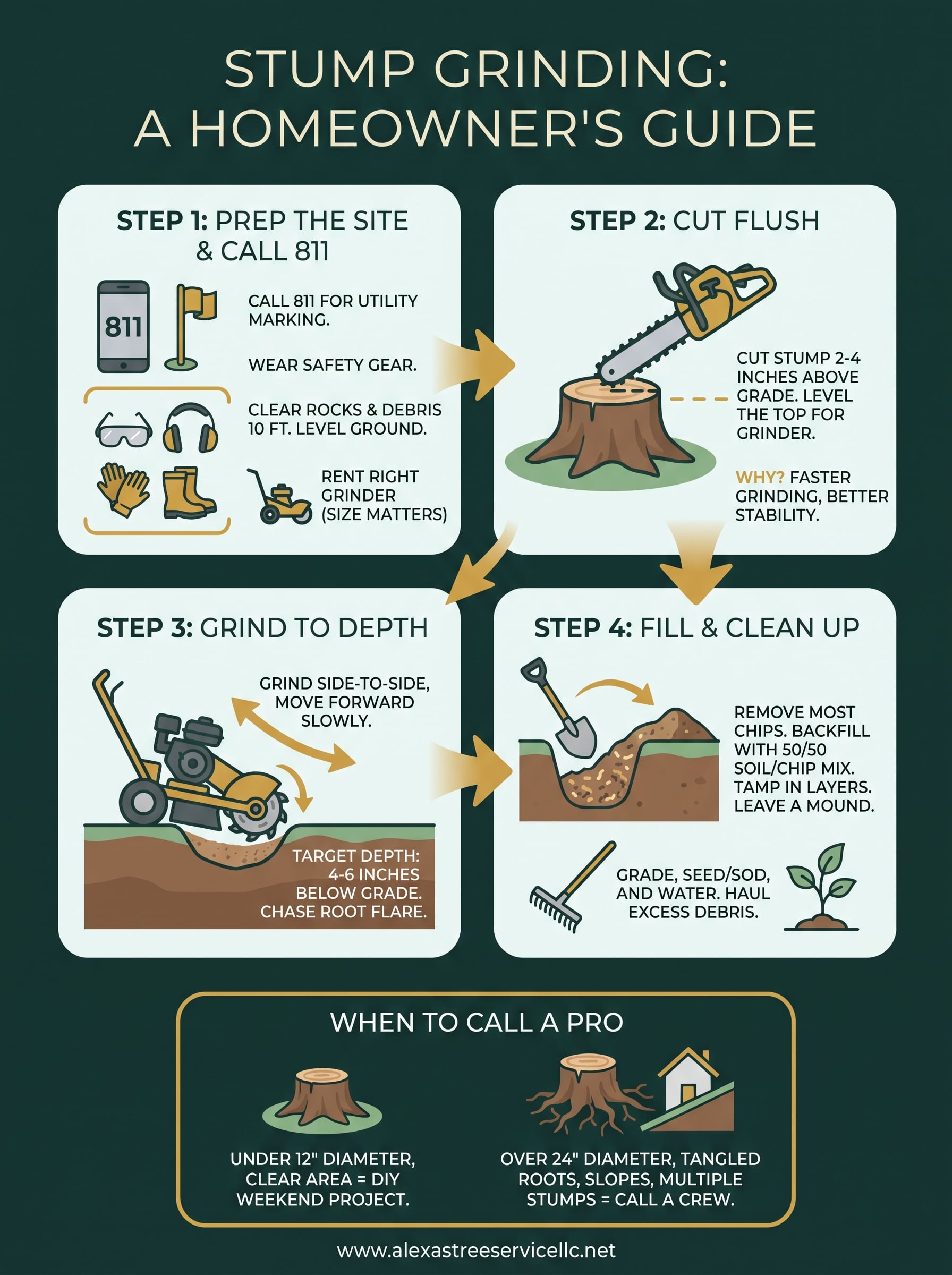
Step 1. Call 811 and prep the site
Before you touch a grinder, call 811 or submit a request through your utility company's website. This free service marks buried gas, electric, water, and cable lines within a few days, and grinding into a gas line or electrical conduit turns a weekend project into an emergency call. Vancouver and Portland both route through Washington and Oregon's 811 systems, and most requests get marked within 48 hours.
Skipping the 811 call is the fastest way to turn a stump job into a five-figure repair bill.
Clear the work area
Once your lines are marked, walk the stump site and clear anything that could interfere with the machine or fly loose during grinding. A grinder spinning at high RPM will launch rocks and buried debris just as easily as wood chips.
- Remove rocks, landscape edging, and sprinkler heads within 10 feet of the stump
- Rope off the area if kids or pets have access to the yard
- Note the location of any marked utility flags and keep the grinder wheel at least 2 feet away
- Check overhead for low branches or power lines that could snag the machine
Set up your footing
Grinding stump work goes faster when you're not fighting the terrain. Level out any soft or uneven ground around the stump with a shovel so the grinder's wheels sit flat, since a machine that rocks or tips mid-cut is both slower and more dangerous to operate. Position the grinder so you can walk it in a straight line across the stump face, giving yourself enough clearance behind you to back away if something goes wrong.
Step 2. Cut the stump flush to the ground
Before the grinder ever touches the wood, cut the stump down as close to the ground as you can with a chainsaw. A tall stump face forces the grinder to chew through extra wood it doesn't need to, which burns rental time and wears down the cutting teeth faster. Aim to leave no more than 2 to 4 inches of stump above grade, and cut the top as level as possible so the grinder wheel makes even contact instead of catching an angled edge.
Why height matters for grinding a tree stump
A flush cut also changes your stance and angle of attack once you start the machine. Working close to ground level keeps the grinder's swing arm in its ideal cutting range, and it lowers the center of gravity you're fighting while you push the machine back and forth. Skip this step and you'll find yourself grinding at an awkward height, which slows the job and increases the chance of the wheel skating off the wood.
A flush cut before grinding saves more time than any other prep step in the whole job.
Handling large or oddly shaped stumps
Wide or oddly shaped stumps need a different approach than a straightforward vertical cut. If the stump has flared roots or a wide base, cut it in sections rather than trying to level it in one pass.
- Cut the highest points first, working around the stump in a circle
- Remove any large surface roots that extend above ground level
- Check your cut with a level or straightedge before switching to the grinder
- Clear cut wood and sawdust away from the base so the grinder has a clean surface to work
Step 3. Grind the stump to the right depth
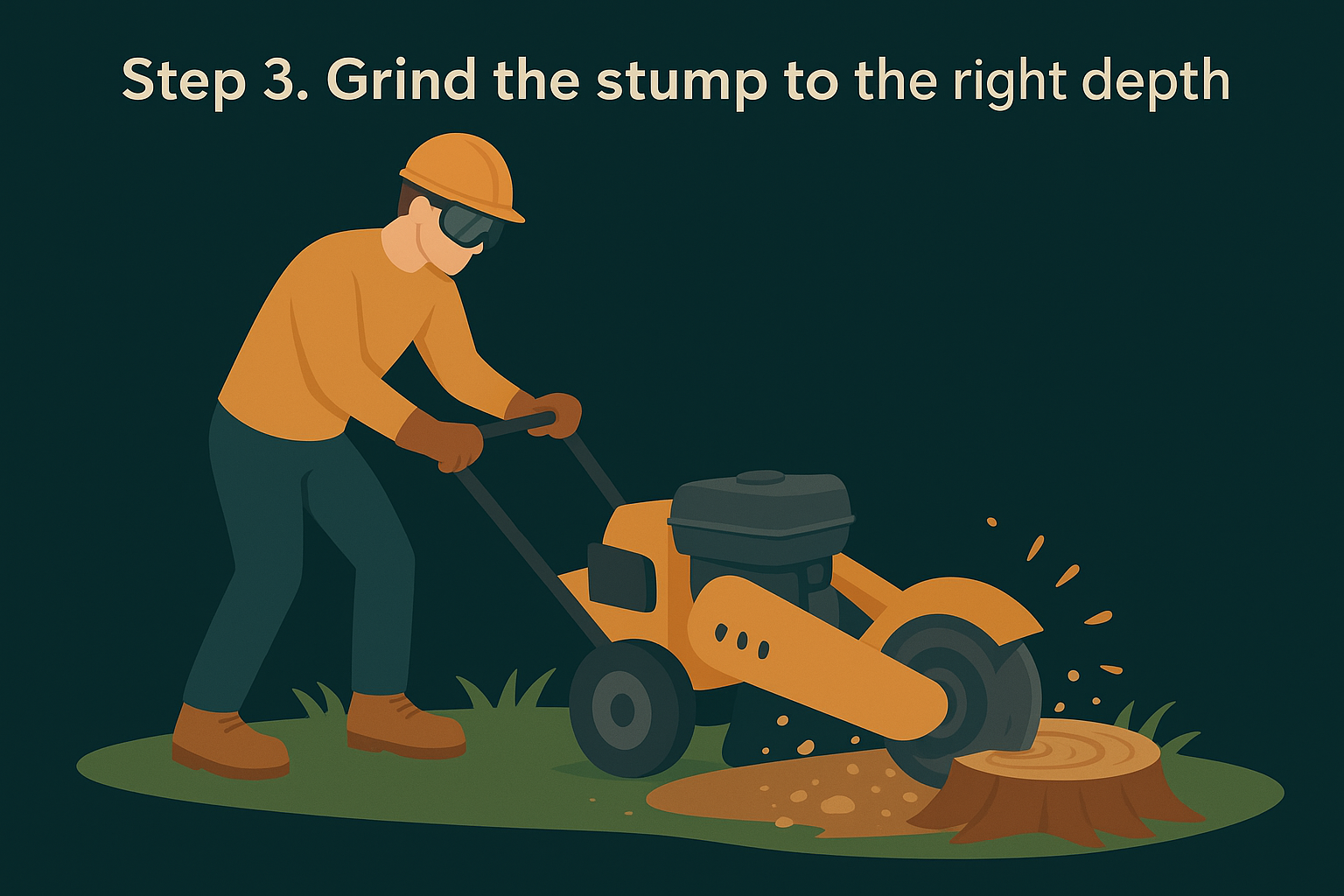
With the stump cut flush, start the grinder and lower the cutting wheel onto the near edge of the wood, then swing it side to side in short arcs, moving forward an inch or two with each pass. Keep the wheel moving constantly instead of holding it in one spot, since a stationary wheel digs a crater instead of shaving the surface evenly. This side-to-side, inch-by-inch approach is the core technique behind stump grinding , and it works the same whether you're clearing a small ornamental stump or a wide oak base.
How deep to grind
Most residential jobs call for grinding 4 to 6 inches below grade , deep enough that grass seed takes root and a shovel won't hit wood if the homeowner plants something new later. Commercial properties or spots getting a new structure sometimes need 8 to 12 inches, which is why commercial stump grinding for construction site prep uses higher-powered machines. Lower the depth control gradually, working the full diameter of the stump at your current depth before dropping lower, rather than punching straight down in the middle.
Grinding too shallow just buries the problem for the next homeowner to find with a shovel.
Clearing the root flare
Don't stop at the visible stump face. Grind outward to chase the major surface roots a foot or two beyond the trunk, since leftover root flare regrows shoots and keeps the tripping hazard alive. Work the perimeter last, once the center hole is at full depth, so you're not repeatedly repositioning the machine over an already-deep hole.
Step 4. Fill the hole and clean up
Once the grinder reaches full depth and you've chased down the root flare, you're left with a mound of wood chips and a shallow crater where the stump used to be. This debris pile looks like more material than it is; grinding a tree stump into chips typically produces two to three times the volume of the original stump, so don't be surprised if it takes a few wheelbarrow loads to clear.
Backfilling the hole
Shovel most of the wood chips out of the hole first, since a hole packed with chips will settle and sink over the following months as they decompose. Mix the leftover chips with topsoil at roughly a 50/50 ratio and use that blend to fill the hole, tamping it down in layers rather than dumping it all at once. Leave a slight mound above grade to account for settling.
A hole filled with straight wood chips will sink again within a year, no matter how well you tamp it down.
Final grading and seeding
Rake the surface level, then overseed or lay sod once the soil has settled for a few days. Water it in like you would any new planting. For stump removal jobs on a slope or near a foundation, check the fill level again after the first heavy rain, since compaction can be uneven.
- Haul or compost excess wood chips, or book a yard cleanup with debris haul-away if the pile is too big for your bins
- Sweep debris off nearby hardscape
- Check the site for exposed roots you missed
- Photograph the finished grade for your records if you're selling the property soon
When a stump job calls for a pro
Some stumps just aren't weekend projects, and a professional stump grinding crew in Vancouver, WA can clear them in a fraction of the time. A trunk over 24 inches wide, a root system tangled near a septic line, or a slope steep enough to make footing dangerous all point toward calling in a crew instead of renting a grinder. Multiple stumps on one property also add up fast in rental fees and sore muscles, often costing more than a professional visit once you tally the half-day rates and the trips to haul chips.
Grinding a tree stump the right way takes the correct machine, careful depth control, and a plan for what happens to the hole afterward. If your stump is small, flat ground, and away from utilities, the steps above will get you there. If it's bigger, awkward, or you'd rather skip the rental counter altogether, get a free estimate from Alexa's Tree Service and let a licensed, insured crew handle it clean the first time.