
5 Ways to Handle Tree and Stump Grinding in Vancouver, WA
The best way to get tree and stump grinding done around Vancouver and Portland is to hire a licensed, insured tree company that removes the tree and grinds the stump in one visit. A stump-only specialist suits a lone leftover stump, and a rented grinder suits one small stump and a free Saturday. Most pros charge by stump diameter , with a minimum fee on small jobs.
A stump looks harmless until it sprouts, snags the mower, or hosts fungus and carpenter ants. Grinding is the usual fix, but the options differ a lot in cost, risk, and cleanup. Quotes are also hard to compare when every company words them differently.
This list covers five ways to get the job done in Clark County and the Portland metro area, from full-service crews to digging the stump out. Each one gets the same breakdown: how it works, who it suits, and what to ask about price. We are Alexa's Tree Service, so we list ourselves first, and we say plainly where the other routes win.
1. Alexa's Tree Service: removal and grinding together
How it works
A stump grinder uses a spinning wheel of carbide teeth to chip the stump into mulch, usually 6 to 12 inches below grade . At Alexa's Tree Service, the same crew that takes the tree down brings the grinder to your property and finishes the stump before leaving. We serve Vancouver, Camas, Battle Ground, Ridgefield, Portland, Gresham, Beaverton, and Lake Oswego, and cleanup is part of the job.
The cheapest stump to grind is the one ground while the crew and equipment are already on your property.
Who it suits
This route fits homeowners who want one licensed, insured crew and one estimate for the whole job. It also fits commercial stump grinding at retail centers, office parks, and parking lots where stumps near entrances or signage need clean, quick work. We have worked in the Pacific Northwest since 2006 and hold 180+ five-star Google reviews . We also run 24/7 storm cleanup for when a fallen tree leaves a stump behind, and we guide you on tree removal permits in Vancouver, WA.
Cost and what to ask
We price each job after looking at it, and estimates are free by phone or through our online form. Stump diameter, access, the number of stumps, and exposed roots drive the price. Bundling grinding with removal saves a second trip. Ask any provider these three things:
- Is the price per stump or per inch, and is there a minimum charge?
- How deep will the stump be ground?
- Are the chips left on site or hauled away?
2. A stump grinding specialist
How it works
Specialists do nothing but grind stumps , so their machines are often compact and tracked, built to fit through narrow side gates. They do not fell trees. You call them after the tree is already down, and they grind each stump, rake the chips into the hole, and leave. For tree and stump grinding on a lot with many stumps, that focus can be efficient.
Who it suits
This is the right call when a previous crew, a storm, or a lot clearing left you several stumps and no standing trees . It is a poor fit if the tree still needs to come down, because you would pay two companies and two minimum fees. Ask about sprouts too. Species such as willow and poplar can resprout from roots, and a thorough grind below grade slows that down.
Cost and what to ask
Many pros charge a few dollars per inch of diameter, with a minimum that covers travel and setup. Local rates vary, so get a written quote. Ask whether the price covers surface roots, and whether the operator carries liability insurance. Our crews and most competent specialists will gladly show proof.
3. A landscaper or handyman with a grinder
How it works
Some landscapers and general contractors own a grinder or sub the work out to someone who does. The process is the same as with a specialist, but grinding is a side service rather than the main business. Ask which one applies, because it affects who is accountable if a sprinkler line or lawn gets damaged during tree and stump grinding.
Who it suits
This works for homeowners already hiring a landscaper for a patio, sod, or a garden redesign. Grinding the stump first and regrading in the same project means the yard is only torn up once. It suits small, easy stumps in open yards. It is a weaker choice for large trees, steep slopes, or stumps close to a house, fence, or foundation.
Verify the license and the insurance before the grinder starts, not after something breaks.
Cost and what to ask
Prices can be lower on small jobs, and sometimes a flat fee is folded into the larger project. Check registration or licensing with your state, either Washington or Oregon, and ask for proof of liability insurance. Then ask who locates utilities and sprinklers, and who pays if a line is hit.
4. Renting a grinder and doing it yourself
How it works
You rent a walk-behind grinder, then sweep the cutting wheel side to side across the stump, lowering it a little at a time until the stump is below grade. Call 811 before you start so buried utilities get marked. Then follow this routine:
- Cut the stump as low as possible with a chainsaw.
- Clear rocks, wire, and loose dirt around it.
- Put on eye, ear, and face protection, plus sturdy boots.
- Grind in slow passes, then rake out the chips.
Who it suits
DIY tree and stump grinding suits one small stump in an open yard, for a person who is comfortable with heavy equipment. It is a poor fit for large stumps, tight spaces, or sloped ground, where machines tip and kick back. Rain-soaked soil, common in our wet seasons, also makes the machine harder to control and rut the lawn.
Cost and what to ask
Rental rates vary by store and machine, but expect to pay at least about $100 for a few hours and more for a full day, plus fuel and delivery. Count your own time too, because a large stump can take hours. If you want a stump ground a lot deeper, or you have more than two stumps, hiring a pro usually costs about the same and carries less risk.
5. Digging the stump out instead of grinding
How it works
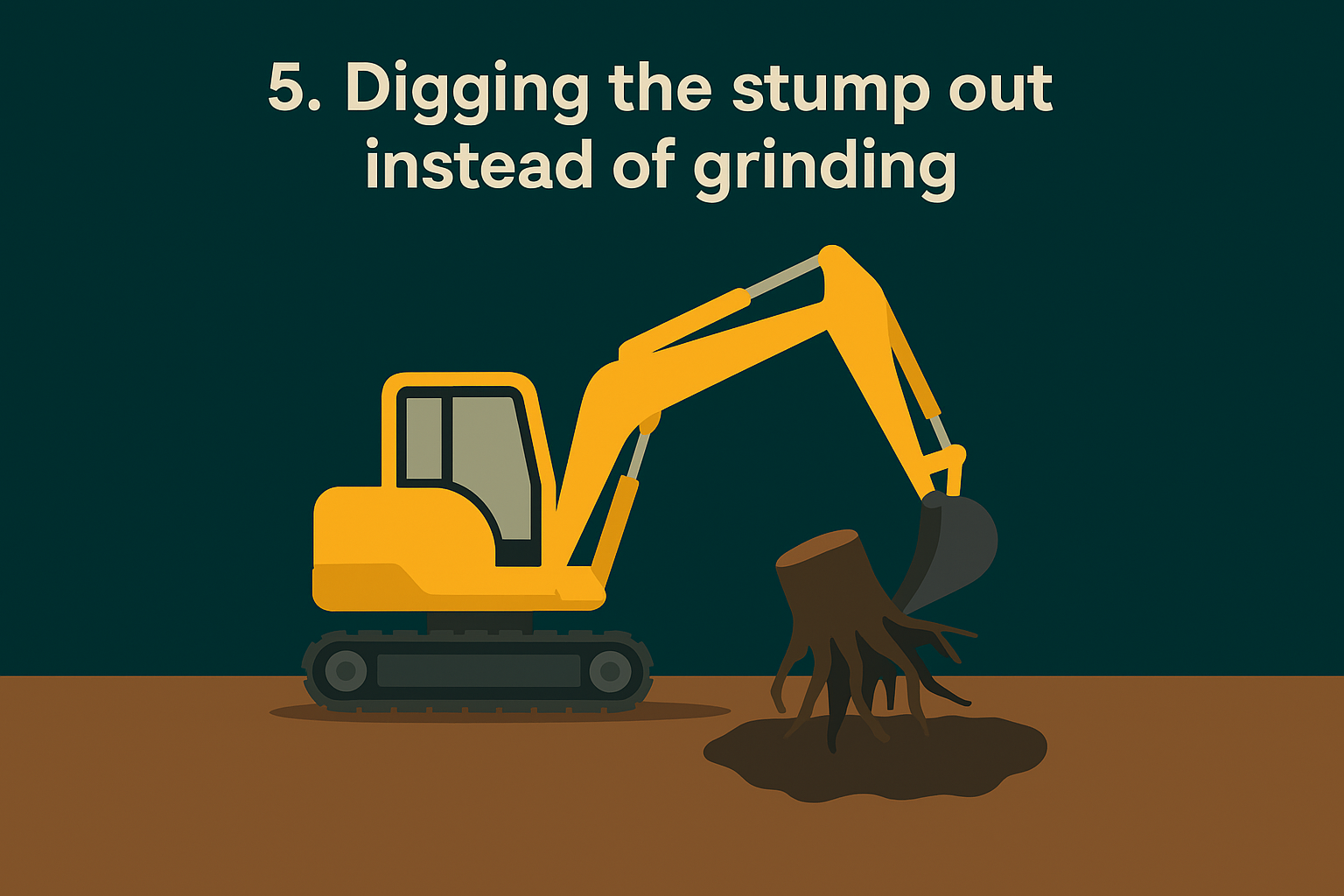
An excavator or backhoe pulls the stump and main roots out of the ground, and the hole is filled with soil. Grinding leaves roots to decay underground, while excavation takes most of them with it. Rooting out a stump costs more and disturbs more of the yard, so most homeowners only choose it for a reason.
Who it suits
Choose excavation when you plan to build on the spot, pour a foundation , or replant a tree in the same place. It also helps when a species keeps sending up suckers after grinding. If none of those apply, grinding is the better value for ordinary tree and stump grinding needs.
Grind when you want the stump gone, and dig when you need the roots gone too.
Cost and what to ask
Expect a higher quote than grinding , because equipment, hauling away stump and soil, and filling the hole all add up. Ask what is included, whether the hole will be filled with clean soil, and how lawn damage will be handled. Compare that figure with a grinding quote for the same stump before deciding.
Choosing the right route for your stump
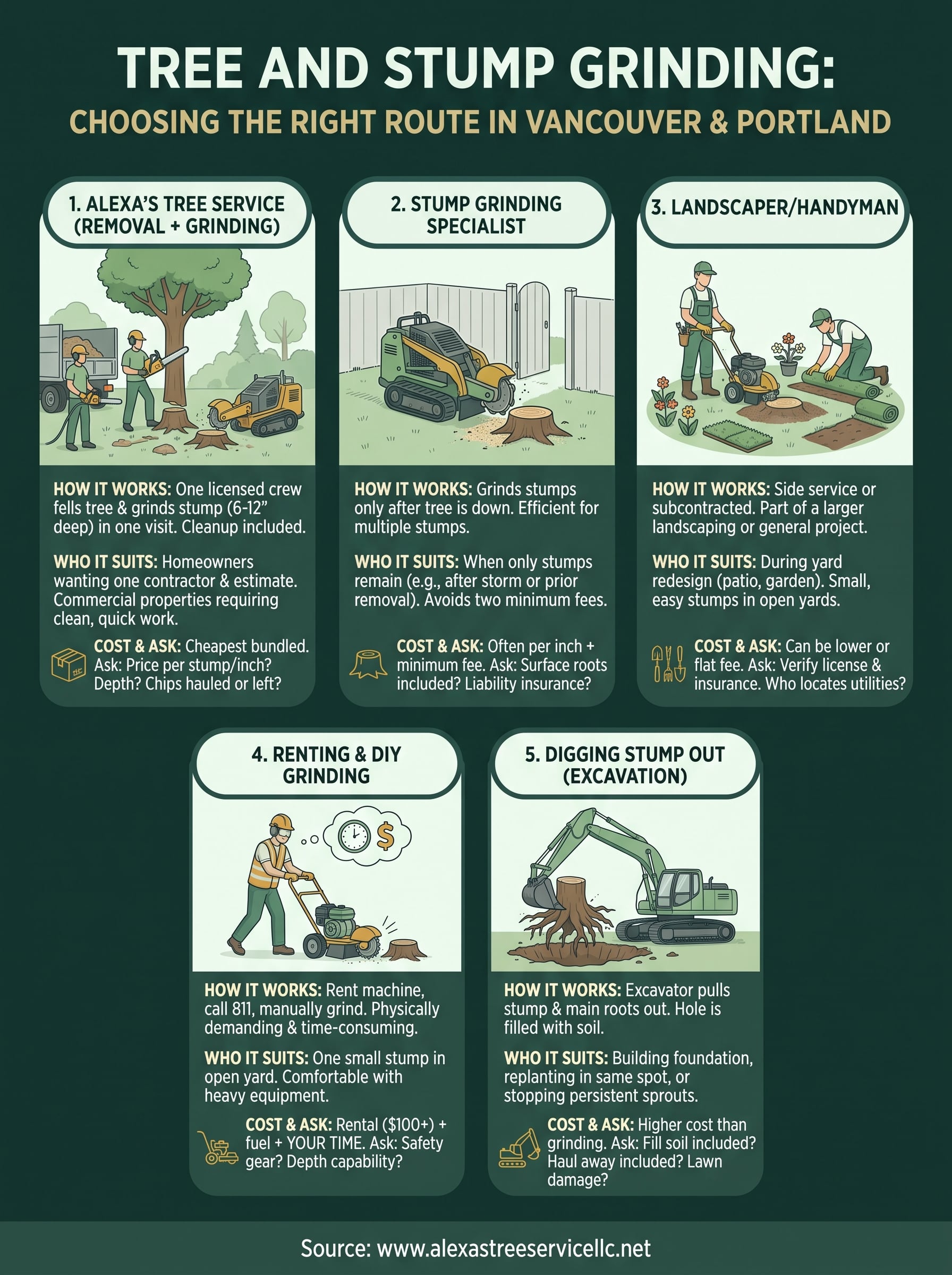
For most Vancouver and Portland area homeowners, the answer is a licensed, insured crew that handles the tree and the stump together. A specialist wins when only stumps remain, a landscaper wins when grinding is part of a bigger yard project, and a rental wins for one small stump. Excavation earns its higher price only when you need the roots gone.
Whichever route you choose, ask about depth, chips, cleanup, and insurance before you agree to anything, and call 811 before any digging. If you want a firm number for your stump, request a free estimate from Alexa's Tree Service and we will tell you what the job takes.