
Cost of Tree Removal: What You'll Pay in the Pacific Northwest
You've got a tree that needs to come down, and before you call anyone, you want a real number, not a sales pitch. The cost of tree removal in Vancouver, WA and Portland, OR typically runs anywhere from a few hundred dollars to over $2,000, depending on size, location, and condition. That range is frustrating when you're trying to budget, so let's narrow it down.
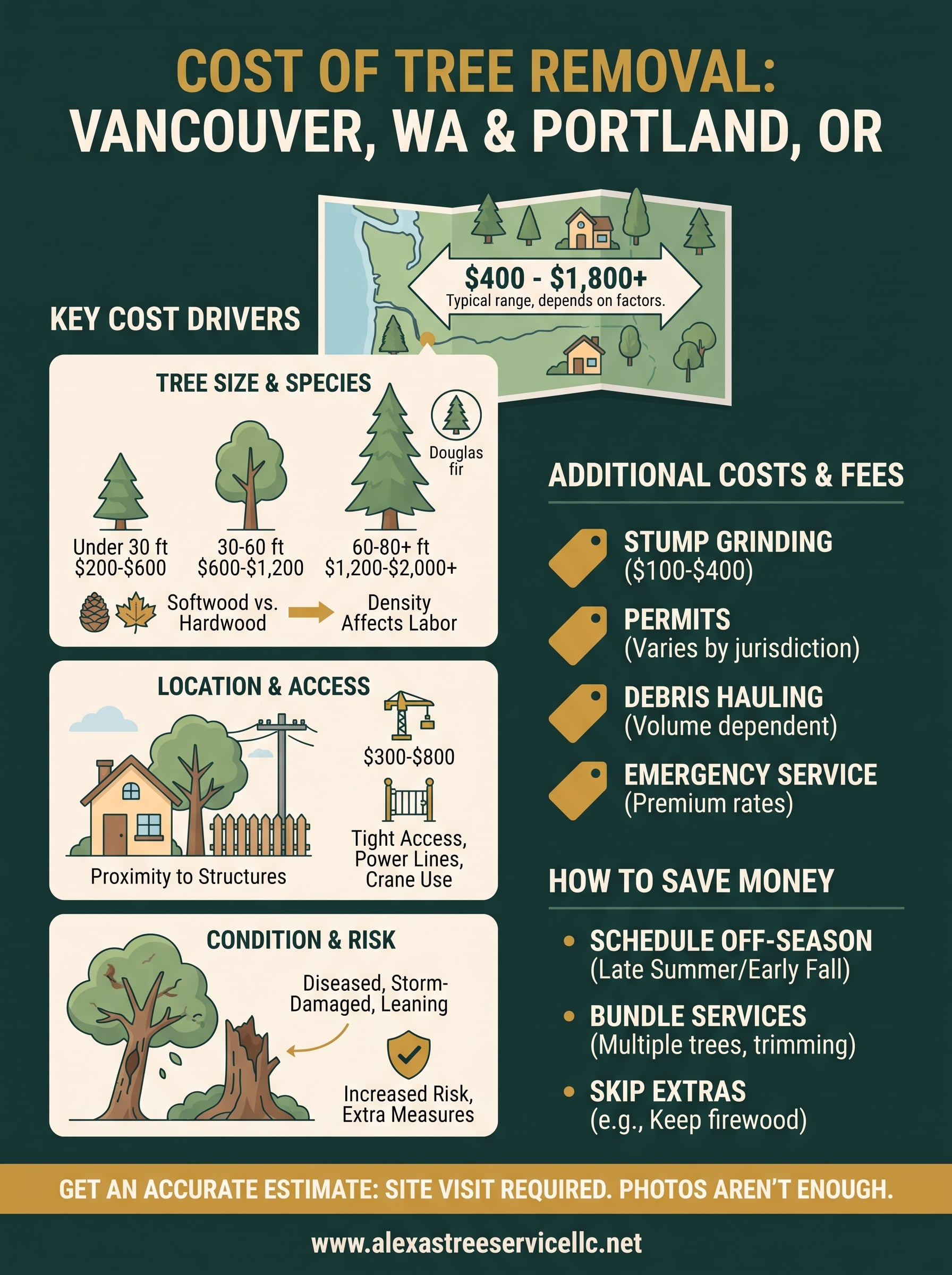
The short answer: most homeowners in our service area pay between $400 and $1,800 per tree, with hazardous or storm-damaged trees and jobs requiring crane access pushing costs higher. Height, trunk diameter, proximity to structures or power lines, and whether stump grinding is included all shift the final estimate. Diseased trees near driveways or roofs often cost more to remove safely than a healthy tree in an open yard.
In this article, we break down the estimated cost of tree removal by tree size, complexity, and emergency versus scheduled work, based on the pricing patterns we see across Clark County and the greater Portland metro. We'll also cover what drives those prices up or down, so you walk into your free estimate knowing what's reasonable and what's not.
Why tree removal costs vary so much in the Pacific Northwest
Ask five neighbors what they paid for tree removal and you'll get five different answers, and that's not because anyone got ripped off. The cost for tree removal depends on a mix of physical factors that drive your price and change from one property to the next: how tall the tree is, how close it stands to your house or the power lines, whether the trunk is rotted through, and how our wet, heavily wooded region shapes the job. In Vancouver and Portland specifically, the mix of mature Douglas firs, big leaf maples, and oaks packed into tight residential lots means crews rarely face a simple, wide-open removal.
Tree size and species drive the base price
Height and trunk diameter matter more than almost anything else, because they determine how much rigging, how many cuts, and how much cleanup a crew needs. A 30-foot ornamental tree in the backyard is a different job than an 80-foot Douglas fir looming over the roofline. Species matters too. Softwood conifers like fir and pine tend to come down faster and cheaper than dense hardwoods like oak or maple, which take longer to cut and haul.
| Tree height | Typical complexity | General cost tendency |
|---|---|---|
| Under 30 ft | Low, often no rigging needed | Lower end of the range |
| 30-60 ft | Moderate, may need partial rigging | Mid-range |
| 60-80+ ft | High, often requires sectioning or crane | Higher end of the range |
Height and access, not the tree's age or appearance, are what really set the price of a removal.
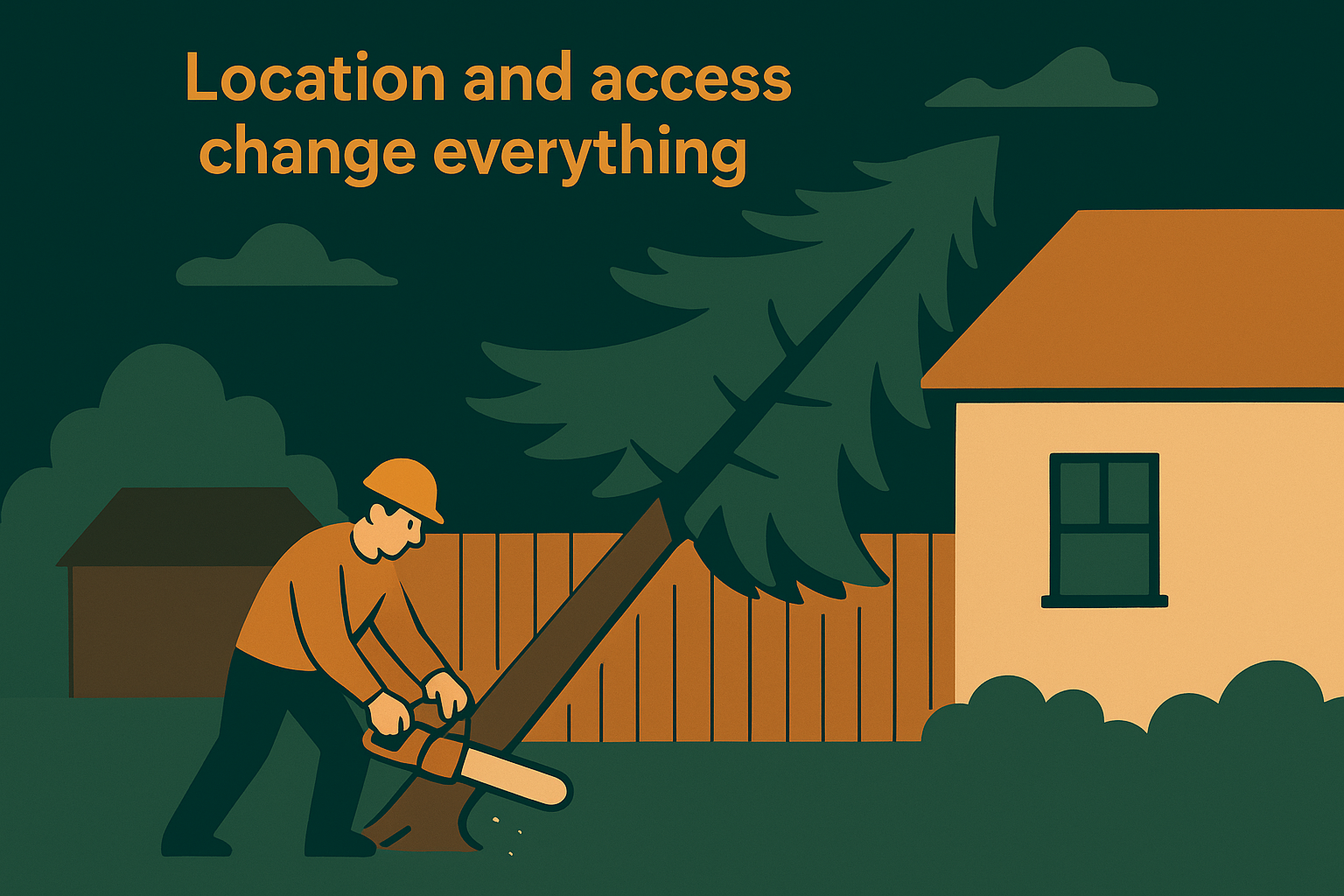
Location and access change everything
A tree standing in an open backyard with a clear drop zone costs far less to remove than one wedged between a fence, a shed, and your neighbor's driveway. When branches overhang a roof, a deck, or power lines, our crews have to section the tree piece by piece and lower each cut with rope rigging instead of letting it fall. That takes more time, more labor, and sometimes specialized equipment like a crane , which can add several hundred dollars by itself. Steep slopes, soft ground from Pacific Northwest rain, and narrow side-yard access for equipment all add to the bill in the same way.
Tree condition and risk level
A healthy tree behaves predictably when it's cut. A diseased or storm-damaged tree doesn't. Rot, cracks, and dead limbs make the wood unpredictable, which means our crews slow down, add extra safety measures, and sometimes bring in additional climbers. Trees that are actively leaning toward a structure or have already been weakened by wind or ice storms fall into a higher risk category that calls for safe takedown of leaning and storm-weakened trees, and that risk gets reflected in the price. If you're comparing quotes, ask the estimator directly whether they've factored in the tree's condition, not just its size.
Regional weather and seasonal demand
Our wet winters and windy storm seasons create demand spikes that affect pricing across Clark County and the greater Portland, OR metro. After a bad windstorm, tree services get flooded with emergency calls , and scheduled, non-urgent removals often cost less because crews aren't racing against downed power lines or leaning trees threatening a roof. Late fall through early spring, when trees are dormant and storm damage is more common, tends to bring higher emergency-related pricing, while summer and early fall scheduling usually gives you more room to negotiate and plan around your budget. Alexa's Tree Service runs around-the-clock crews for post-storm tree emergencies for exactly these situations, but if your tree isn't an immediate hazard, booking ahead of storm season is one of the simplest ways to control cost.
How to get an accurate tree removal cost estimate
Getting a real number for the estimated cost of tree removal starts with a proper on-site cost breakdown, not a phone quote based on a description. Photos help, but a trained estimator needs to see the trunk diameter, check for rot at the base, look at the canopy for dead wood, and walk the property to figure out the drop zone or rigging path. Alexa's Tree Service offers free estimates across Vancouver, Portland, and the surrounding towns for exactly this reason: guessing over the phone leads to surprises once the crew shows up.
What to have ready before you call
Before you schedule a visit, walk your own property and take note of a few things. This saves time during the estimate and helps you compare quotes apples to apples.
- The tree's approximate height and how close it stands to your house, fence, or shed
- Whether power lines run through or near the canopy
- Any visible cracks, leaning, dead branches, or fungus at the base
- Whether you want the stump ground down or left in place
- How the crew will access the tree (gate width, slope, distance from the street)
What a good estimate includes
A solid written estimate spells out more than a single dollar figure. It should list the tree removal itself, cleanup and debris hauling, whether stump grinding is included or priced separately, and any anticipated extra charges for crane use or permit coordination. If you're getting quotes from more than one company, ask each one the same questions so you're not comparing a bare-bones number against a full-service one.
A quote that doesn't mention cleanup or debris removal almost never means those are free, it means they'll show up as an extra later.
Red flags in cheap quotes
A quote that comes in dramatically lower than everyone else's is worth a second look before you sign anything. Common shortcuts include skipping proof of insurance, leaving the stump and wood debris behind, or using undersized equipment that isn't rated for the job, all of which shift risk and cleanup cost back onto you. Ask directly whether the crew is licensed and insured, since hiring an unlicensed tree crew that damages your roof or your neighbor's fence leaves you covering the repair. Alexa's Tree Service has been licensed and insured in the Pacific Northwest since 2006, and that history shows up in reviews from 100+ clients across Clark County and the Portland metro.
Comparing quotes side by side
Once you have two or three estimates in hand, line them up by scope, not just price. A cost for tree removal that's a few hundred dollars higher but includes full cleanup, stump grinding, and a certificate of insurance is usually the better deal once you account for what a cheaper bid leaves out.
Typical costs by tree size, height, and species
Numbers help more than ranges once you're trying to picture your own project, so here's how the cost of tree removal typically breaks down by size in Vancouver and Portland. Small ornamental trees near the low end of that $400-$1,800 window, while a mature Douglas fir crowding a roofline lands at the top. These are typical ranges, not quotes, since access and condition still swing the final number, but together with our 2026 tree removal price guide they give you a starting point before your free estimate.
Small and medium trees
Underneath 30 feet, most removals fall in the $200-$600 range because crews can drop the whole tree in one or two cuts without rigging. Medium trees between 30 and 60 feet, common with ornamental maples, cherry, and younger firs, usually run $600-$1,200. At this size, a crew still has room to work but may need to section larger limbs before the trunk comes down, especially if the tree sits close to a fence line or garden bed.
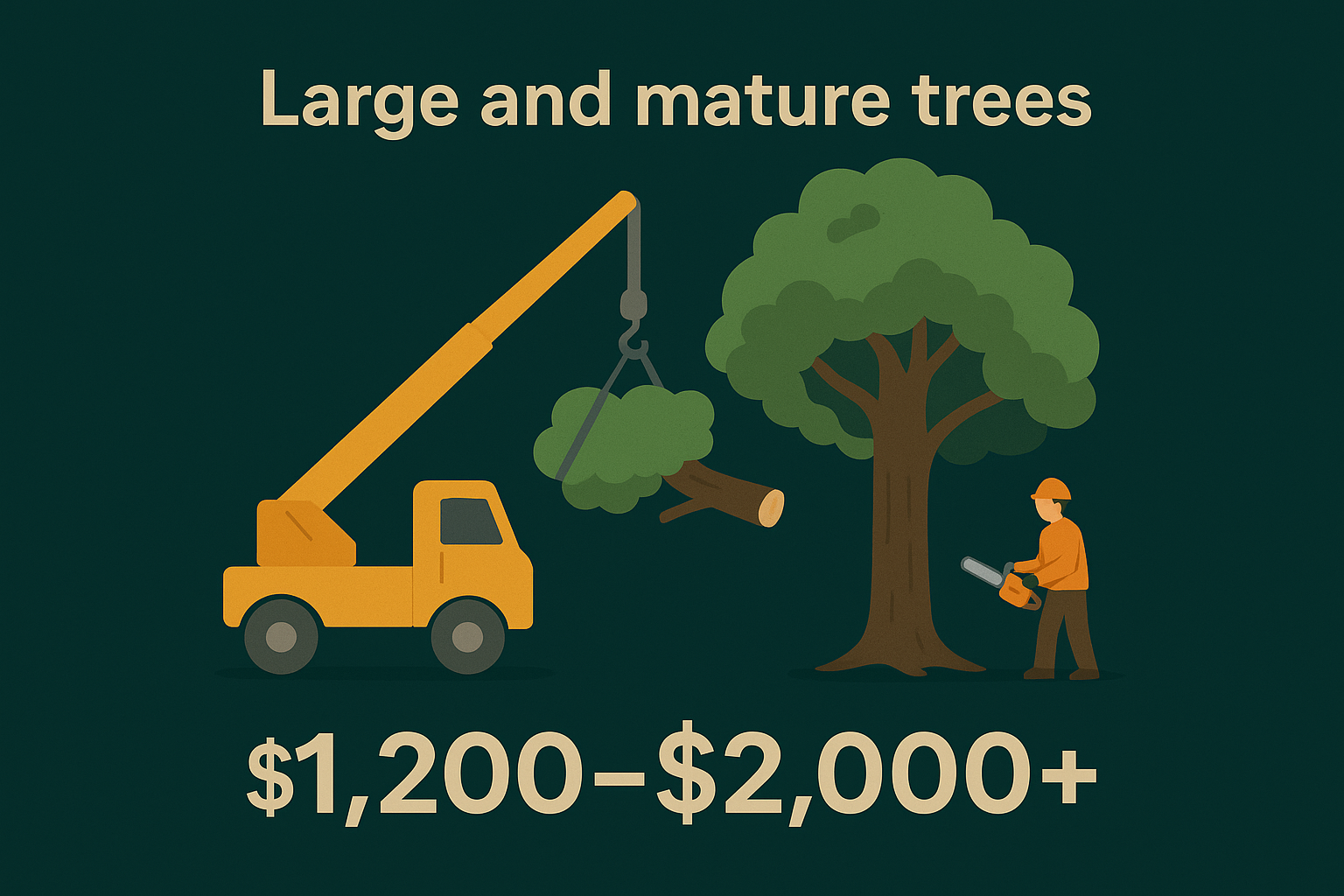
Large and mature trees
Once you're past 60 feet, you're typically looking at $1,200-$2,000 or more, and a mature Douglas fir or oak towering over a house can climb higher still if it needs crane support. These trees carry more weight per section, take longer to rig safely, and generate significantly more debris to haul away. A tall conifer leaning toward a roofline is the kind of job where the price difference between a careful crew and a rushed one becomes obvious fast.
| Tree height | Typical species examples | Estimated cost range |
|---|---|---|
| Under 30 ft | Ornamental cherry, dogwood, young maple | $200-$600 |
| 30-60 ft | Big leaf maple, mature ornamental trees, younger fir | $600-$1,200 |
| 60-80+ ft | Douglas fir, mature oak, tall pine | $1,200-$2,000+ |
The tallest tree on your lot almost always sets the ceiling for what you'll pay, not the average tree in your yard.
Why species still matters at every size
Species shifts the price within each height range because wood density and branch structure change how long a removal takes. Softwood conifers like fir and pine cut faster and generate lighter debris, which keeps labor time down. Hardwoods like oak and maple are denser, heavier per cut, and often have wider canopies that need more rigging to control safely. Two trees of the same height can land at different ends of their cost bracket simply because one is a fir and the other is an oak with a sprawling crown over your driveway.
Additional costs and fees to budget for
The number on your estimate for the tree itself rarely tells the whole story. Most homeowners budgeting for the cost of tree removal forget to ask about the extras that show up once the trunk is down, and those extras can add hundreds of dollars if you're not prepared for them. Knowing what typically gets billed separately helps you read a quote correctly and avoid a surprise invoice at the end of the job.
Stump grinding
Grinding a stump down below grade is almost always priced separately from the removal itself, usually running $100-$400 depending on trunk diameter and root spread. Leaving the stump in place saves money upfront, but it can attract insects, interfere with mowing, and eventually rot in place, which some homeowners regret a year or two later. If you already know you want the stump gone, ask to have the stump ground out during the same visit rather than scheduling a second trip.
Permits and access requirements
Vancouver, WA and several surrounding jurisdictions require a permit before removing certain trees, particularly larger native species or trees within critical areas and setbacks. Permit fees themselves are often modest, but the paperwork and inspection timeline can add days or weeks if you're not familiar with the process. Alexa's Tree Service offers permit assistance guidance for Vancouver-area removals, which saves you from tracking down city requirements on your own.
Skipping a required permit can cost far more in fines than the permit itself ever would.
Debris hauling and cleanup
A felled tree generates a surprising amount of wood, branches, and chips, and hauling that debris off your property is a real cost, not an afterthought. Some companies leave rounds of the trunk behind as firewood to cut their hauling costs, which is fine if you want the wood but frustrating if you don't. Question every quote about what happens to the debris before you sign, since "cleanup included" means different things to different crews.
Crane rental and emergency fees
Equipment like a crane, needed for trees too tall or too tightly boxed in for standard rigging, typically adds $300-$800 to a job. Emergency or after-hours storm removals carry a premium too, since crews are mobilizing outside normal scheduling and often working around downed power lines or damaged roofs.
| Add-on | Typical added cost |
|---|---|
| Stump grinding | $100-$400 |
| Crane rental | $300-$800 |
| Permit fees (Vancouver, WA) | Varies by jurisdiction |
| Emergency/after-hours service | Premium above standard rate |
Extra debris hauling for unusually large trees can also push totals higher, so ask specifically what's bundled into your written estimate.
How to save money without cutting corners
Cutting corners on tree removal almost always costs more later, whether that's a damaged roof, a stump that rots and attracts carpenter ants, or a second crew called out to finish a job the first one botched. The good news is that lowering the cost of tree removal doesn't require lowering your standards. It requires timing your project well, bundling work smartly, and knowing which extras you can skip without creating a bigger problem down the road.
Schedule during the off-season
Winter storms in Clark County and the Portland metro keep crews booked solid with emergency calls, and that demand pushes prices up across the board, even for jobs that have nothing to do with storm damage. Booking your removal in late summer or early fall , before the wind and rain pick up, usually gets you a better rate and more flexibility on scheduling. If your tree isn't an immediate hazard, waiting a few weeks for a slower stretch on the calendar is one of the easiest ways to save without changing anything about the job itself.
Bundle multiple trees or services
Requesting quotes for several jobs at once, like removing one tree while trimming two others on the same property, often reduces the per-project cost because the crew is already mobilized with equipment on site, so it pays to know typical trimming prices per tree as well. The same logic applies to stump grinding: asking for it during the original visit instead of scheduling it separately saves a return trip and the fees that come with it.
Bundling jobs into one visit almost always beats scheduling them separately, since mobilization costs get spread across more work.
Know which extras you actually need
Not every job needs a crane, and not every stump needs to disappear the same week. Being upfront with your estimator about your priorities lets them build a quote that fits your budget instead of a one-size-fits-all package.
- Leave the stump if it's out of the way and you're not in a rush, then grind it later as a separate, smaller job
- Keep firewood rounds instead of paying extra to haul them off, if you have the space to store them
- Ask about weekday scheduling instead of weekend rates, since some companies charge a premium for Saturday work
Don't shop by price alone
Comparing quotes is smart, but choosing the cheapest number without checking insurance, reviews, or scope almost always backfires. Alexa's Tree Service has built its reputation on clean, damage-free work precisely because cutting corners on safety or cleanup ends up costing homeowners more than the original quote ever suggested.
Planning ahead for your tree removal
By now you've got a real range in mind instead of a guess. The cost of tree removal in Vancouver and Portland comes down to height, access, condition, and timing, and every one of those factors is something you can ask about before a crew ever shows up. Small ornamental trees land in the low hundreds, mature Douglas firs near a roofline push past $1,800, and extras like stump grinding or crane work shift the total either direction.
Getting an accurate number means walking your property, noting power lines and access points, and getting a written estimate that spells out cleanup and permits, not just the cut. Skip the guesswork and the lowball quotes that leave surprises behind. If you've got a tree on your mind, schedule your free on-site estimate with Alexa's Tree Service and get a real, written number before storm season fills the calendar.