Tree Removal Contractors Near Me: 5 Types in Vancouver, WA
The best tree removal contractors near me are licensed, carry liability and workers' compensation insurance, quote in writing, and have recent reviews you can check. Which kind fits depends on the job. A local full-service crew suits most homeowners. An independent arborist suits a tree you are unsure about, and a small owner-operator suits a simple removal. A regional company suits large properties, and a storm crew suits an emergency.
The problem is that every search for this phrase returns the same wall of directories, ads, and phone numbers. Nothing tells you who is insured, who subcontracts the work, or why two quotes for the same tree differ by hundreds of dollars.
Below you get five types of contractor, with how each works, who it fits, what it costs, and what to verify before you sign. We are Alexa's Tree Service, a Vancouver, WA company working since 2006, so we list ourselves first and explain the other four options just as plainly.
1. Local full-service crew: Alexa's Tree Service
A local full-service crew handles the whole job, from estimate to hauling, and is the right default for most homeowners.
How it works and who it suits
We have worked since 2006 in Vancouver, WA, Portland, OR, Camas, Battle Ground, Ridgefield, Gresham, Beaverton, and Lake Oswego. You request a free estimate by phone or online form. The crew removes the tree, grinds the stump if you want it, and hauls away branches and debris. Most residential jobs take 2 to 8 hours .
This option suits homeowners with hazardous, diseased, or unwanted trees. It also suits business owners with trees near entrances or parking lots, where we schedule work around business hours. Where a permit applies in Vancouver, we guide you through it, and processing takes 5 to 10 business days , so book early. Storm damage is covered too, with 24/7 emergency cleanup .
Cost and what to check
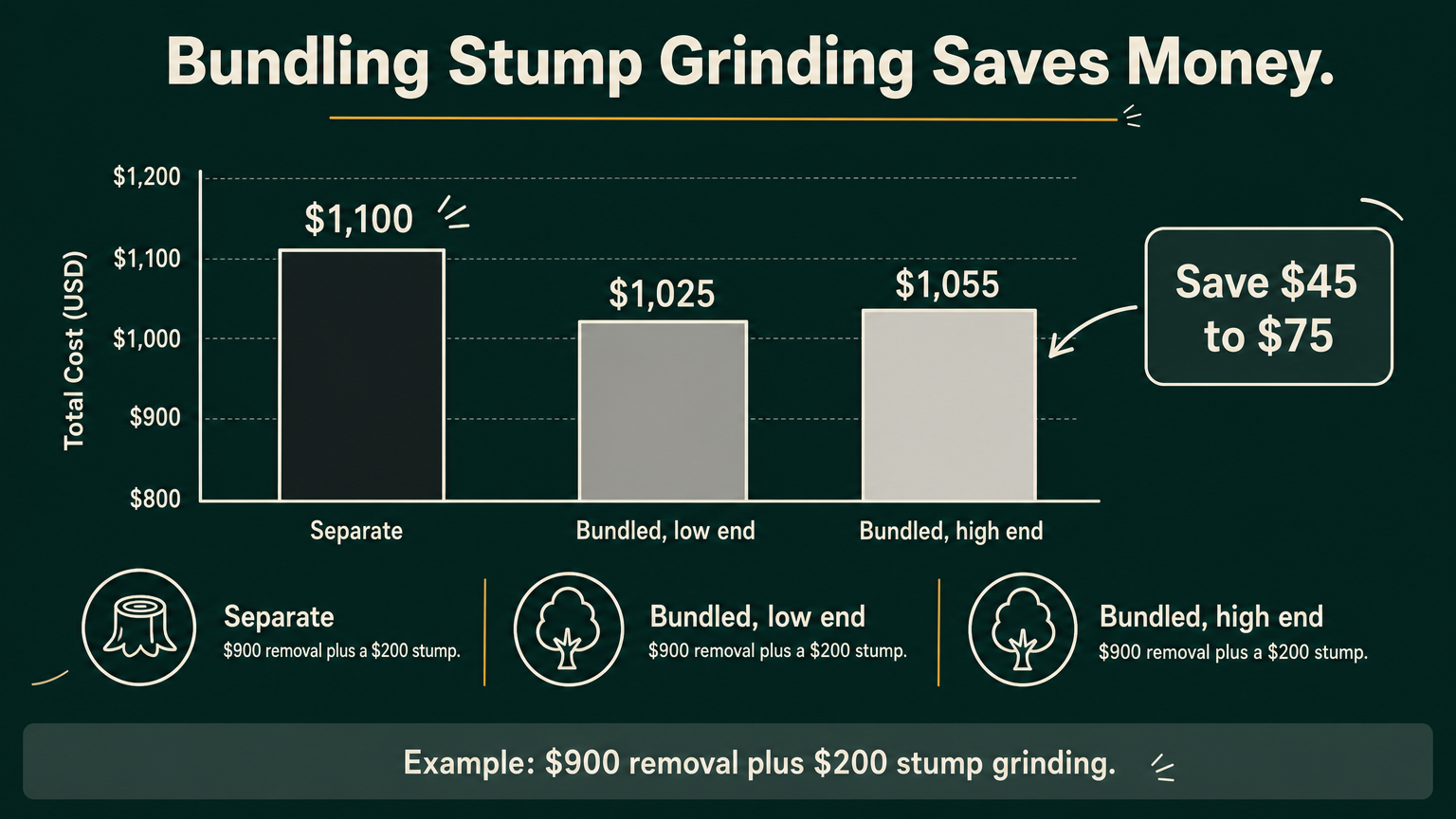
Removal runs $300 to $2,000+ , depending on height, access, and hazards. Stump grinding costs $120 to $380 per stump , and bundling it with the removal saves $45 to $75. Say you get a $900 removal and a $200 stump. That is $1,100 separately, or $1,025 to $1,055 bundled. These are our own ranges, so use them as a yardstick for any quote.
The cheapest quote is rarely the lowest total once stump, hauling, and permits are added.
- Ask for our certificate of insurance, and read our 180+ five-star Google reviews for details, not just the star count.
- Confirm in writing whether stump grinding and hauling are included.
- Ask whether a permit applies before any cutting starts.
2. Independent certified arborist
An independent arborist inspects the tree and tells you whether it needs to come down, without selling you the removal.
How it works and who it suits
Look for an ISA Certified Arborist credential, which you can verify on the International Society of Arboriculture's website. You pay for a site visit and usually receive a written assessment of the tree's health and risk.
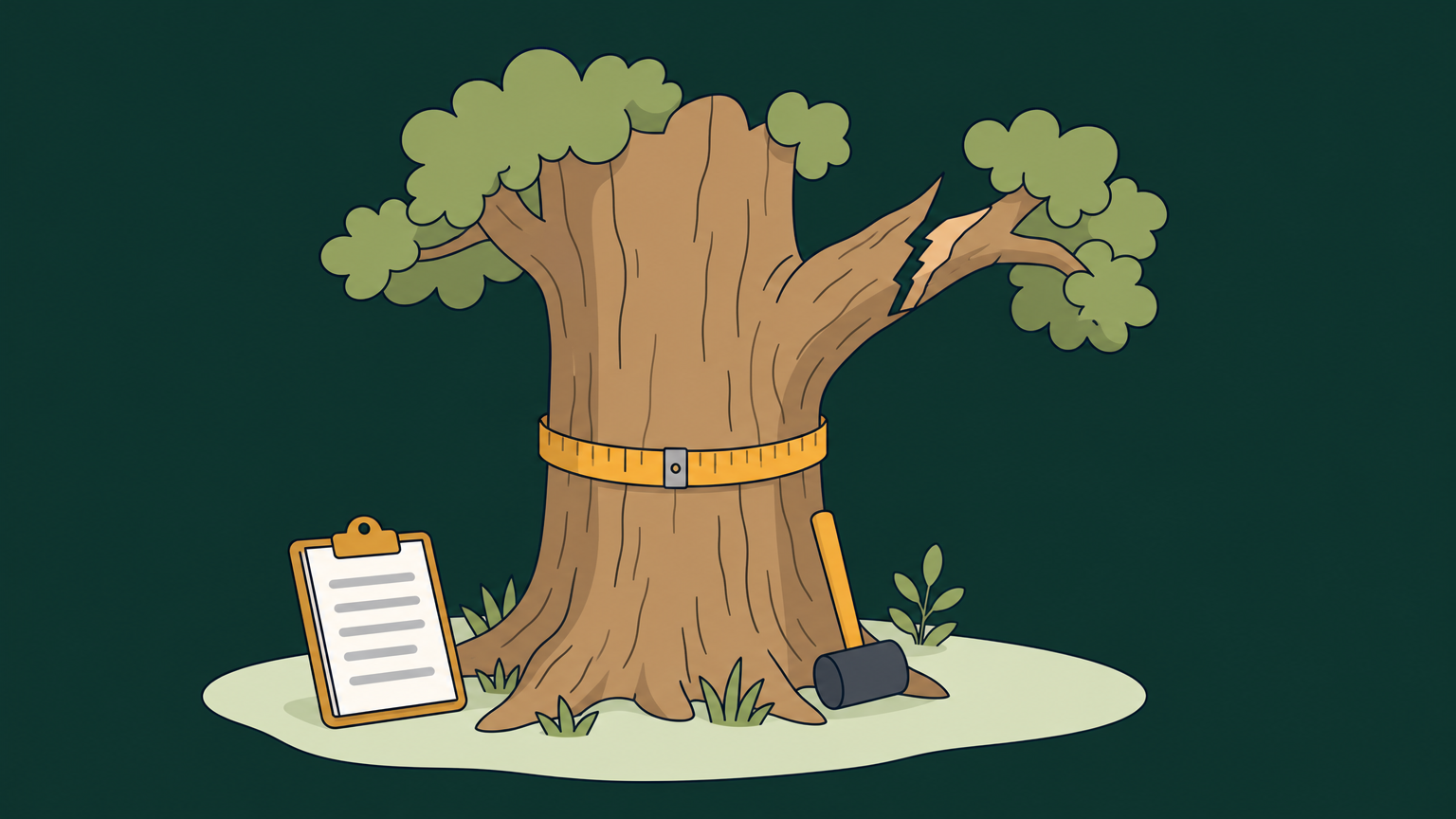
This option suits a tree you are unsure about, such as a large oak with a cracked limb or a tree a neighbor disputes. It also fits trees that local rules may protect. The report helps with insurance claims and permit applications. Sometimes the answer is not removal, because cabling or pruning can keep a valuable tree standing.
Cost and what to check
Expect a flat fee or hourly rate for the assessment, separate from any removal. That fee is far smaller than the cost of removing a healthy tree. For reference, our own tree cabling runs $300 to $1,200 per tree.
An assessment costs less than removing a tree that did not need to go.
- Get the fee in writing before the visit.
- Ask whether the arborist profits from the removal, or only advises.
- Ask the report to state the risk level and the options, not just a verdict.
3. Small owner-operator crew
A small owner-operator crew is one or two trucks run by the person who quotes the job, and it often gives the lowest price because overhead is low.
How it works and who it suits
The owner visits, quotes, and usually works on the job. That makes it a good match for simple removals with clear access. Think of a small tree in an open yard, far from the house, fences, and power lines.
Skip this option for large trees over structures or near power lines. A mistake there costs more than the savings, and a small crew may lack the rigging equipment or insurance limits for it.
Cost and what to check
Quotes from small crews often come in below larger companies, but the gap can close once you price in risk. Insurance is the check that matters most. If an uninsured worker is hurt on your property, you may be exposed to the claim.
A low quote is only a bargain if the insurance behind it is real.
- Have the insurer send the certificate of insurance directly, instead of accepting a photo from the crew.
- Look up the business in your state's contractor lookup. In Washington, the Department of Labor & Industries website shows registration.
- Walk away from cash-only demands, large upfront deposits, or any plan to "top" the tree.
4. Large regional tree care company
A large regional company runs a sales-then-crew model, which works best for big properties and multi-tree jobs.
How it works and who it suits
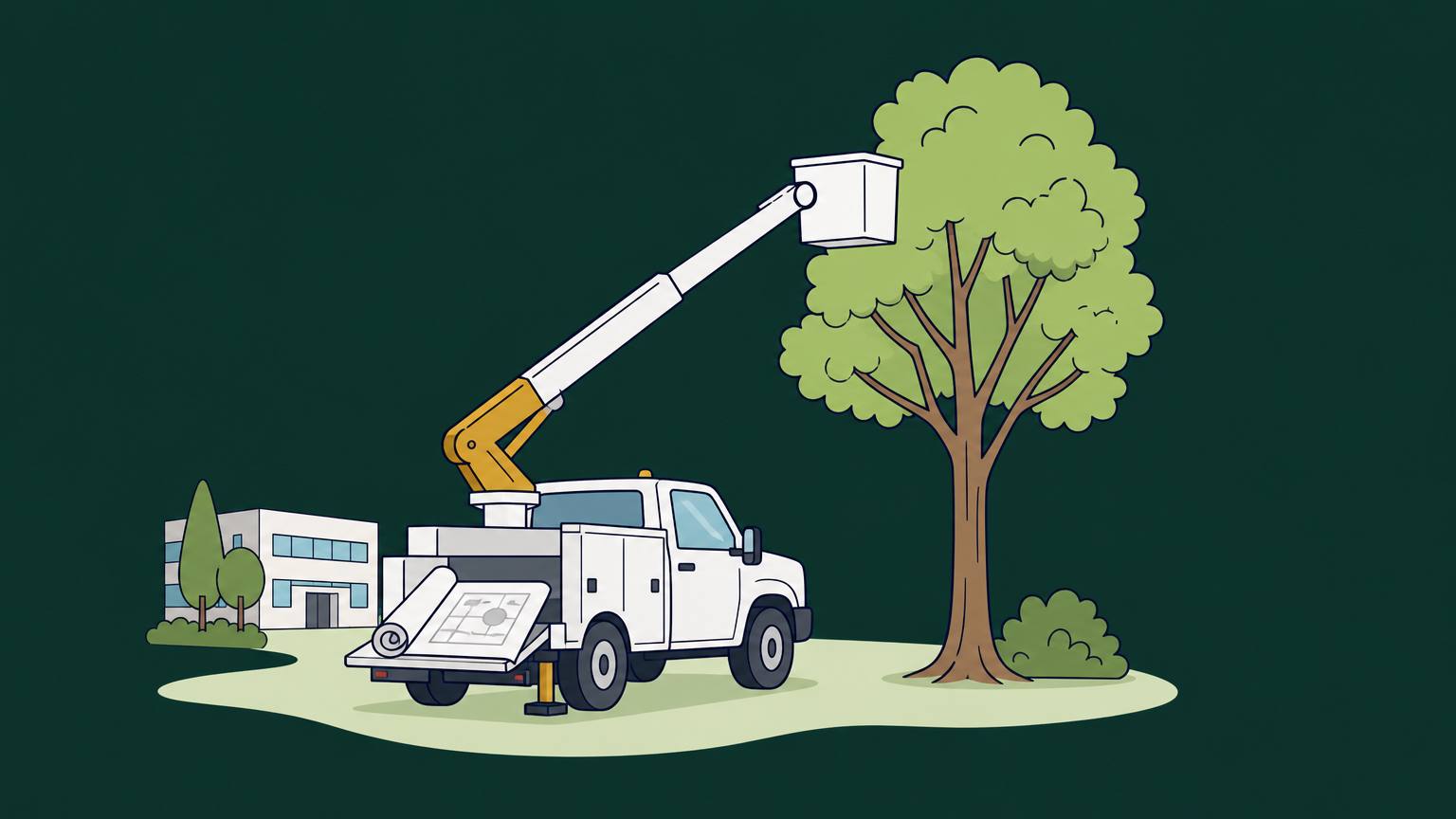
A sales arborist inspects the site and writes a formal proposal. A separate crew then does the work, often with bucket trucks or cranes. This suits large properties , homeowner associations, and commercial campuses that need contracts, consistent paperwork, and a crew that can scale up.
Expect more process and slower scheduling for a single small tree. You gain broader services, such as ongoing plant health care. You may also deal with an office instead of the person who owns the business.
Cost and what to check
Prices are often higher than local crews because of overhead, but proposals tend to be detailed and firm. Proposals also itemize differently. One lists removal, stump, hauling, and cleanup separately, while another bundles them. Two quotes only compare once the scope matches line by line .
Compare scope before price, because a more itemized proposal is not necessarily a more expensive one.
- Ask whether employees or subcontractors will do the work.
- Ask for a firm start date, not just a lead-time estimate.
- Check for minimum charges on one-off jobs.
5. Storm and emergency response crew
An emergency crew makes the hazard safe first and cleans up second, and you call one when a tree is on your house, across your driveway, or leaning after a storm.
How it works and who it suits
If a tree touches a power line, stay away and call the utility and 911 before anyone else. Many local companies run a 24/7 line. We list an average response of 1.5 to 3 hours for active hazards, a fair yardstick when you phone around.
Photograph the damage before anything is moved, and call your insurer early. Emergency work often only makes the site safe by cutting, clearing, and tarping. Full removal and stump work can be scheduled afterward.
Cost and what to check
Emergency work usually costs more than a planned removal because of after-hours labor and urgency. Ask whether the price is hourly or fixed before the saw starts. After big storms, out-of-area crews often knock on doors, and you should never pay in full upfront to one of them.
In an emergency, make the hazard safe first and negotiate the cleanup second.
- Get the scope and price in writing, even as a text message.
- Confirm insurance by certificate, even in a rush.
- Ask what is included: hauling, ground cleanup, and tarping.
Which contractor to call first
For most homeowners around Vancouver and Portland, a licensed, insured local crew is the right first call. Use an independent arborist when the tree's fate is uncertain. Choose a small crew only for easy jobs, a regional company for large sites, and a storm crew when time matters.
Whichever you pick, get at least three written quotes, verify insurance directly, and compare what each quote includes, not just the total. If you want a number for your own tree, you can request a free tree removal estimate from Alexa's Tree Service and compare it against the others.