
How to Remove a Tree Stump: DIY Methods That Work
That stump in your yard isn't just an eyesore. It's a tripping hazard, a mower obstacle, and a spot where new sprouts keep popping up no matter how many times you cut them back. If you're searching for removal tree stump methods you can handle yourself, you've got real options before you spend money on a pro.
This guide walks through the actual DIY stump removal methods that work: digging it out by hand, using chemical accelerants to speed up rot, renting a grinder for faster results, and even burning where local codes allow it. We'll cover what each method costs, how long it takes, and which tools actually earn their price versus the ones that waste your weekend.
We'll also flag the tree removal mistakes homeowners must avoid that turn a simple weekend project into a multi-day headache, like hitting buried utility lines or underestimating a root system that spreads twice as wide as the stump itself. And if you get partway through and realize the job's bigger than expected, we'll tell you when it makes sense to call in licensed and insured help instead of pushing through it alone.
How to choose the right stump removal method
Not every stump calls for the same approach. A fresh pine stump with shallow roots comes out in an afternoon with a shovel and a mattock. A decades-old oak with roots running under your driveway needs a grinder or a professional crew with the right equipment. Before you buy tools or chemicals, take ten minutes to assess what you're dealing with: stump diameter, wood type (softwoods rot faster than hardwoods), how close it sits to structures or utility lines, and how much time you actually want to spend on this.
The right method depends less on how big the stump looks and more on how far its roots have spread.
Match the method to your timeline and budget
If you need the yard usable this weekend, renting a grinder beats waiting weeks for chemicals to soften the wood. If you've got months and want to spend under $50, a chemical stump remover paired with hand tools does the job slower but cheaper, though it helps to know what stump grinding really costs before you commit to weeks of waiting. Tree stump removal by hand works fine for stumps under 10 inches wide; anything bigger and you're fighting roots for hours.
| Method | Typical Cost | Time to Finish | Effort Level |
|---|---|---|---|
| Manual digging | $0-$50 (tool rental) | 1-2 days | High |
| Chemical accelerant | $15-$40 | 4-8 weeks | Low |
| Rented stump grinder | $75-$150/day | Same day | Moderate |
| Burning (where legal) | $20-$60 | 1-3 days | Moderate |
Commercial-grade grinders remove even large root systems in under an hour, which is why most homeowners who try removal of tree stumps on stubborn hardwoods eventually compare the most effective ways to remove or grind a stump and call in equipment like the kind Alexa's Tree Service uses for stump grinding jobs across Vancouver and Portland. Once you've picked a method, the prep work below applies no matter which route you take.
Step 1. Cut the stump down and prepare the area
Start by cutting the stump as close to ground level as you can. A chainsaw with a sharp chain handles this in minutes and gives you a flat, low surface that's easier to dig around or grind later. If the trunk still has a few feet of height, remove it in sections rather than fighting one massive cut.
Clear a three-foot work radius around the stump before you touch a shovel. Rocks, low branches, and mulch all get in the way once you start digging, and a cluttered area slows down every step that follows.
Before anything else, call 811 to have utility lines marked. Hitting a buried gas or electric line while digging turns a weekend project into an emergency.
Run through this checklist before moving to Step 2:
- Cut the stump flush or as low as your saw allows
- Clear rocks, roots on the surface, and loose debris
- Mark utility lines through 811 (free in most states)
- Put on eye protection and gloves
- Have a tarp ready for soil and debris removal
This prep work sets up faster digging no matter which removal method you chose above.
Step 2. Dig around the stump and expose the roots
Grab a round-point shovel and start digging a trench about 18 inches out from the stump's edge, working your way around in a full circle. Go down at least a foot deep. This distance keeps you clear of the main root ball while giving you room to see where roots branch out.
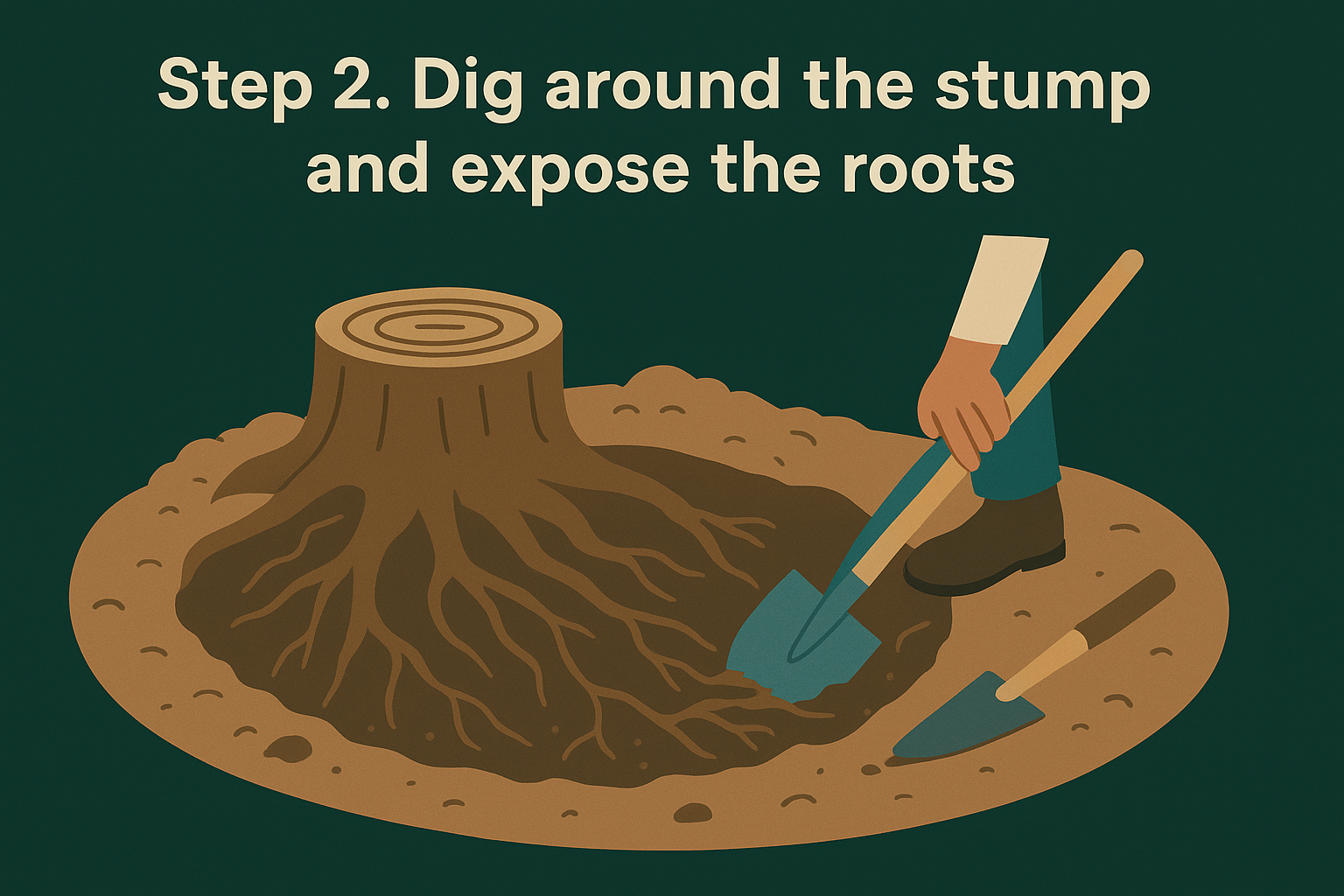
You're not digging a hole, you're excavating a root map.
Once the trench is open, switch to a mattock or root saw to expose individual roots as you find them. Push soil away from each root with a hand trowel or a stiff-bristle brush so you can see exactly where wood meets dirt. This step matters more than people expect: cutting a root you can't fully see risks leaving a stub buried underground, which just becomes tomorrow's obstacle.
Keep circling the stump, alternating between shovel and mattock, until you've traced the major roots outward by two to three feet. Larger stumps often surprise you here, with roots running far wider than the trunk itself suggests. Toss loosened soil onto your tarp as you go so it doesn't pile back into the trench and slow down the next pass.
Step 3. Cut the roots and pull out the stump
Once you've exposed the major roots, cut through each one with a root saw or reciprocating saw fitted with a pruning blade. Work from the outside in, cutting roots roughly two to three feet from the trunk where they've thinned out enough to slice through in a few strokes. A sharp axe works too on smaller roots, but saves your back for the bigger cuts.
A stump only lets go once every anchoring root has been severed, not just the visible ones.
After the roots are cut, test the stump by rocking it side to side. If it barely moves, you've missed a root somewhere underneath. Dig a bit deeper and check the underside before pulling harder.
When it finally gives, use one of these methods to pull it free:
- Pry bar or digging bar wedged under the stump for smaller ones under 12 inches
- Come-along winch anchored to a nearby tree for medium stumps
- Truck or tractor with a chain for anything too heavy to lift by hand
Fill the resulting hole loosely with soil once the stump is out, and set the wood aside if you're planning to burn or haul it later.
Step 4. Try chemical or grinding methods for stubborn stumps
When digging and root cutting stall out on a hardwood stump, chemical stump remover products speed up decay so the wood softens enough to break apart with an axe or shovel. Drill several holes into the stump's top and outer sides, pour in a potassium nitrate based remover, and keep the area covered with a tarp to hold moisture in. Most products need four to eight weeks before the wood turns spongy enough to chop through.
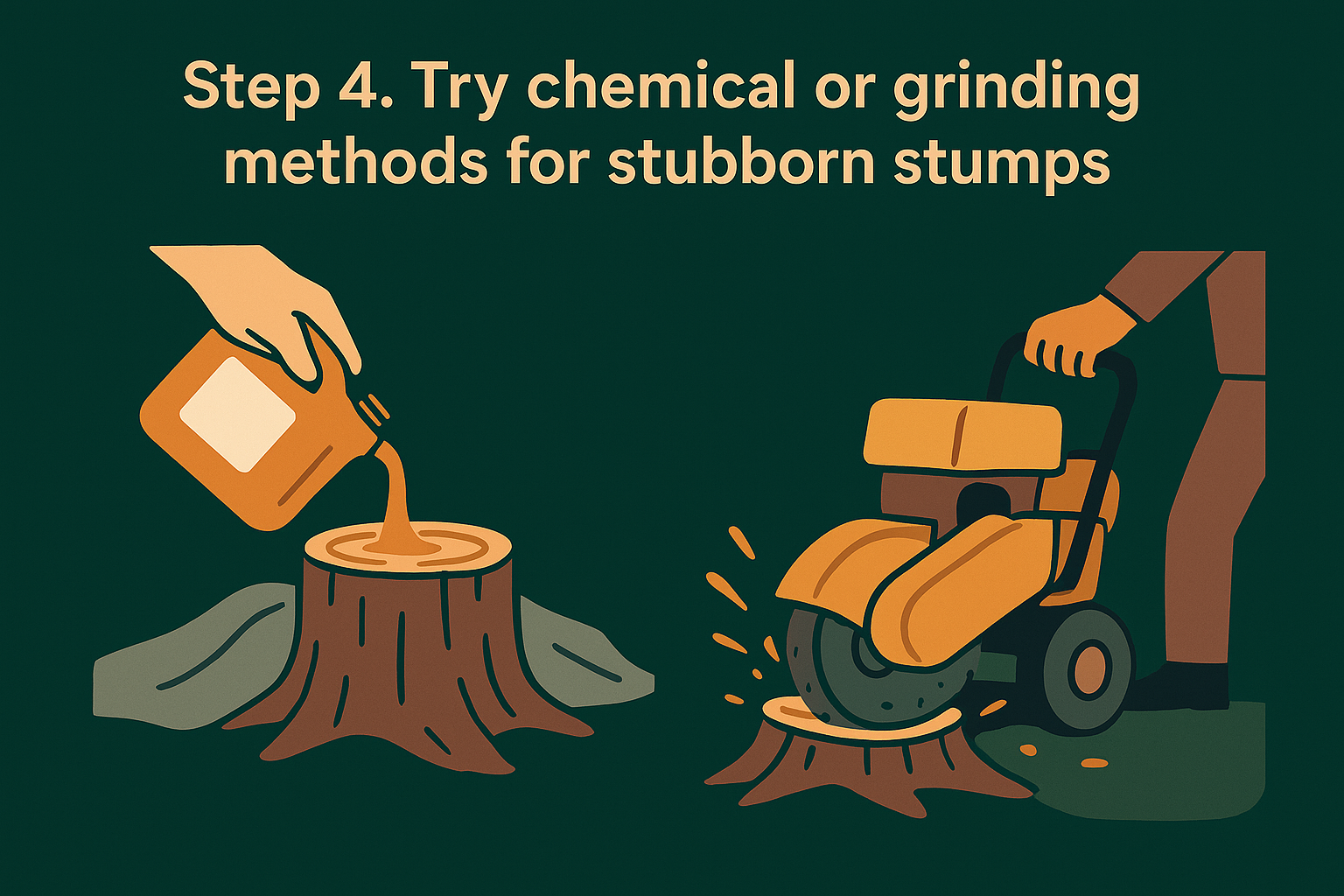
Chemicals don't remove a stump, they just make the wood weak enough for you to finish the job.
Renting a grinder for same-day results
If you'd rather skip the wait, a rented stump grinder chews through the wood and surface roots in under an hour for most residential stumps. Rental units run $75 to $150 a day at most hardware stores, and you'll want steel-toed boots, eye protection, and hearing protection before starting. Grind at least four inches below grade so grass seed or sod covers the spot cleanly.
For stumps over 24 inches wide or tangled with a neighboring tree's roots, this is usually the point where licensed tree removal crews in Vancouver, WA with commercial grinders finish the job faster and cleaner than a rental ever could.
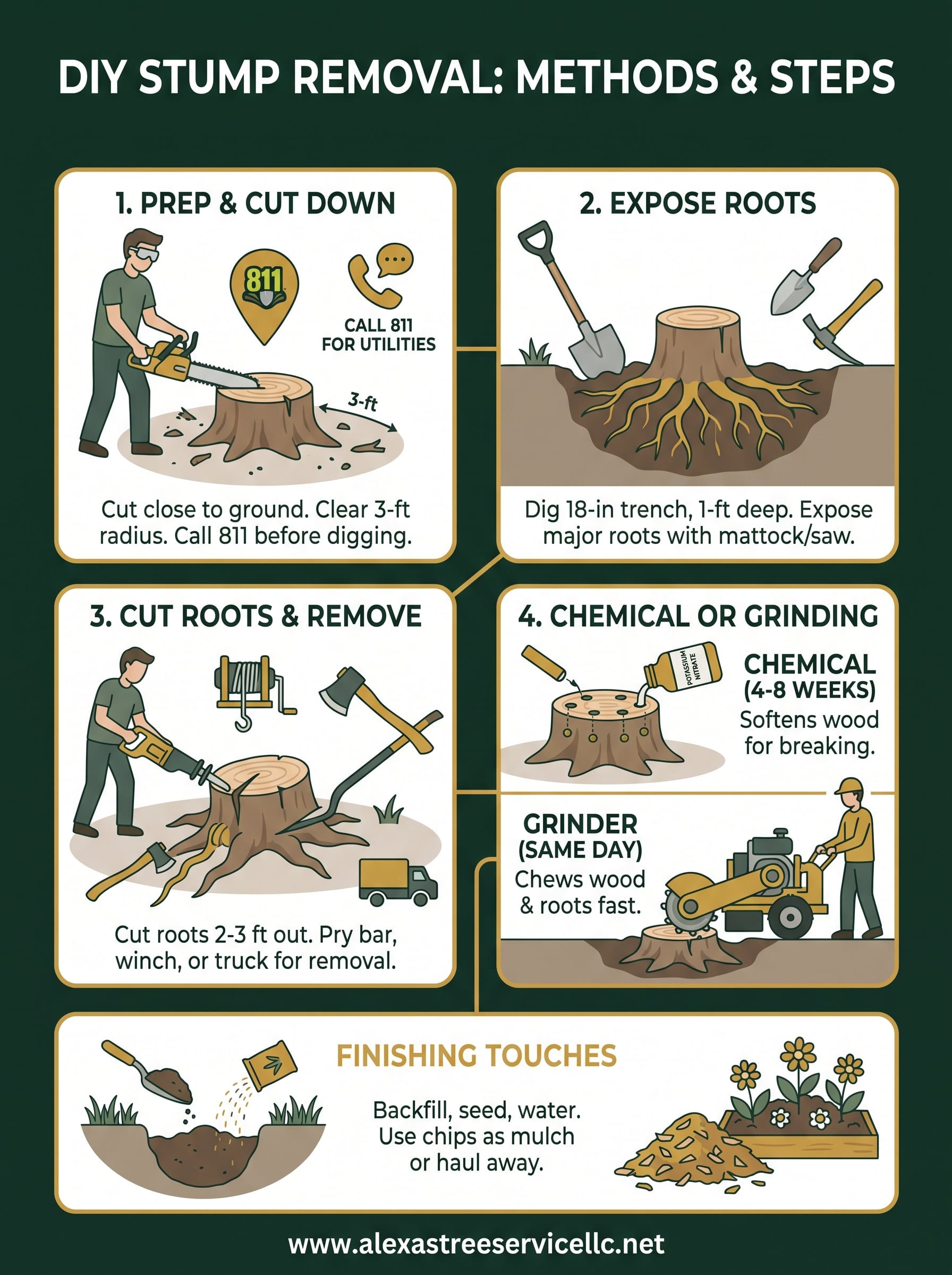
Finishing touches for your yard
Once the stump is out, backfill the hole with topsoil, tamping it down in layers so it doesn't sink after the first heavy rain. Spread grass seed or lay sod over the spot, and keep it watered daily for two weeks so it blends in with the rest of your lawn. Leftover wood chips from grinding work great as mulch around garden beds instead of going to waste, and anything you can't use can go out with a yard cleanup and debris haul-away.
Getting rid of a stump yourself saves money, but it also teaches you fast why root systems and heavy wood turn a simple afternoon into a multi-day project for anyone tackling DIY stump removal on a large or established tree. If you hit a stump too big to move, roots tangled around a fence line, or a hardwood that laughs at your chemical remover, that's the point to stop digging and call in equipment built for the job. Reach out to Alexa's Tree Service for a free estimate on professional stump grinding in Vancouver, WA and let a crew with the right grinder finish what your shovel started.