
Stump Grinding vs. Stump Removal: How to Get Rid of a Stump
The difference between stump grinding and stump removal is depth. Grinding chews the stump into chips 6 to 12 inches below ground and leaves the deep roots to rot. Removal digs out the stump and root ball whole. For most yards, grinding is the right call. Measure the stump, call 811, then rent a grinder for a small stump or hire a pro for a big one.
A leftover stump is more than an eyesore. It is a trip hazard, it wrecks mower blades, and it invites termites, mold, and fungi. Some species keep sending up sprouts. Online advice makes the choice harder, because "removal" can mean anything from rotting powder to an excavator, and popular tips like burning are slow, risky, or restricted.
Alexa's Tree Service has ground stumps for homeowners in Vancouver, WA and the Portland area since 2006, and the prices below are its own. This guide explains how the methods differ, how to check your site, how to grind or dig out a stump yourself, how to compare pro quotes, and how to clean up afterward.
Stump grinding vs. stump removal: what each one means
Stump grinding shreds the stump and its top roots to 6 to 12 inches below grade, while stump removal pulls the stump and root ball out of the ground. Both clear the yard, but they leave different things behind.
What each method leaves behind
Grinding leaves a pile of chips and buried roots. Full removal leaves a crater. Here is how the common options compare.
| Method | What it does | Time | Best for |
|---|---|---|---|
| Stump grinding | Shreds the stump and top roots 6 to 12 inches below grade | 30 minutes for a small softwood stump, 2 to 3 hours for a large hardwood | Lawns, beds, most home stumps |
| Full stump removal | Digs out the stump and root ball by hand or with machinery | Longest by hand, and big stumps need heavy equipment | Foundations, pools, deep replanting |
| Chemical rotting | Powder softens the wood over time | Weeks or longer, then you still chop it out | Small stumps and patient owners |
Why grinding suits most yards
Grinding wins on speed and mess. Full extraction means heavy digging and leaves a hole that takes a lot of soil to fill. Reserve it for spots where every root must go , such as under a new foundation or pool.
Buried roots rot over the years, which is fine under a lawn or bed. A few species, such as black locust, can resprout, so ask a pro whether your tree needs a deeper grind or follow-up treatment.
Grinding is faster and cleaner than extraction, and it is enough unless something must be built or planted right where the stump stood.
Step 1. Check the site and pick your method
Measure the stump, inspect the ground around it, and decide whether the job is DIY size before you rent or call anyone.
Measure and inspect
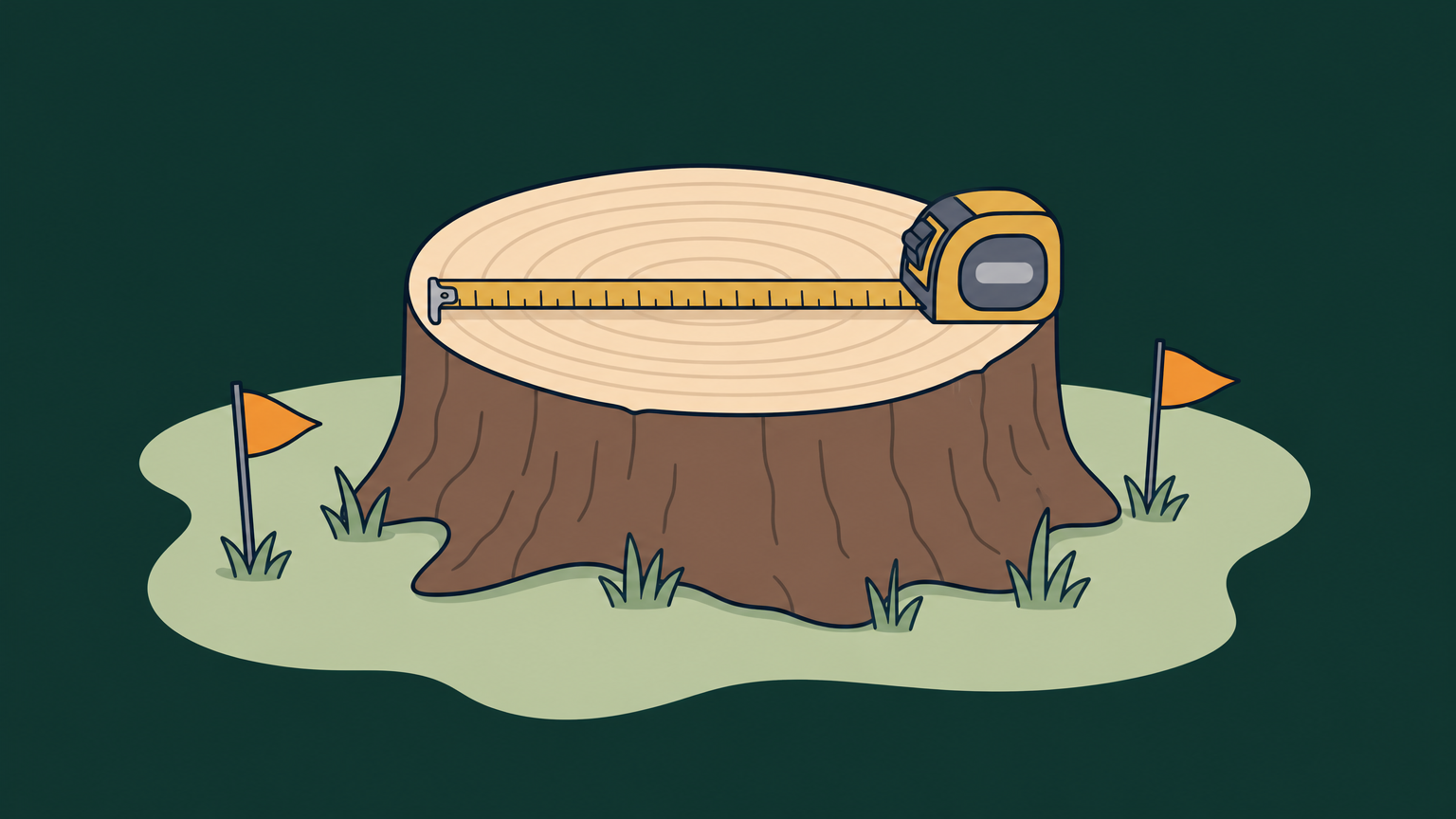
Measure the diameter across the top at its widest point. Then walk the area and note what could go wrong:
- Surface roots running into the lawn, driveway, or a bed
- Fences, walls, or the house within a few feet
- Irrigation lines, buried wires, or rocks near the stump
- Whether a grinder can physically reach the stump through a gate
Call 811 a few business days before any digging or grinding. Utilities mark buried lines for free , and hitting one turns a cheap job into an expensive and dangerous one.
DIY or pro
My rule is simple. Rent a grinder or dig by hand only for stumps under roughly 12 inches across with shallow roots and open access. Above 24 inches, or anywhere near lines, fences, or a foundation, hire the job out . Large hardwood stumps wear out a rental machine and its operator.
If a mistake could hit a utility line or a foundation, pay a pro to do it.
Step 2. Grind or dig out the stump yourself
Rent a walk-behind stump grinder for stumps you can reach, or dig out a small stump with a shovel and root saw. Rental prices vary by supplier, so check them against a pro quote first.
Grind with a rented machine
- Cut the stump as low as you can with a chainsaw.
- Clear rocks, wire, and metal from the stump and the ground around it.
- Put on gloves, safety glasses, ear protection, and sturdy boots, and keep people and pets away.
- Start at one edge with the cutting wheel above the wood. Sweep it side to side, then lower it a little at a time.
- Work across the stump, then grind the surface roots outward.
- Stop 6 to 12 inches below grade, as a pro would.
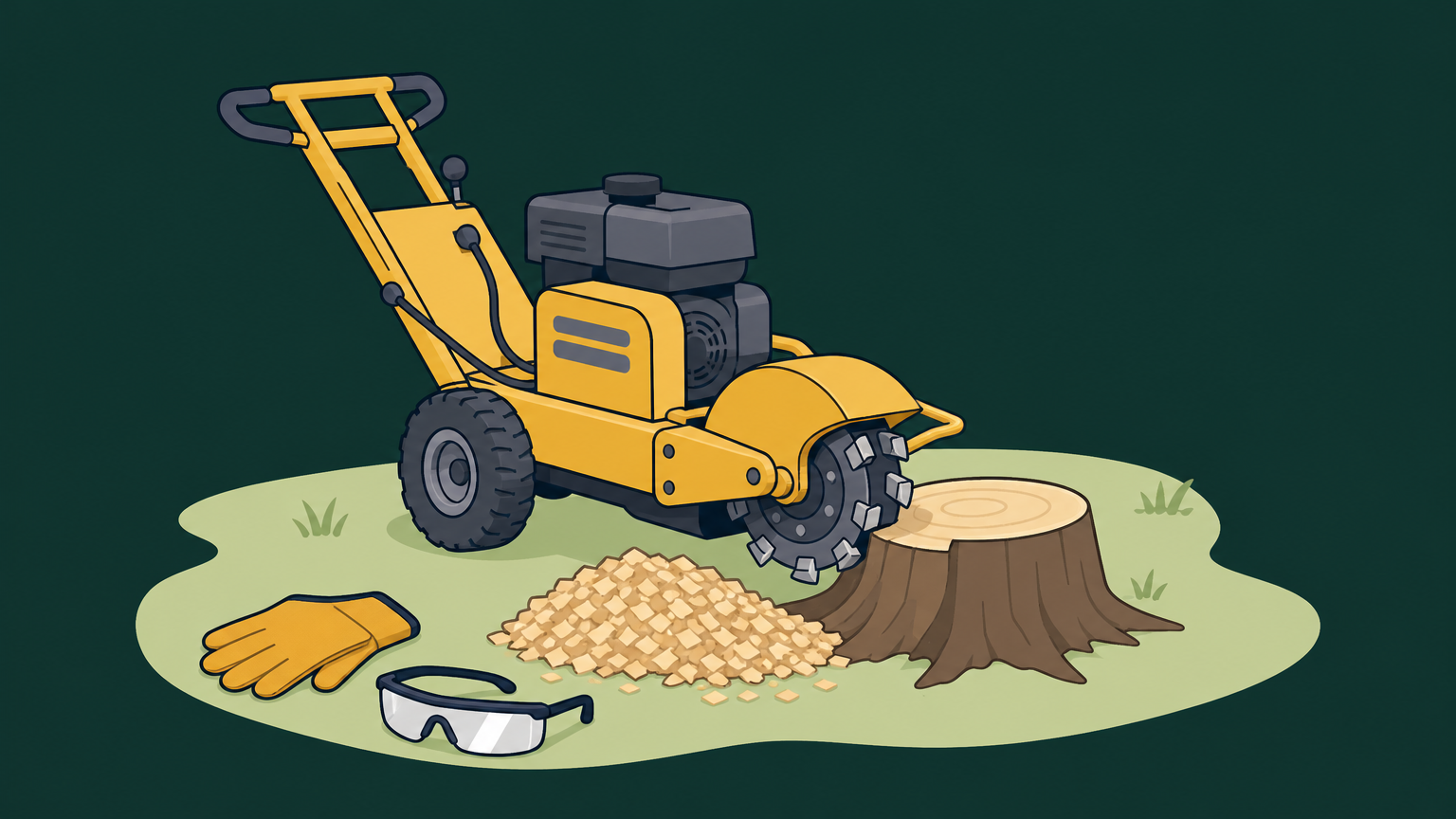
Never rush the sweep. Forcing the wheel down in one pass stalls the machine and throws chips and stones.
Dig out a small stump
Dig a trench around the stump with a shovel until the roots are exposed. Cut them with a root saw. An ordinary axe can shatter if it hits a rock. Then work a grub hoe under the remaining roots and lever the stump free. This works only on small stumps with shallow roots.
Methods to skip
I would skip burning and gasoline. Fire spreads, and burning stumps is restricted or illegal in many areas. Rotting powder works, but you drill holes, wait weeks, and still chop out what is left.
A rented grinder beats every shortcut, but only when the stump is small enough for one person to handle safely.
Step 3. Hire a pro and compare quotes
Call two or three local tree services, get a written free estimate from each, and compare price, grinding depth, root work, and cleanup. Stump grinding priced by a pro near you should be a clear line item.
What stump grinding costs
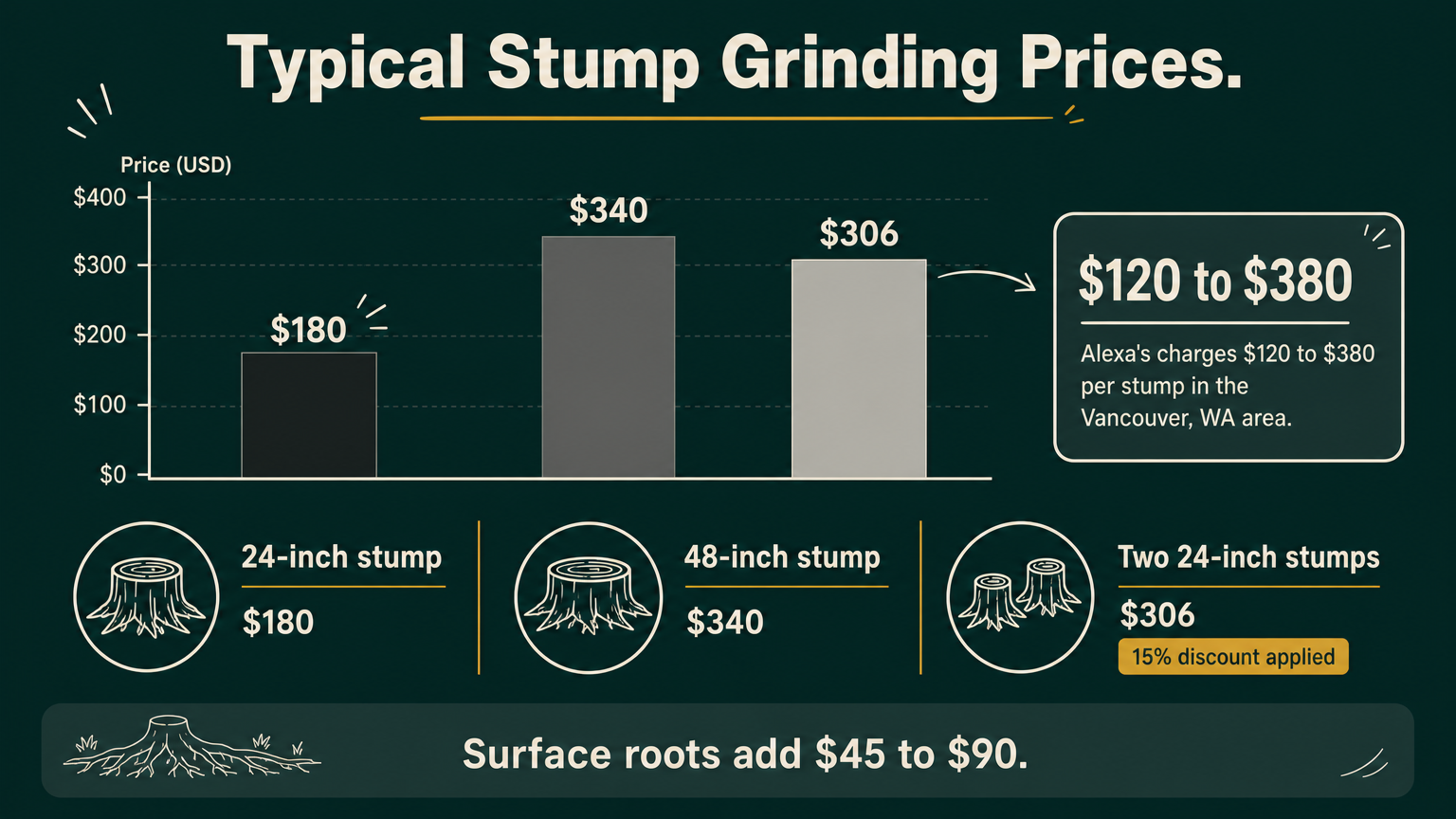
Price follows stump size. Alexa's Tree Service charges $120 to $380 per stump in the Vancouver, WA area. These numbers assume reasonable access and average wood density , so a steep backyard or very hard wood can push you higher.
| Item | Price |
|---|---|
| 24-inch stump | about $180 |
| 48-inch stump | about $340 |
| Surface roots | add $45 to $90 |
| Multiple stumps | 15% volume discount |
| Grinding bundled with tree removal | saves $45 to $75 |
Take two 24-inch stumps. Each averages $180, so $360 total, and the 15% discount brings it to $306 . Tree removal quotes usually leave the stump out, so ask for grinding as a separate line or a bundle.
What to ask before you hire
- Is the pro licensed and insured?
- How deep will the grinder go? (Alexa's grinds 6 to 12 inches below grade.)
- Do you chase surface roots? (Alexa's follows them 2 to 3 feet from the stump center.)
- Are cleanup and backfill in the quote? (They are in all of Alexa's quotes.)
- Is the estimate free and without obligation?
Compare quotes line by line, because a low price that skips cleanup and backfill usually costs more.
Step 4. Clean up the chips and fill the hole
After grinding, rake out most of the chips, fill the hole with topsoil, tamp it, and seed or plant over it. Skip this if your pro includes backfill, but still check the result.
Deal with the chips
A large stump can fill several wheelbarrows. Use the chips as mulch in a layer 2 to 3 inches deep around trees and beds, or add them to a compost pile. Keep them on top of the soil rather than tilling them in. Left alone, they take months or longer to break down. If the chips are mixed with dirt, shovel out the mixed layer in the middle of the hole and replace it with clean soil.
Repair the lawn
Fill the hole with topsoil in layers and tamp each one. Mound it slightly , because the soil settles over the following months and you will need to top it up. Then seed or plant, and water well. If you want a new tree there, plant it a little off the old spot so its roots avoid the old chips and buried root mass.
Grinding is only half the job, and good backfill is what leaves you with a usable yard.
Pick the method, then get it done
For most yards, grinding is the right answer to the stump grinding versus stump removal question. It is faster, cleaner, and cheaper than digging out the whole root ball. Check the site and call 811. DIY only small stumps with shallow roots. Hire a pro for anything big, close to structures, or hard to reach. Then clean up the chips and fill the hole properly.
If you are in Vancouver, WA or the Portland area, you can get a free stump grinding estimate from Alexa's Tree Service. Tell them the stump's diameter and where it sits, and compare the quote with your other options.