
How to Find the Best Tree & Stump Removal Services
A dead tree leaning toward your roof, a stump that keeps sprouting suckers in the yard, or a storm that just took down half a maple, these problems all lead to the same search: tree & stump removal done right, at a fair price, by someone who won't wreck your lawn in the process. Finding that company takes more than picking the first ad you see.
If you're in Vancouver, WA, Portland, OR, or one of the surrounding Pacific Northwest towns, the answer comes down to checking a handful of specifics: licensing and insurance , real reviews from real neighbors, and a written estimate that spells out removal, cleanup, and stump grinding separately so you're not surprised by the final bill.
This guide walks through exactly what to look for, the questions to ask before signing anything, and how free estimates and local permit knowledge separate a crew that shows up once and disappears from one you'd call again for pruning or storm cleanup. We've done this work in Clark County and the greater Portland metro for over 15 years, so we know what separates a solid removal job from a costly mistake.
What to know before hiring a tree or stump removal company
Before you call anyone, understand that what tree removal costs in 2026 across the Pacific Northwest swings widely based on tree size, location, and how much of a hazard the job presents. A 30-foot ornamental in an open backyard runs far less than a 90-foot Douglas fir leaning over a garage. Knowing the variables ahead of time helps you spot a fair quote versus one that's padded or, worse, one that's suspiciously low because the crew plans to skip insurance or cleanup.
Permits matter more than most homeowners realize
Vancouver, WA and several surrounding cities require permits for removing certain trees, especially heritage trees, trees over a specific diameter, or anything within critical areas like wetlands and steep slopes. Skipping this step can mean fines or a stop-work order mid-job, and it ranks high among the tree removal mistakes that cost homeowners the most. A company that's worked the region for years should know Clark County's rules cold and walk you through permit assistance before the chainsaws start. If a company can't answer basic permit questions for your city, that's a red flag.
A company that doesn't ask about permits before quoting your job probably hasn't done this in your city very often.
Cost factors you should ask about upfront
Get clarity on what's included in a quote before you compare numbers. Here's what typically drives the price:
| Factor | Why it matters |
|---|---|
| Tree height and diameter | Larger trees need more equipment, time, and crew |
| Location (near power lines, structures) | Tight access requires slower, more careful rigging |
| Stump grinding | Often quoted separately from removal |
| Wood/debris hauling | Some companies leave logs behind unless you pay extra |
| Emergency or storm timing | After-hours or urgent jobs cost more |
Having these line items broken out lets you compare apples to apples instead of guessing why one bid is $400 higher than another.
Timing affects both price and tree health
Insurance and licensing aren't optional extras, they're the difference between a covered incident and a lawsuit if a limb crushes your fence or a worker gets hurt on your property. Late fall through winter is typically the best window for tree removal and major pruning in the region, which is why Vancouver arborists recommend winter trimming: trees are dormant and crews have more scheduling flexibility. Ordinarily this means lower rates than peak spring and summer months when storm damage and routine trimming requests pile up. Overgrown or diseased trees, though, shouldn't wait for the
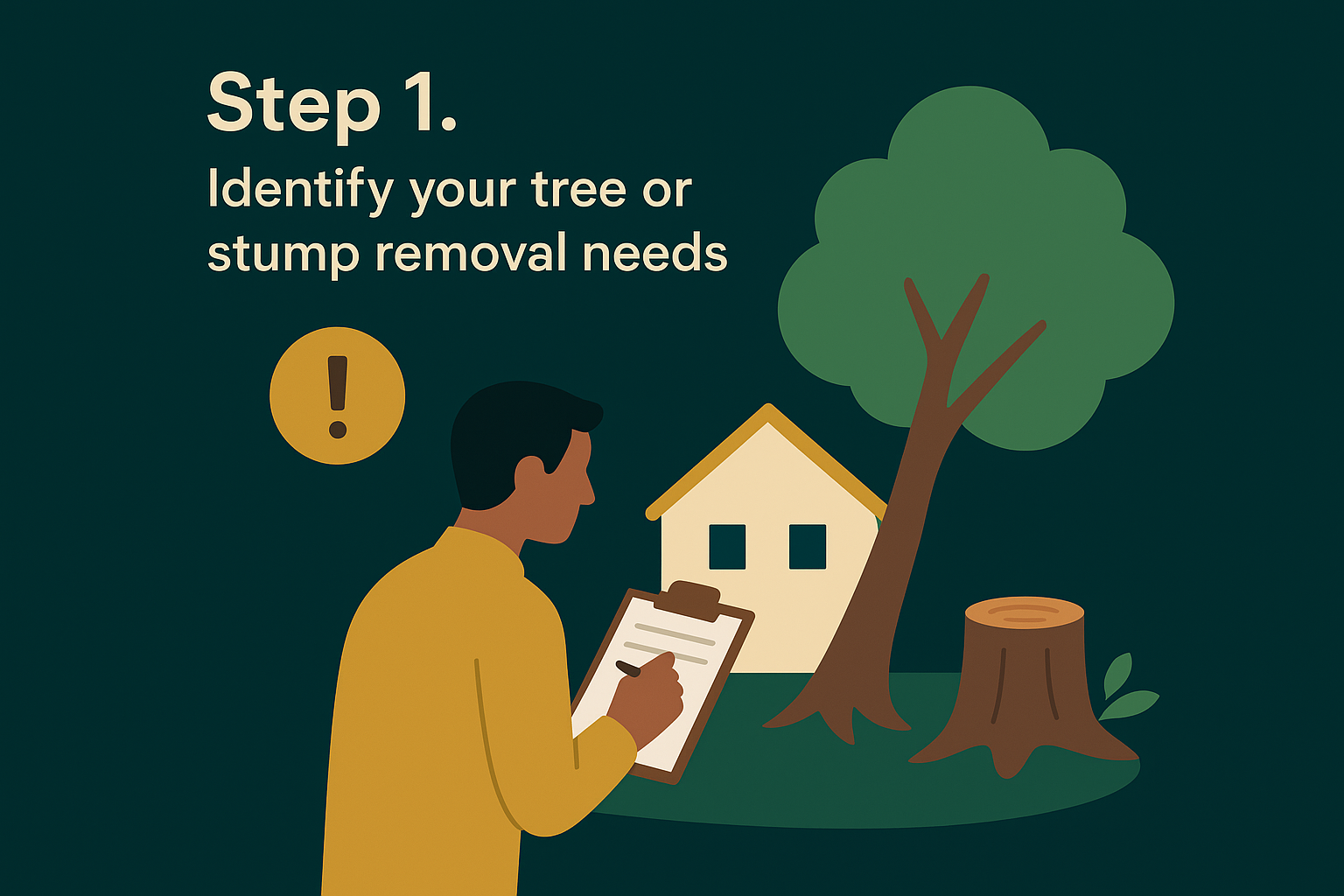
Step 1. Identify your tree or stump removal needs
Before you dial a single number, walk your property and write down what's actually wrong. A leaning trunk, a stump left over from last year's storm, or a hedge that hasn't been shaped in three years all call for different crews and different equipment. Getting clear on the job first keeps you from paying for services you don't need or, worse, hiring a company that only handles trimming when what you really need is full tree & stump removal .
Match the problem to the service
Start by sorting your situation into one of these buckets:
- Hazard removal : dead, diseased, or storm-damaged trees threatening a structure, power line, or walkway, handled by our same-day emergency removal crew in Vancouver, WA
- Routine trimming : overgrown branches, deadwood, or ornamental pruning for shape and health, the kind of certified arborist trimming work that keeps a canopy sound
- Stump grinding : leftover stumps sprouting suckers or blocking landscaping plans, cleared by fast, complete stump grinding that leaves the lawn flat
- Cabling or bracing : weak limb unions or split trunks that need support instead of removal, where the benefits of cabling and bracing a tree are worth weighing
- Storm cleanup : downed limbs or trees needing 24/7 emergency crew response
Most companies price these differently, so knowing which category you fall into speeds up the quote process and helps you avoid paying for a full crew when a single arborist visit would do.
Knowing exactly what you need before you call saves you from paying full-crew rates for a job that only needs one arborist and a chainsaw.
Note the tree's location and access
Document how close the tree sits to your house, fence, driveway, or your neighbor's property line. Tight access, overhead wires, or a slope changes both the price and the equipment a crew needs to bring. Snap a few photos on your phone. Sending them ahead of an estimate visit lets a company give you a more accurate ballpark before anyone shows up, and it flags jobs that need a bucket truck or crane instead of just ground crews with chainsaws.
Step 2. Find licensed and insured local providers
Once you know what kind of job you're dealing with, narrow your search to companies actually licensed to work in your city and carrying real insurance, not just a business card that says so. Washington and Oregon both require contractor licenses for tree work, one of several reasons removals belong to licensed professionals, and a legitimate crew will hand over that number without hesitation. Skipping this check is how homeowners end up covering hospital bills or fence repairs out of pocket when a cut-rate crew shows up uninsured.
Ask for the license number and insurance certificate before you ask for a price. A company that hesitates on paperwork will hesitate on cleanup too.
Verify credentials before you schedule anything
Don't take a company's word for it. Run through this checklist before booking a visit:
- Ask for the contractor license number and confirm it's active with your state's licensing board
- Request a certificate of general liability insurance , not just workers' comp
- Confirm coverage limits are high enough to cover damage to your house, garage, or a neighbor's property
- Ask how long they've operated locally, not just as a business entity elsewhere
- Check that the crew, not just a subcontracted broker, carries the insurance
Companies with 15+ years of regional experience , like ours here in Vancouver and Portland, tend to have this paperwork ready before you even ask, because they've been through the permit and insurance conversation hundreds of times.
Prioritize local knowledge over national chains
Local providers understand which neighborhoods sit in flood zones, which cities require permits for heritage trees, and how Pacific Northwest weather stresses root systems differently than a national franchise crew flown in for the season would know. A company serving Camas, Battle Ground, Ridgefield, Gresham, Beaverton, and Lake Oswego day in and day out has already dealt with your city's specific rules. That local footprint matters more than a flashy website when a limb is hanging over your roof and you need someone who knows the terrain, not just the trade.
Step 3. Request and compare free estimates
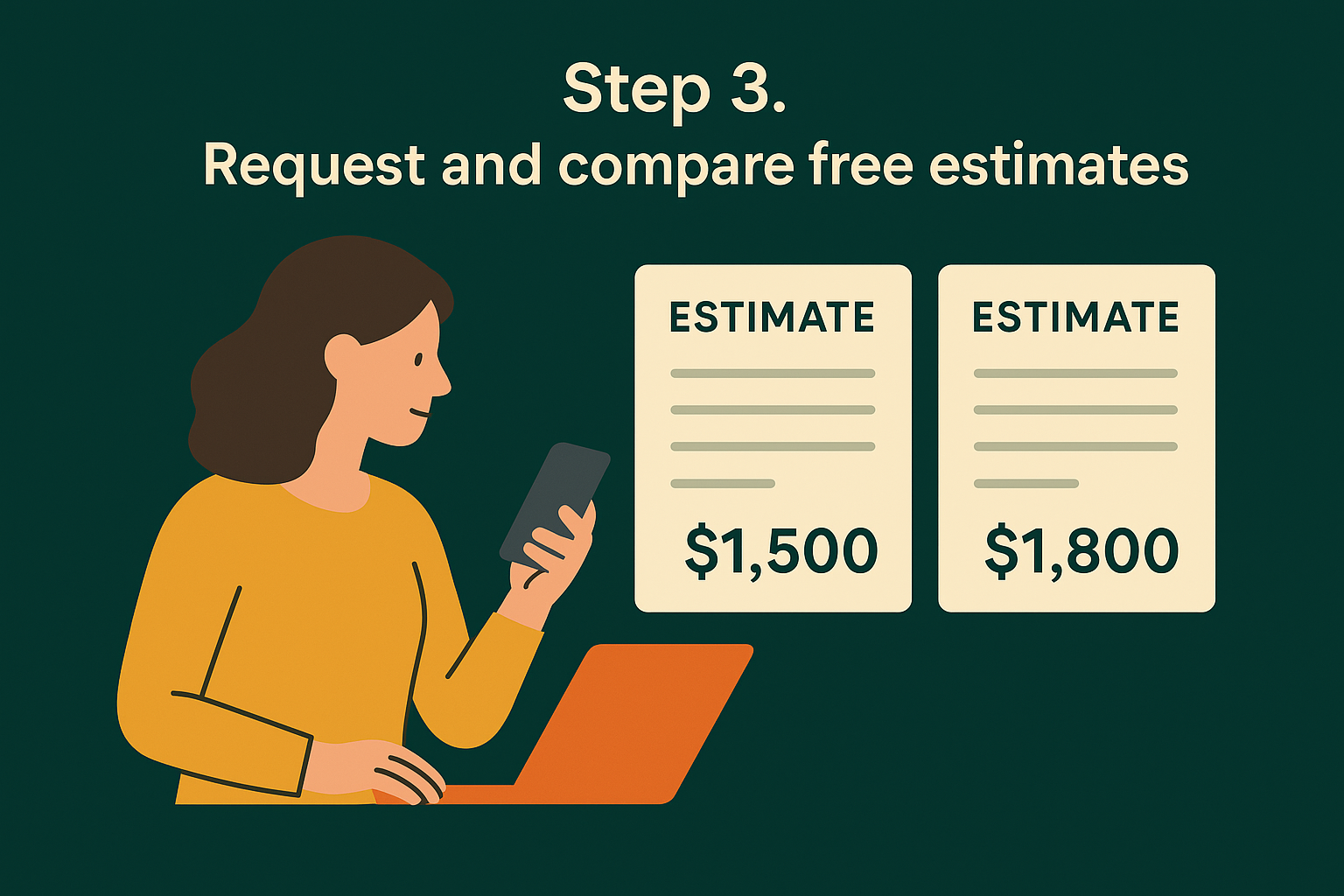
Once you've got two or three licensed candidates, request written free estimates from each one before you commit to anything. A phone quote based on your description of "a big oak in the backyard" isn't worth much. Insist on an in-person visit so the estimator can measure the trunk, check overhead clearance, and see exactly how close the job sits to your roof or fence. Alexa's Tree Service offers free estimates through an online form or a quick phone call, and that visit is where most surprises get caught before they become invoices.
Ask for line-item pricing, not a lump sum
A quote that just says "$1,800 for the tree" tells you nothing. Push for a breakdown that separates:
- Removal and rigging
- Stump grinding (often a separate line, priced by diameter, root spread, and access)
- Debris hauling and cleanup
- Any permit filing fees
A single lump-sum number hides more than it reveals. Ask for a breakdown or walk away.
This also makes it easier to spot which company is quietly skipping cleanup or leaving the stump behind to hit a lower headline price.
Compare bids on more than price alone
Once you have two or three written estimates, line them up side by side. The lowest number isn't always the best deal if it excludes stump removal, hauling, or insurance coverage that another bid includes. Weigh the estimated timeline too. A company that can start next week during storm season beats one booked out a month, especially if the tree in question is already a hazard. Factor in how each estimator answered your questions on-site; a crew that walked the property carefully and flagged access issues upfront usually does the same careful work once the chainsaws come out.
Step 4. Check reviews and ask the right questions
Once you've narrowed your list to licensed, insured companies with solid quotes, the last filter is reputation. Online reviews tell you how a company behaves after the invoice, not just how polished their sales pitch sounds. Look for patterns across dozens of reviews rather than trusting a handful of five-star posts that could belong to anyone. A company with 180+ five-star Google reviews built over years of local jobs has a track record you can actually verify, not just a marketing claim.
Read between the lines of online reviews
Skim for specifics, not just star ratings. Comments mentioning clean cleanup , on-time arrival, or careful work near fences and gardens tell you more than a generic "great service" comment ever will. Watch for repeated complaints about damaged lawns, no-shows, or surprise fees tacked on after the crew arrives. A pattern of vague five-star reviews posted the same week can be a sign of incentivized reviews rather than genuine feedback.
One detailed review about careful cleanup tells you more than ten generic five-star ratings ever will.
Ask questions that reveal real experience
Before you sign anything, get direct answers to a short list of questions:
- How many crew members will be on-site, and who's supervising?
- What happens to the wood and debris, is hauling included?
- Will you grind the stump the same day, or is that scheduled separately?
- What's your plan if you hit a power line or fence during removal?
- Can you provide references from jobs done in my city in the past year?
Honest, specific answers to these questions matter more than a slick estimate sheet. A crew that hesitates or gives vague responses probably hasn't handled situations like yours before.
Choosing a provider you can trust
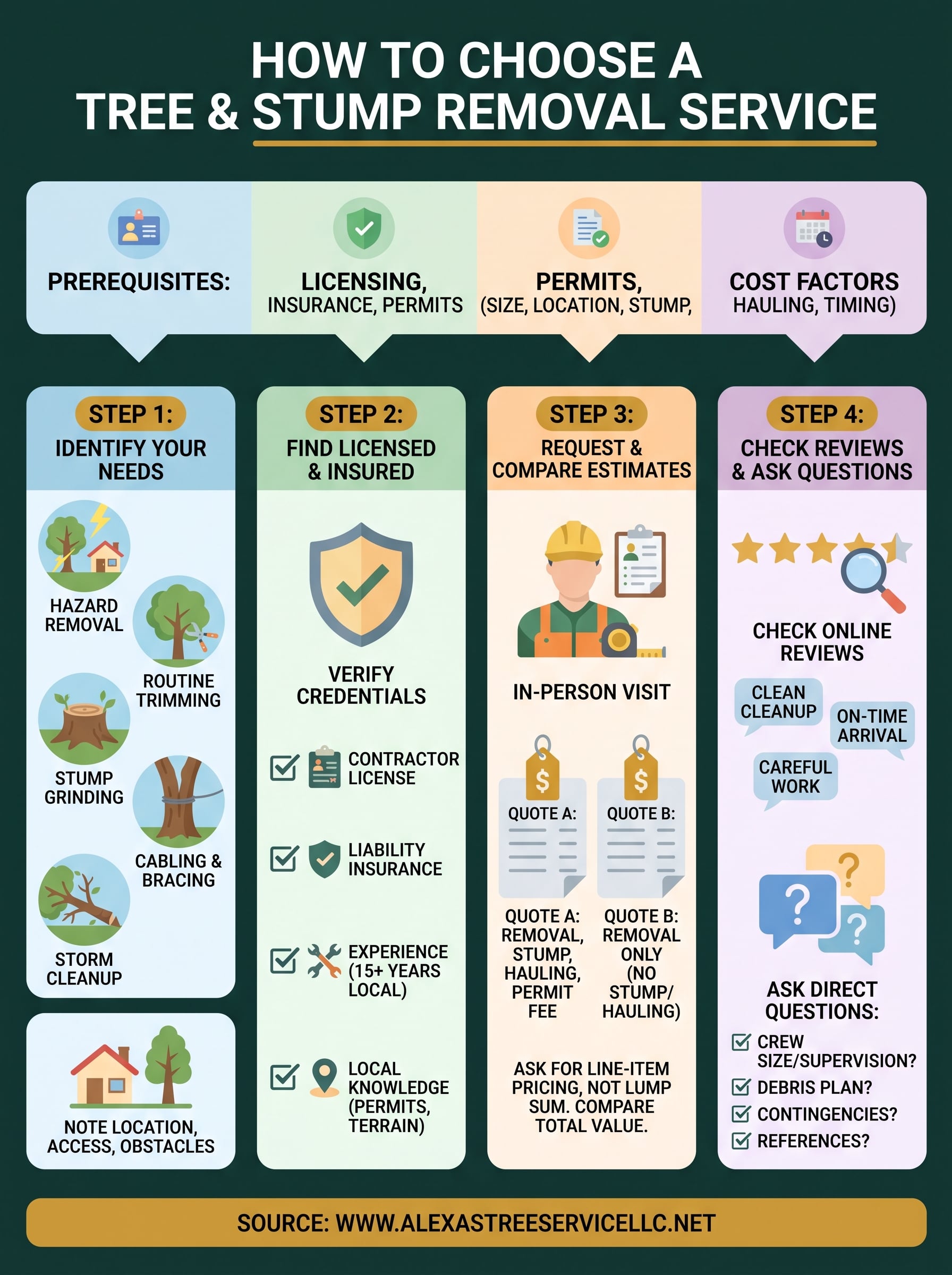
Getting tree & stump removal right comes down to the same handful of checks every time: verified licensing, real insurance, a written estimate broken into line items, and reviews that hold up under scrutiny. Skip any one of these steps and you're gambling with your yard, your fence, or your wallet.
Homeowners who slow down and run through this checklist end up with a crew that shows up on time, cleans up properly, and doesn't nickel-and-dime you after the fact. That's the difference between a one-time job and a company you'll call again for pruning or storm cleanup down the road.
If you're in Vancouver, Portland, or anywhere in between and ready to get a straight answer on cost and timeline, schedule your free on-site tree and stump estimate and see how a 15-year local track record compares to the other bids in your inbox.