
Tree Removal Fee: What Determines Your Price in 2026
You've got a tree that needs to come down, and before you call anyone, you want a real number. The tree removal fee you end up paying isn't random. It's built from a handful of specific factors: tree height and diameter, how close the trunk sits to your house or power lines, how much your crew has to climb versus what a bucket truck can reach, and whether the wood and stump get hauled away or left in a pile for you to deal with.
Most homeowners in Vancouver and Portland ask the same question: what should this actually cost? The honest answer is a range, because a 30-foot ornamental in an open backyard and a 90-foot fir leaning over your roof are two completely different jobs, even though both fall under "tree removal." Tree removal fees swing widely for exactly that reason.
This guide breaks down what drives the price up or down, walks through average cost ranges by tree size and difficulty, and covers the extras (permits, stump grinding, emergency storm work) that often surprise people when the final invoice arrives. By the end, you'll know what questions to ask and what a fair quote looks like for your property.
Why tree removal fees vary so much
Start with the tree itself. Tree height and diameter are the biggest levers in any quote, because they determine how many cuts a crew makes, how much rigging is needed, and how many truckloads of wood leave your property, and they sit at the top of the list of factors that determine tree removal pricing. A 25-foot flowering cherry in a side yard might take two guys ninety minutes. A 100-foot Douglas fir with a four-foot trunk, common all over Clark County, can take a full crew most of a day, sometimes two if it has to come down in sections.
Location on your property matters just as much as size. Tree removal fees climb fast when a trunk sits within a few feet of a house, garage, fence, shed, or septic line, because the crew can't just drop it and has to rig ropes, cut in small sections, and lower each piece by hand or with a crane. Trees near power lines add another layer of complexity and, often, a required coordination call with the utility company before anyone touches a saw.
A tree's price tag is set less by how tall it is and more by how carefully it has to come down.
Access for equipment
Crews price jobs differently depending on whether a bucket truck or crane can reach the tree. If your driveway is wide and clear, a company can park a truck right next to the trunk and work from the bucket, which is faster and cheaper than sending a climber up with a chainsaw and rope. Backyard trees behind a fence, on a slope, or tucked between other trees usually mean climbing removal , which takes longer and costs more because it's more labor-intensive and carries more risk.
Tree condition and species
A dead or diseased tree isn't automatically cheaper to remove, and it's often more expensive. Dead wood is brittle, unpredictable, and can shatter or drop limbs without warning, so crews take it slower and sometimes bring in extra safety gear, which is why it helps to spot an unhealthy tree early. Species matters too. Hardwoods like oak and maple are denser and heavier per cubic foot than a cedar or alder of the same size, which affects how the wood is handled and hauled. Hazardous or storm-damaged trees, especially ones already leaning or split, push a job into a different pricing tier because of the added risk to the crew and your property.
Typical price ranges by tree size
Here's a general breakdown we use as a starting point in the Vancouver and Portland area. Treat these as ballparks, not quotes, since accessibility and hazards shift the number in either direction, and see our fuller 2026 price guide by size, species, and access for more detail.
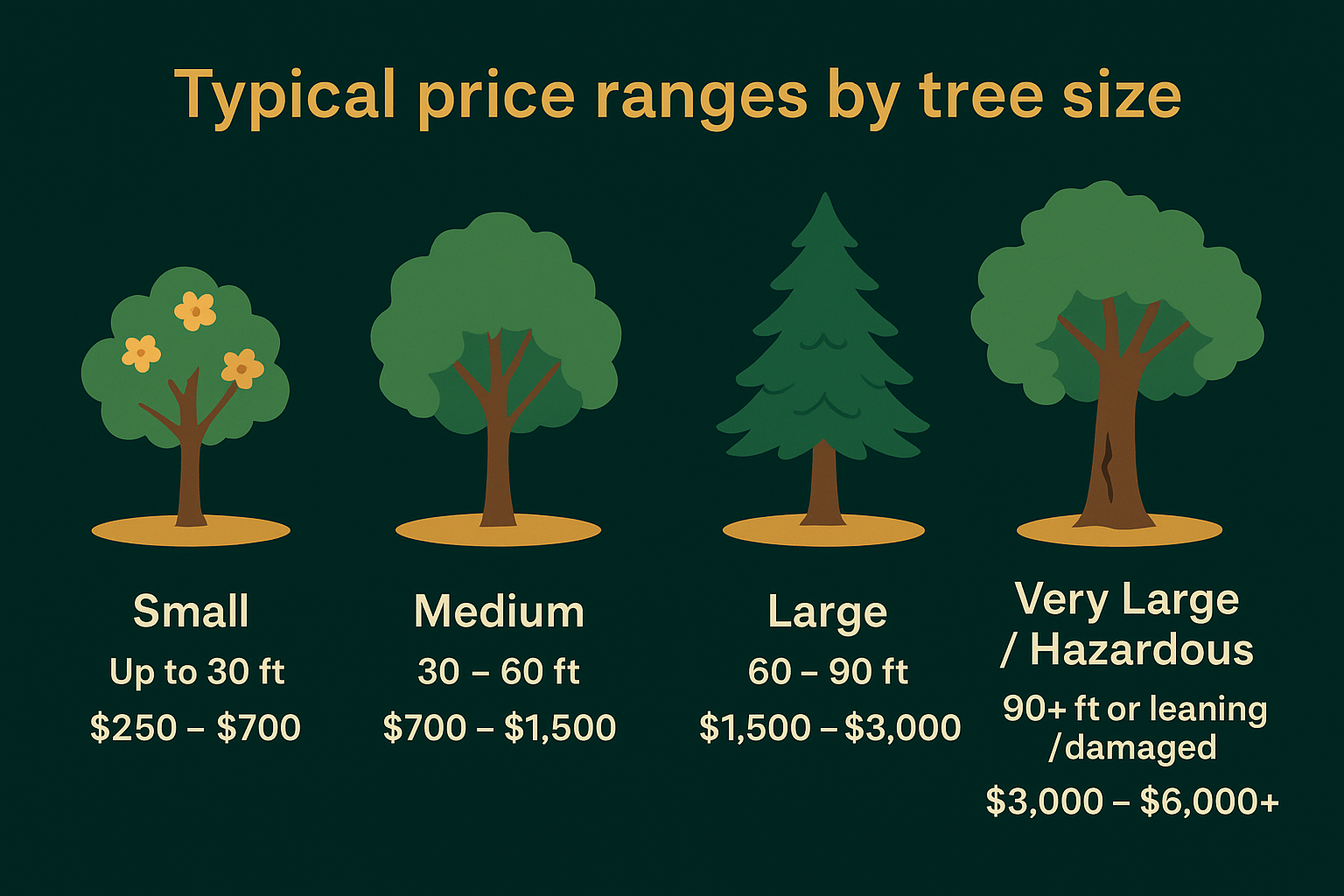
| Tree Size | Height Range | Typical Cost Range |
|---|---|---|
| Small | Up to 30 ft | $250 – $700 |
| Medium | 30 – 60 ft | $700 – $1,500 |
| Large | 60 – 90 ft | $1,500 – $3,000 |
| Very Large / Hazardous | 90+ ft or leaning/damaged | $3,000 – $6,000+ |
Why one company's number won't match another's
Even for the same tree, two companies can hand you quotes that differ by hundreds of dollars, and it's rarely because one is overcharging. Crew size and equipment vary between companies. A two-person outfit with hand tools takes longer than a four-person crew with a crane, which changes the labor cost even though the tree is identical. Insurance and licensing also factor in. A properly licensed and insured company builds that overhead into their pricing, and that's worth paying for, since an uninsured crew that damages your roof or a neighbor's fence leaves you covering the repair. When you're comparing estimates, ask what's included, not just the bottom-line number, and check our same-day tree removal crew in Vancouver, WA for a sense of how we scope a job before quoting it.
How to estimate your tree removal fee
You don't need a professional on-site to get a reasonable ballpark before you start calling around. Grab a tape measure, take a few photos, and walk your property with the price ranges from the table above in mind. Most homeowners can narrow their tree removal fee down to within a few hundred dollars just by answering three questions: how tall is the tree, how close is it to structures or lines, and can a truck get near it.
Measure height and trunk diameter
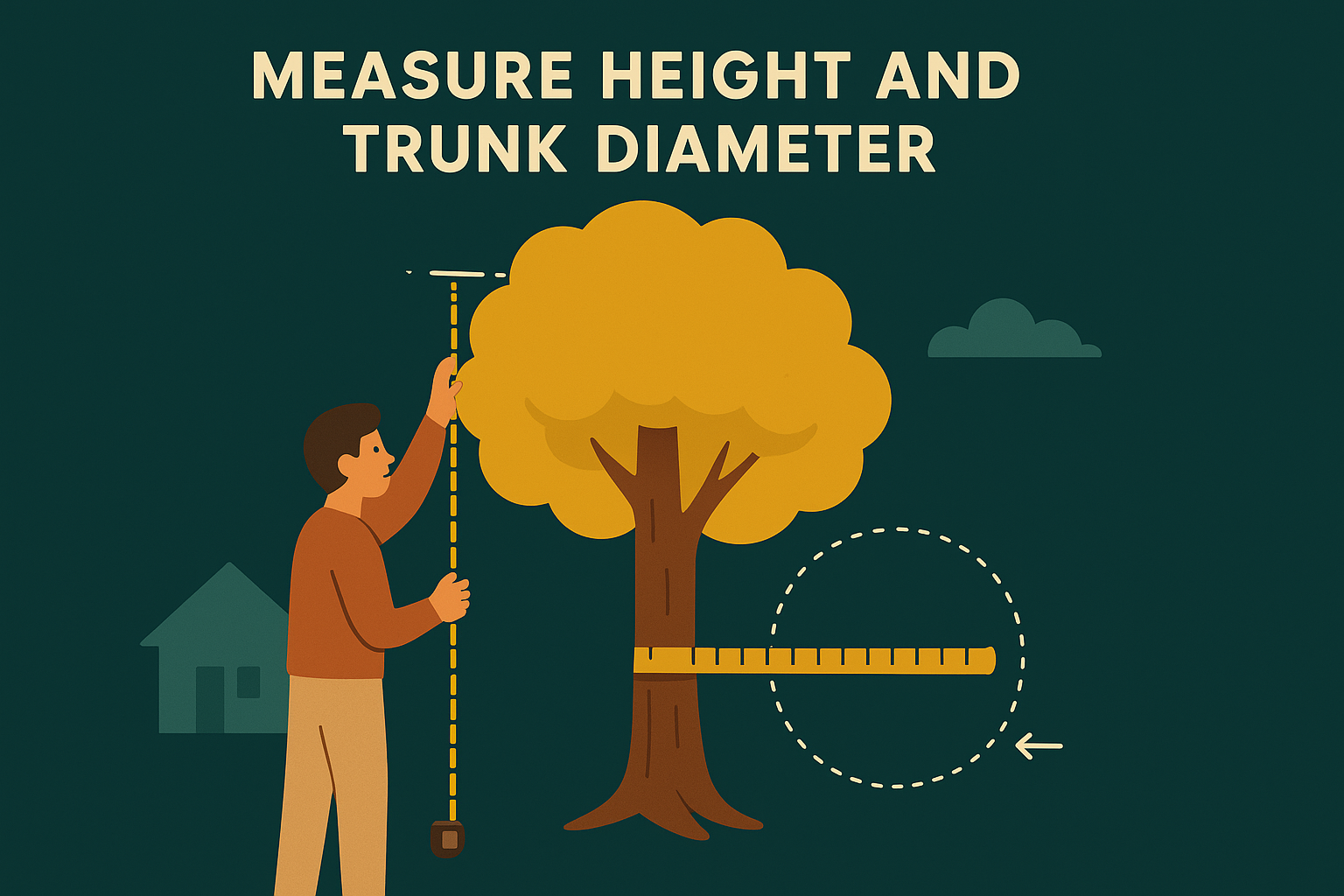
Stand back from the tree until you can see the whole crown, then estimate height by comparing it to something known, like your house's roofline or a nearby power pole (most residential poles run 35 to 45 feet). For trunk diameter, wrap a string around the base at chest height, measure the string, and divide by 3.14 to get a rough diameter in inches. Crews use diameter to judge how much wood volume they're cutting and hauling, which is a bigger cost driver than height alone once you're past the 60-foot mark.
Score the access and hazard factors
Walk the property and note anything that would slow a crew down. This short list covers what most estimators check first:
- Distance from the trunk to your house, garage, fence, or shed
- Overhead power lines running through or near the canopy
- Slope of the ground and whether a truck can park within 50 feet
- Fences, gates, or narrow side yards blocking equipment access
- Visible dead branches, cracks, or lean, which signal hazard pricing
Each item on that list can push a job into the next pricing tier, so be honest about them rather than assuming the easiest scenario.
The fastest way to estimate a fair tree removal fee is to measure what makes the job hard, not just how tall the tree stands.
Match your tree to the right tier
Once you've got a rough height, diameter, and hazard score, line it up against the size table from the previous section. A 45-foot maple with no obstacles sits comfortably in the medium tier, likely $700 to $1,500. That same tree leaning toward a garage roof, or growing six feet from a fence line, jumps toward the top of that range or into the large tier because of the rigging and hand-lowering involved.
Confirm with a free on-site quote
Self-estimating gets you in the right neighborhood, but it's not a substitute for a walk-through. Soil conditions, root spread, and what's actually inside a trunk (rot isn't always visible from outside) all change the final number. We offer free estimates for exactly this reason: a crew looks at your specific tree, confirms access, and gives you a number you can actually rely on before any cutting starts.
Additional costs that can raise your tree removal fee
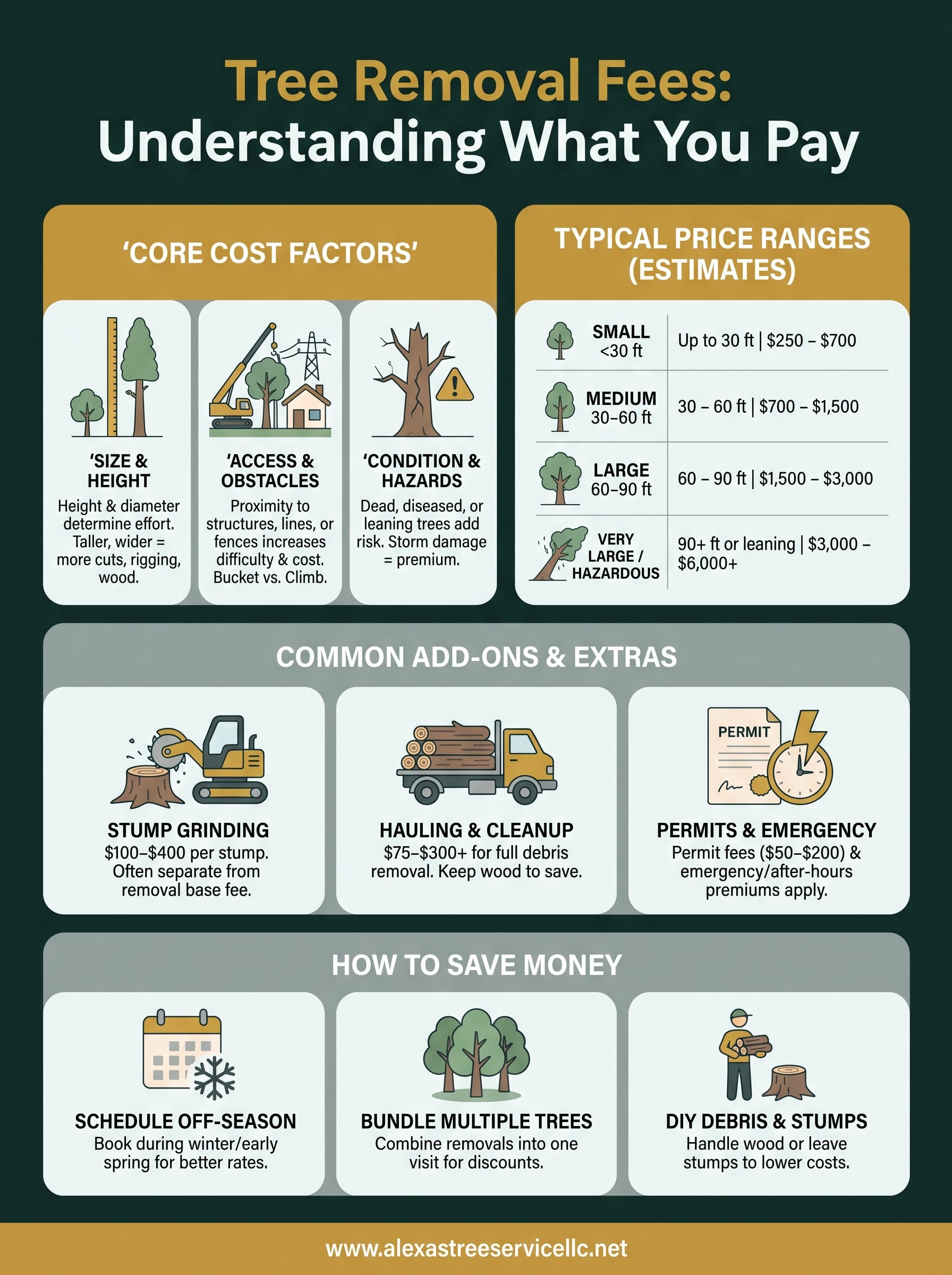
Even a clean, straightforward estimate can grow once you start adding the extras most homeowners don't think about until the crew is already there. Stump grinding is the most common add-on, and it's almost never included in a base tree removal fee unless you ask for it upfront. Grinding a stump typically runs $100 to $400 depending on diameter, and leaving it behind means dealing with a tripping hazard, regrowth, or a spot in your yard you can't mow around for years.
Hauling matters too. Quotes usually assume the crew cuts the tree into rounds and leaves them stacked on your property, which keeps the price lower. If you want the wood, brush, and debris fully hauled away and disposed of, expect to pay more, often $75 to $300 extra depending on the size of the tree and how far the dump site is from your address. Some homeowners actually save money here by keeping the rounds for firewood and only paying to have the branches chipped and removed.
Emergency and storm-related premiums
Generally, calling for emergency tree removal during or right after a storm costs more than scheduling standard work weeks in advance. Crews working after hours, in the dark, or in dangerous wind conditions charge a premium because the risk to the team goes up and the job often can't wait for daylight or calm weather. If a tree has already fallen on a structure, vehicle, or power line, that's a different pricing category entirely, and our after-hours storm response team in Vancouver, WA handles those calls where speed matters more than shopping three quotes.
The bill grows fastest not from the tree itself, but from everything the crew has to do around it.
Crane rental and specialized rigging
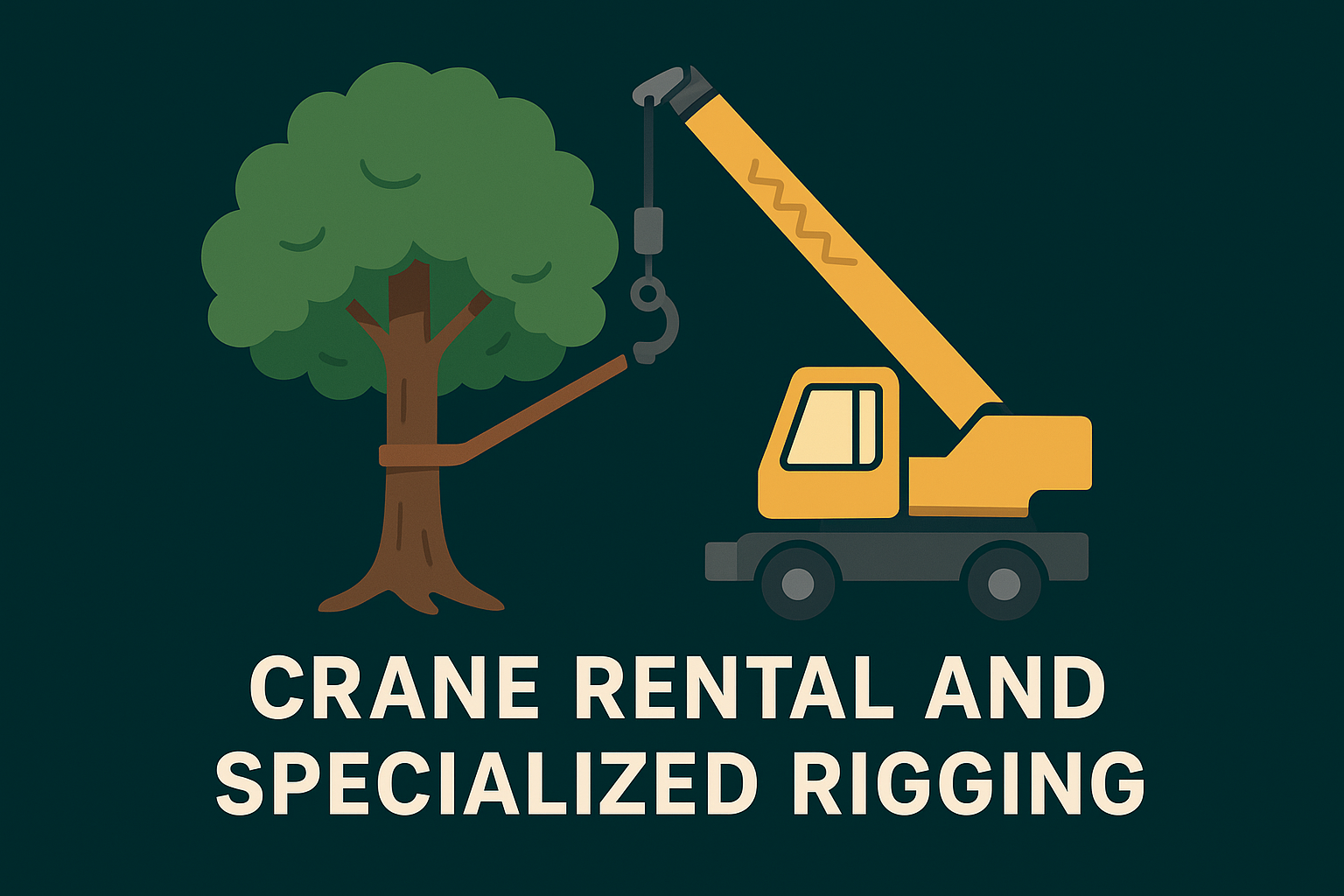
Certain trees, particularly very large or hazardous ones near a house, simply can't come down safely with ropes and a climber alone. Renting a crane for the day adds a significant line item, often several hundred dollars, but it's frequently cheaper in the long run than the alternative of a limb dropping the wrong direction and hitting your roof.
Quick reference: common add-ons
- Stump grinding: $100–$400 per stump
- Full debris haul-away: $75–$300+
- Emergency/after-hours service: premium pricing, often 25–50% above standard rates
- Crane rental for hazardous trees: several hundred dollars added to the base fee
- Multiple tree discounts: some companies lower per-tree pricing when removing three or more trees in one visit
Understanding which of these apply to your situation before you call around keeps you from getting blindsided by a final invoice that looks nothing like the verbal number you were quoted. Our tree removal page breaks down which of these extras we typically include versus quote separately, so you know what you're comparing when you get bids from other companies.
Tree removal permits and rules in Washington and Oregon
Before you sign off on a tree removal fee , check whether your city or county requires a permit, because skipping this step can cost more than the removal itself. Vancouver, WA and Portland, OR both regulate tree removal, but the rules differ enough that a job legal on one side of the Columbia River might need paperwork on the other. Ignoring this isn't a small risk either; unpermitted removal of a protected tree can bring fines that dwarf what the job would have cost with a permit in hand.
Vancouver, WA and Clark County rules
Generally, Vancouver requires a tree removal permit for trees over a certain diameter, and the threshold gets stricter if the tree sits in a critical area, a shoreline buffer, or a designated tree preservation zone tied to a subdivision. Smaller residential lots often have more flexibility for removing a single hazardous tree without a permit, especially if it's dead, diseased, or poses an immediate safety risk, but you still need documentation if a city inspector ever asks. Clark County unincorporated areas follow a separate set of rules from the city itself, so a tree on the edge of city limits can fall under different requirements than one two blocks away.
Portland, OR and Oregon municipal rules
Portland runs one of the stricter urban tree codes in the Pacific Northwest, and it applies to a much wider range of situations than most homeowners expect, which is why our Portland tree removal and arborist team checks the code first. The city's Urban Forestry division, part of Portland Parks & Recreation, requires permits for removing many trees over six inches in diameter, including on private property, and street trees planted in the right-of-way have their own separate protections. You can check current thresholds and applications directly through the City of Portland's tree permit resources before assuming a tree is fair game.
Permits protect the tree canopy, but skipping one protects nothing, it just adds a fine on top of your tree removal fee.
How permits change your cost and timeline
Factor permit costs into your budget early, since fees typically run $50 to $200 depending on the jurisdiction, and processing can add one to four weeks before a crew is legally allowed to start. Here's what usually determines whether you need one:
- Trunk diameter measured at standard height (varies by city)
- Whether the tree is native, heritage-designated, or in a protected zone
- Proximity to wetlands, steep slopes, or shoreline buffers
- Whether the removal is for new construction versus hazard mitigation
Handling this correctly matters enough that we offer permit assistance guidance through our Vancouver, WA arborist services, walking clients through what's required before a chainsaw ever gets fired up. Reach out through our contact page if you're unsure whether your tree needs sign-off first.
How to save money on tree removal
Saving on a tree removal fee doesn't mean chasing the cheapest bid you can find. It means timing the job right, bundling work where it makes sense, and doing the prep that shaves labor hours off the crew's day. Homeowners who plan even a few weeks ahead, rather than calling in a panic, usually end up paying less for the exact same tree.
Schedule during the off-season
Winter and early spring tend to be slower months for tree companies in the Vancouver and Portland area, since most storm damage gets handled in fall and most ornamental pruning happens in late winter dormancy. Booking a non-emergency removal during a slower stretch often gets you a better price than calling in July when every crew is backlogged with summer work. If your tree isn't an immediate hazard, ask about scheduling flexibility instead of insisting on the soonest available date.
Waiting three weeks for a scheduled slot almost always beats paying an emergency premium for the same tree.
Bundle multiple trees into one visit
Companies price a single tree differently than they price a job with several trees on one property, because setup, insurance paperwork, and crew mobilization cost roughly the same whether they're cutting one tree or four. Grouping your removal with a neighbor's, or tackling several problem trees on your own lot at once, usually knocks down the per-tree rate. Before you book anything separately, ask these questions:
- Does the company offer a discount for three or more trees in a single visit?
- Can stump grinding for multiple stumps be bundled into one trip?
- Will combining removal with routine trimming or a maintenance plan lower the total?
Handle debris and stump work yourself
Keeping the cut rounds for firewood, or renting a chipper for smaller branches instead of paying for full haul-away, is one of the easiest ways to trim the invoice. Similarly, if the stump doesn't bother you visually or functionally, skipping complete stump and root grinding altogether saves $100 to $400 without affecting the safety of the removal itself. Just confirm with the crew ahead of time so the quote reflects what they're actually leaving behind.
Compare quotes on scope, not just price
Getting multiple estimates protects you from overpaying, but only if you're comparing apples to apples. A quote that's $200 cheaper but excludes haul-away, stump grinding, or cleanup isn't actually the better deal once you add those costs back in. Ask each company to itemize what's included, request the quote in writing, and confirm insurance coverage before you sign anything. A properly licensed crew that protects your property is worth more than a marginal savings from an outfit cutting corners on coverage, and there are good reasons to leave removals to licensed professionals.
Getting a fair price for your tree removal
A fair tree removal fee always comes back to the same handful of factors: size, access, hazard level, and what's included in the scope. Once you know how to measure a tree, spot the access problems a crew will flag, and ask about permits before work starts, you're no longer guessing at a number someone else hands you. You're checking their math against your own.
Price still matters, but it shouldn't be the only thing you compare. Licensed and insured crews with a real local track record protect your property in ways a rock-bottom bid never will, and that protection is worth paying for. If you've got a tree in Vancouver, Portland, or anywhere nearby that needs a real number attached to it, schedule a free on-site tree removal quote and get a number built around your actual property, not a guess.