
Tree and Stump Removal: DIY vs. Professional Options
That stump sitting in your yard after a tree removal isn't just an eyesore. It's a tripping hazard, a magnet for termites and fungus, and it can send up new shoots for years if you leave the roots alone. Every homeowner in Vancouver or Portland who's cut down a tree eventually asks the same question: pull it out yourself or call someone who does this for a living.
The honest answer depends on the stump's size, the equipment you're willing to rent, and how much time you want to spend on it. Small stumps under 12 inches can sometimes be tackled with a rented grinder or chemical rot accelerators over several weeks. Larger stumps, especially those tangled in roots near foundations, driveways, or septic lines, usually need professional stump removal to avoid damage or injury.
In this guide, we walk through both paths in detail: the tools and steps for DIY grinding or digging, what stump removal costs by diameter and wood type in the Pacific Northwest, and when hiring a licensed crew saves you money and headaches in the long run. We'll also cover permit considerations for Clark County properties so you know exactly where you stand before touching a shovel.
Why remove a stump and how to pick your method
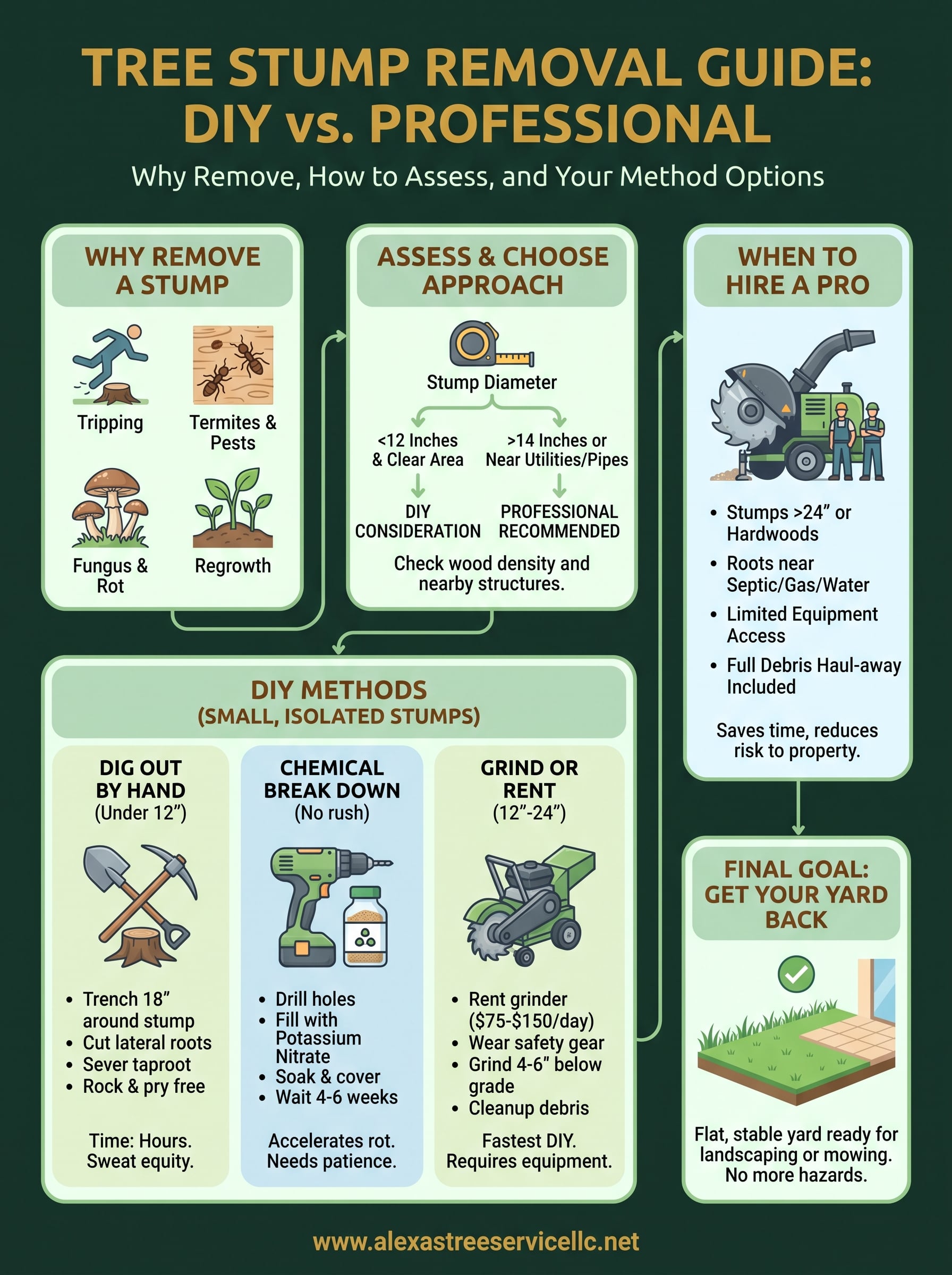
Leftover stumps do more damage than most people expect. Decaying wood attracts carpenter ants, termites, and the fungi behind root rot that can spread to nearby healthy trees or even your home's foundation if the stump sits close enough. A stump also keeps sending nutrients to root suckers, so you'll see new sprouts popping up in your lawn for two or three seasons after the tree removal stump was cut down. If you're planning to landscape, install a patio, or just mow in a straight line again, the stump has to go.
A stump left in the ground isn't finished business, it's a slow-motion problem waiting to spread.
Before you pick a method, look honestly at three things: stump diameter, root spread, and what's nearby. A 10-inch pine stump in open lawn is a weekend project. A 30-inch oak stump with roots running under a driveway or septic line is a different animal entirely, and that's where professional stump removal earns its cost.
DIY vs. professional at a glance
| Factor | DIY approach | Professional service |
|---|---|---|
| Stump diameter | Under 12-14 inches | Any size, including large hardwoods |
| Time investment | Days to weeks (chemical) or a weekend (manual) | Usually finished same day |
| Equipment cost | $75-$150/day rental | Included in quote |
| Risk of property damage | Higher near utilities, pipes | Low, insured crews |
| Root system removed | Partial | Full grinding below grade |
Once you know which category your stump falls into, the next step is matching it to the right technique, starting with a proper assessment.
Step 1. Assess the stump and choose your approach
Grab a tape measure before you grab a shovel. Stump diameter tells you almost everything: anything over 14 inches, or with roots crossing a walkway, gas line, or septic field, moves straight into professional territory. Check the wood itself too. Soft, spongy, or already crumbling wood breaks down faster and responds well to chemical accelerants, while dense, fresh-cut hardwood resists rot for years and usually needs mechanical grinding.
Walk the yard and note what's within 10 feet of the stump. Sprinkler heads, buried cable, fences, and foundations all change your risk calculation. Root spread often reaches two to three times the width of the trunk, so a stump that looks isolated may still have roots wrapped around a water line you can't see.
Measure twice, dig once, because a shovel through a buried pipe costs more than any tree service call.
Once you've sized up the stump, match it to a method, and it helps to know which DIY stump removal methods actually work:
- Under 12 inches, open ground: dig it out by hand
- Rotting or soft wood, no rush: chemical breakdown
- Large, hardwood, or near utilities: rent a grinder or call a pro
That decision sets up everything in the next three steps.
Step 2. Dig out a stump by hand
Manual removal works best on stumps under 12 inches with a shallow root system, think birch, maple saplings, or ornamental trees. You're trading sweat for savings, and a small stump usually takes two to four hours if the soil is soft and the roots haven't spread far.
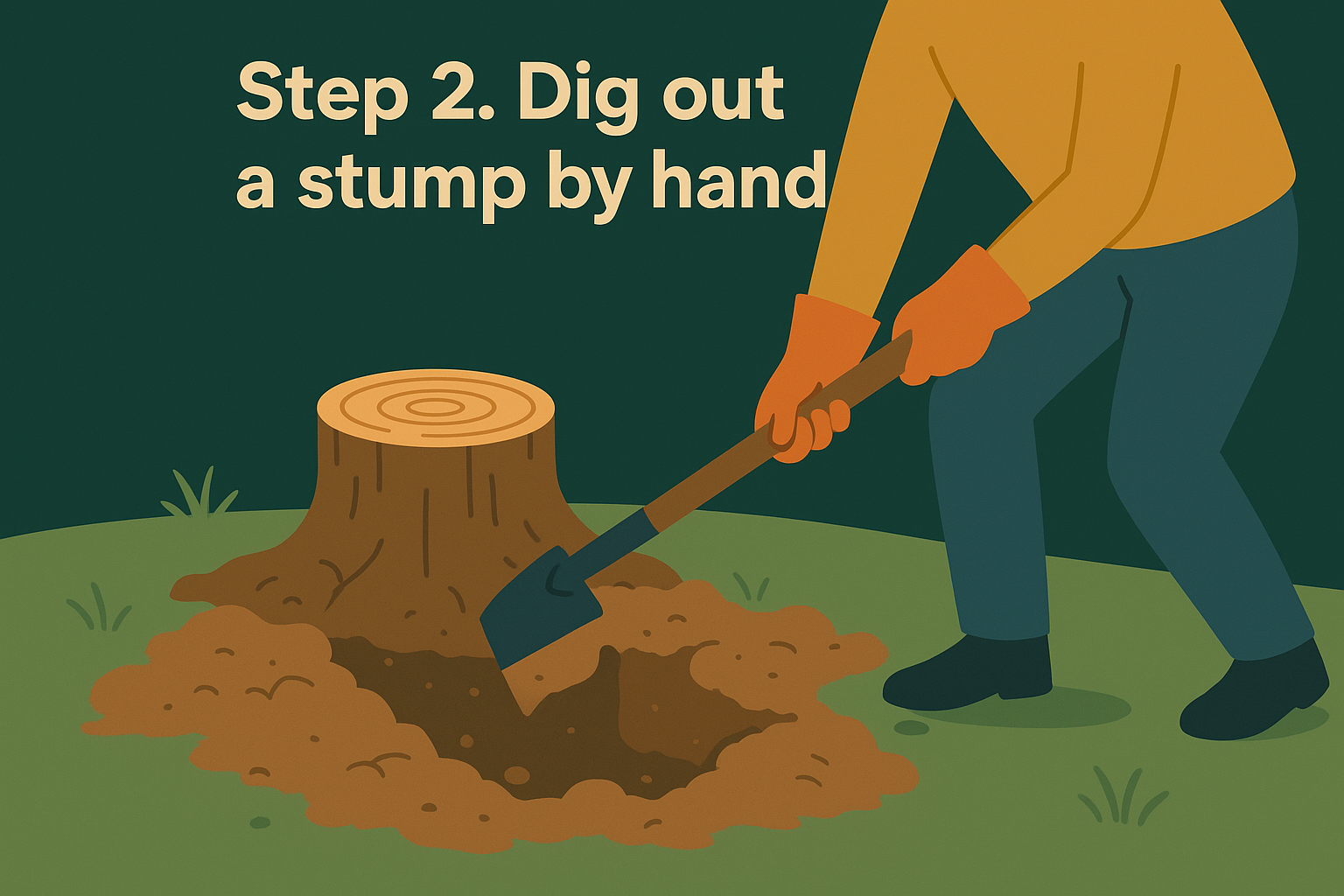
Start by clearing debris around the base, then dig a trench about 18 inches out from the trunk to expose the major roots . Cut through roots as you find them with a root saw or sharp axe, working your way around the circumference before you try to rock the stump loose. A digging bar or heavy-duty mattock gives you the leverage to pry against the taproot once the side roots are severed, and there's more on clearing stumps for good if the roots run deeper than expected.
A stump only fights back as hard as the roots you haven't cut yet.
Here's the basic sequence:
- Trench around the stump, 18 inches out
- Cut and clear lateral roots
- Sever the taproot underneath
- Rock and pry the stump free with a bar
- Backfill the hole with topsoil
If you hit roots thicker than four inches or the stump won't budge after an hour of prying, that's your signal to switch to chemical breakdown or call in tree and stump removal professionals instead.
Step 3. Kill and break down a stump with chemicals
Chemical breakdown suits stumps you're not in a rush to clear, especially soft or already-decaying wood from an older tree removal . The process uses a potassium nitrate stump remover , sold at most hardware stores, to accelerate rot from the inside out. Drill several one-inch holes into the top and sides of the stump, angling them downward, then pour in the granules and top off with water. Expect four to six weeks before the wood turns spongy enough to break apart with an axe or shovel.
Chemicals don't remove a stump, they just make the wood give up faster than nature would on its own.
Follow this sequence for consistent results:
- Drill 8-10 holes, one inch wide and eight inches deep
- Fill holes with potassium nitrate granules
- Soak with water and cover with a tarp
- Recheck every two weeks, adding more granules as they dissolve
- Break apart the softened wood once it crumbles under an axe
Once the stump is reduced to loose debris, you can burn the remains where local ordinances allow or haul them off entirely, which brings you to grinding when chemicals aren't fast enough.
Step 4. Grind the stump or hire a professional
Renting a stump grinder costs $75-$150 a day at most equipment yards, and it's the fastest DIY option for stumps between 12 and 24 inches. Wear eye protection and steel-toe boots, then work the grinding wheel across the stump in passes, lowering it a few inches each time until you're 4-6 inches below grade, following the full stump grinding technique from prep to cleanup. A 20-inch stump usually takes 45 minutes to an hour once you get the rhythm down.
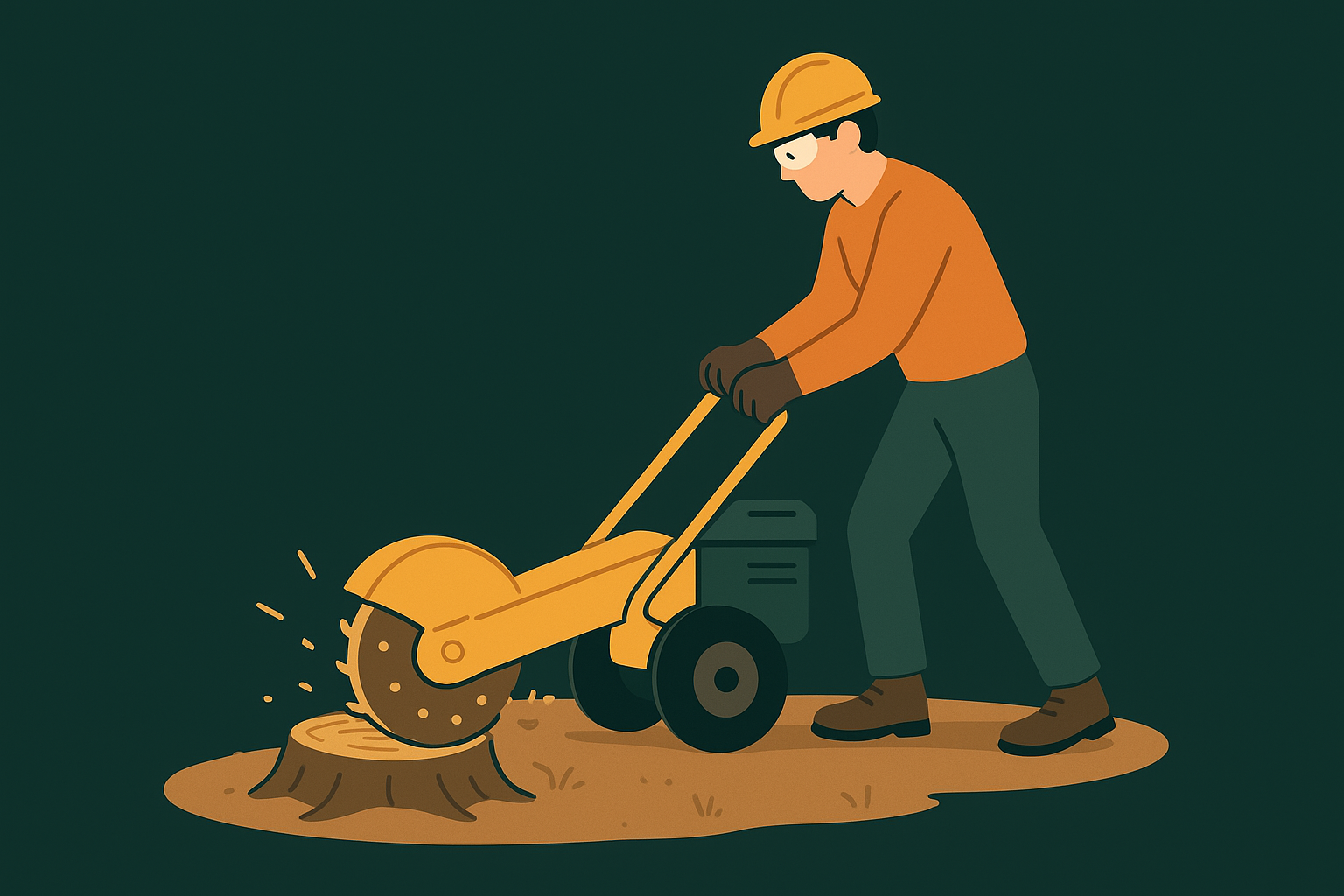
Grinding gets you below grade fast, but it takes muscle, safety gear, and a machine that can kick back if you rush it.
When to call in a pro instead
Larger stumps, tight yards, or roots wrapped around utility lines push the job past what a rented machine can safely handle. That's where a stump grinding crew with commercial machines pays off:
- Stumps over 24 inches or dense hardwood species
- Roots near septic lines, foundations, or buried cable
- No truck or trailer to haul a rented grinder
- You want the debris hauled away, not left in a pile
A licensed crew grinds below grade, removes the chips, and leaves the area ready for sod or landscaping the same day, something few DIY setups can match.
Getting your yard back to normal
Whichever path you choose, the goal is the same: a flat, stable yard where grass grows and nobody trips over a root hump. DIY stump removal works fine for small stumps in open ground, and chemical breakdown handles the ones you're not rushing to clear. But once you're dealing with hardwood over 24 inches, roots near a septic line, or a driveway you can't risk damaging, the math shifts toward hiring out.
Grinding below grade, hauling debris, and prepping the soil for new landscaping is exactly what a crew does every week, not once a decade like most homeowners. If your stump falls into that category, or you'd rather skip the rental truck and sore back entirely, book a free on-site stump estimate with our Vancouver, WA crew and get your yard back to normal without the guesswork.